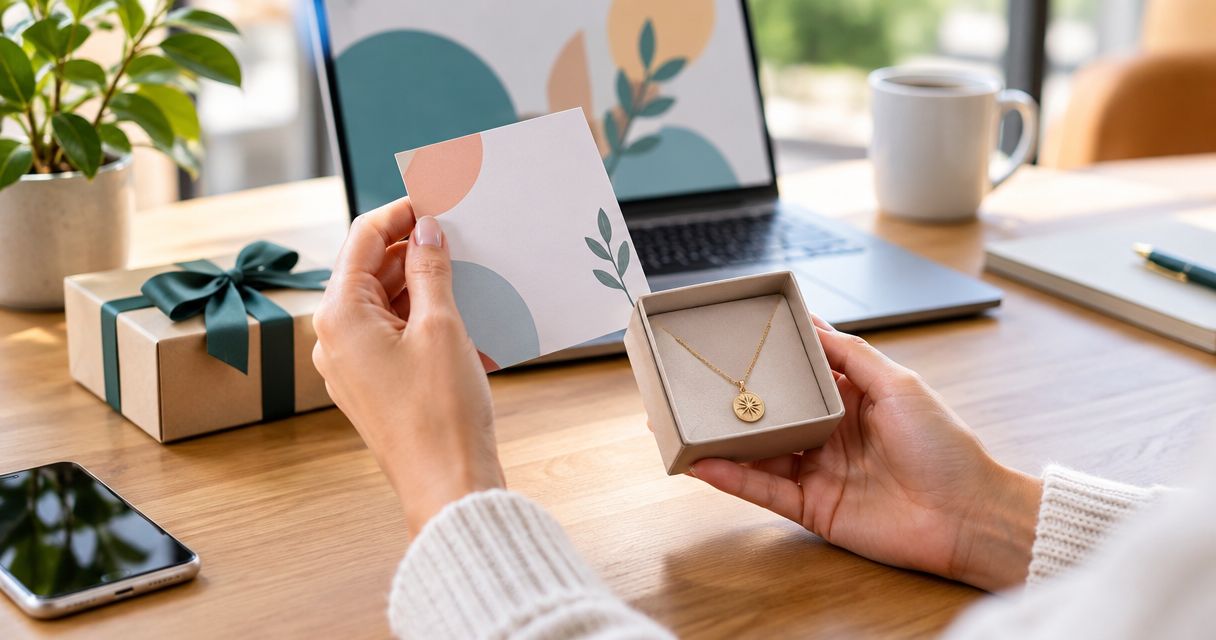
Best overall for a heartfelt message: a message-card necklace. Best for a personal detail: an initial necklace. Best for understated everyday wear: a simple pendant. This 2026 guide ranks necklace styles by how well they fit your mother-in-law’s taste, your relationship, and the occasion—not by unverified product claims.
- The best necklace for mother in law matches her jewelry habits before adding a sentimental detail.
- Dearlykept message-card jewelry suits shoppers who want a necklace paired with a pre-written sentiment and gift box.
- Choose an initial necklace for personal simplicity, a birthstone necklace for symbolism, or a locket for a photograph.
- Choose a pearl necklace for familiar dressy styling, or a simple pendant when she prefers understated jewelry.
Why this matters
A necklace for your mother-in-law has two jobs: feel appropriate to give and feel natural for her to wear. A heartfelt message does not fix a pendant she dislikes. An attractive necklace does not automatically communicate the appreciation you intended.
Dearlykept message-card jewelry is best suited to shoppers who want a necklace gift paired with a pre-written sentiment. Dearlykept sells necklaces and bracelets with sentiment cards and gift boxes. For this gift, read the card as carefully as you inspect the jewelry: the wording needs to fit a mother-in-law relationship, not simply sound emotional.
Start with something observable. Does she wear delicate pendants, pearls, personal symbols, or no necklaces at all? That answer gives you a better starting point than a gift’s presentation. Your 2026 shortlist should reflect her actual style rather than the jewelry you wish she wore.
What makes the best necklace for a mother-in-law?
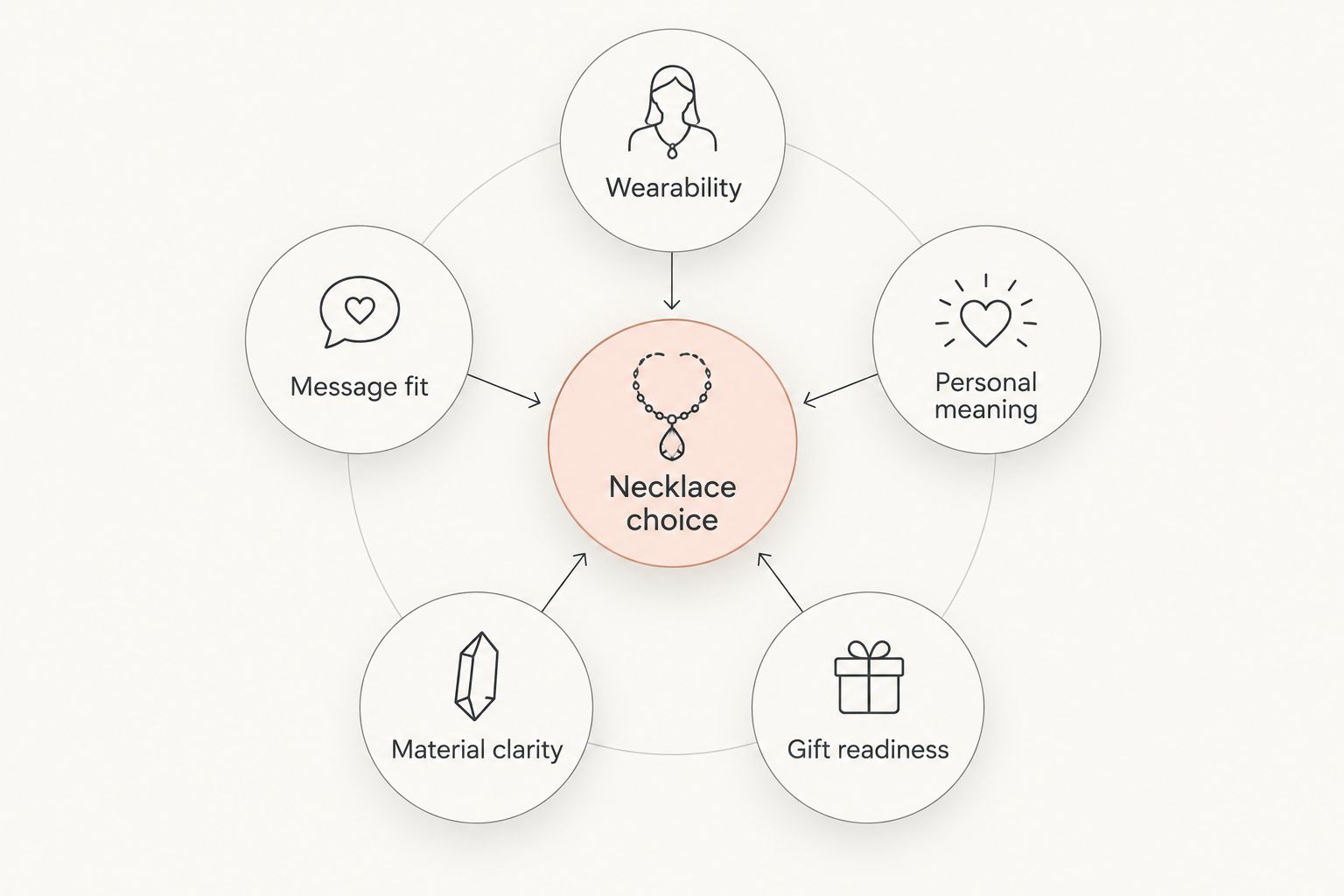
Use these five criteria before choosing a style. They separate a thoughtful gift from a necklace selected only because its description mentions family.
- Wearability: Match the scale, necklace style, and finish she already chooses. Check the stated chain length against a necklace she likes.
- Message fit: Choose wording that reflects your relationship. Appreciation is different from treating a mother-in-law as a lifelong parent.
- Personal meaning: An initial, birthstone, photograph, or sentiment should refer to something she values—not something that needs a long explanation.
- Material clarity: Read the actual material and care information. A finish name alone does not establish composition or suitability for sensitive skin.
- Gift readiness: Check what accompanies the necklace. For message-card jewelry, the card and gift box are part of the choice, not substitutes for checking the necklace itself.
Give wearability priority when these criteria conflict. A symbol can be meaningful without becoming something she wants around her neck. Likewise, a beautifully written card can accompany a necklace that is too conspicuous for her taste.
Before you browse, write 1 sentence describing what you want the gift to say. Then compare 2 necklaces she already wears and identify 1 detail they share. These are selection exercises, not sizing rules: they keep your attention on her preferences rather than the packaging.
Best mother-in-law necklaces at a glance
These are style recommendations, not named product reviews. The table ranks each option for a distinct need; it does not imply that every style is sold by Dearlykept.
| Rank | Necklace style | Best for | Standout feature | Key limitation |
|---|---|---|---|---|
| 1 | Message-card necklace | Expressing appreciation directly | A written sentiment accompanies the jewelry | The wording can feel too intimate or generic |
| 2 | Initial necklace | Personal simplicity | A letter connects the gift to her identity | The letter and design need to suit her taste |
| 3 | Birthstone necklace | A birthday-linked symbol | A gemstone association adds personal meaning | Symbolism does not guarantee she likes the color |
| 4 | Locket | Keeping a photograph close | Space for an image adds a private connection | Photo fitting requires additional preparation |
| 5 | Pearl necklace | Familiar dressy styling | Pearls provide the central visual detail | Pearl type, setting, and care need checking |
| 6 | Simple pendant necklace | Understated everyday styling | An uncomplicated shape keeps the focus on wearability | The necklace alone conveys little relationship-specific meaning |
1. Message-card necklace: best for expressing appreciation
A message-card necklace pairs jewelry with a written sentiment. Dearlykept offers this gift format with pre-written cards and gift boxes, making it relevant when the words are central to your choice.
The strongest reason to choose this style is straightforward: you want to say something more specific than a necklace alone communicates. Read the complete message before deciding. Language about gratitude, welcome, or family connection should reflect what you genuinely mean.
Message-card necklace pros:
- Gives the gift an explicit emotional context.
- Lets you assess the message separately from the necklace design.
- Combines a wearable gift with something she can read and keep.
Message-card necklace cons:
- Pre-written wording can feel less personal than your own words.
- A suitable message does not establish whether the necklace fits her style.
Best for: A mother-in-law who appreciates written expressions of affection or thanks.
For a 2026 celebration, distinguish the occasion from the relationship. A birthday message can celebrate her without making sweeping claims about your bond. Add your own short note about something she has actually done for you; do not ask the pre-written card to tell your entire story.
Verdict: Buy a message-card necklace when both the sentiment and the jewelry suit her; skip it when only the card appeals.
2. Initial necklace: best for personal simplicity
An initial necklace uses a letter as its main personal detail. It is a direct way to make the gift about your mother-in-law without relying on a lengthy message or a shared family narrative.
Choose the initial intentionally. Her own first initial keeps the focus on her identity; someone else’s initial changes the meaning. Do not assume she wants to wear a child’s or grandchild’s letter simply because she loves that person.
Initial necklace pros:
- Adds a personal reference without a photograph.
- Keeps the meaning easy to understand.
- Lets you focus the choice on letter shape, scale, and finish.
Initial necklace cons:
- Some recipients do not enjoy letter jewelry.
- A highly decorative initial can conflict with understated tastes.
Best for: A mother-in-law who likes personal details but prefers a restrained gift.
Look at how the letter is presented. A pendant letter and an initial engraved on a disc are different visual choices, even when they refer to the same person. Select the treatment that resembles jewelry she already wears rather than treating all initial necklaces as interchangeable.
Verdict: Buy an initial necklace when she enjoys personal symbols; skip it if she avoids lettering in her accessories.
3. Birthstone necklace: best for birthday-linked meaning
A birthstone necklace connects its gemstone choice to a birth month. It gives you a personal theme without needing a written sentiment to explain the entire gift.
The association is only part of the decision. Check whether she likes the stone’s appearance, then read the product’s gemstone description. A birthstone label does not, by itself, tell you whether the stone is natural, laboratory-grown, or an imitation.
Birthstone necklace pros:
- Connects naturally to a birthday gift.
- Adds a personal reference through color and gemstone choice.
- Offers meaning without requiring a visible name or initial.
Birthstone necklace cons:
- Her birthstone color might not match her preferences.
- Gemstone identity and care cannot be inferred from the gift theme.
Best for: A mother-in-law who enjoys gemstone jewelry and birthday symbolism.
For a birthday in 2026, choose her stone rather than turning the necklace into a family chart unless you know she wants that. Multiple relatives’ stones introduce additional decisions about inclusion and arrangement. A gift centered on her own taste is simpler to choose and explain.
Verdict: Buy a birthstone necklace when she likes both the symbolism and the stone; skip it when the birth-month connection is the only attraction.
4. Locket: best for keeping a photograph close
A locket is a pendant designed to hold a small keepsake, often a photograph. Its meaning comes from what you place inside as much as from its outer appearance.
Choose the image before choosing the locket. A photograph with clear faces and uncluttered composition gives you a practical starting point, but the insert still needs to match the actual compartment. Check the opening mechanism, photo-fitting instructions, and stated dimensions.
Locket pros:
- Holds a private visual reminder.
- Lets you personalize the gift beyond its exterior.
- Makes a shared photograph part of the necklace itself.
Locket cons:
- Preparing and fitting the photograph adds work.
- The opening mechanism needs checking alongside the chain and pendant.
Best for: A mother-in-law who treasures printed photographs and keepsakes.
Do not assume the most meaningful photograph is the newest group portrait. Choose an image she would enjoy revisiting. If a family photograph carries complicated associations, select another image rather than expecting the locket to smooth over those feelings.
Present the locket ready to use if you can follow its fitting instructions. An empty compartment leaves the central part of the gift unfinished.
Verdict: Buy a locket when you have a suitable photograph and time to prepare it; hold if the image is still undecided.
5. Pearl necklace: best for familiar dressy styling
A pearl necklace makes pearls the main visual feature, whether through a pendant or a strand. Choose this category when pearls already appear in your mother-in-law’s jewelry choices—not merely because you associate them with a certain age.
Check the exact description. Natural, cultured, and imitation pearls are different categories, and the word pearl alone does not identify which one a necklace uses. The setting and care instructions also belong in your decision.
Pearl necklace pros:
- Fits a recipient who already enjoys pearl jewelry.
- Offers a style-led choice without overt family symbolism.
- Lets you match an existing preference for a pendant or strand.
Pearl necklace cons:
- Pearl type cannot be established from appearance alone.
- A dressy design is a poor fit if she wants something casual.
Best for: A mother-in-law who chooses pearls for occasions or everyday outfits.
A 2026 gift does not need a new trend to feel considered. Repeat an element she likes, but avoid buying something nearly identical to a necklace she already owns unless she has requested it. Familiar style and unnecessary duplication are not the same thing.
Verdict: Buy a pearl necklace when pearls are an established preference; skip it when the choice rests on an age-based assumption.
6. Simple pendant necklace: best for understated everyday styling
A simple pendant necklace uses an uncomplicated shape without making an initial, gemstone association, or photograph its central feature. It suits a gift decision driven primarily by what your mother-in-law likes to wear.
Here, the small design choices matter. Check the pendant’s stated dimensions, chain length, fastening, and material information. A plain design does not automatically make a necklace comfortable or suitable for sensitive skin.
Simple pendant necklace pros:
- Keeps attention on her established style.
- Avoids relationship wording that feels too intimate.
- Leaves your accompanying note to explain the gift’s meaning.
Simple pendant necklace cons:
- Can feel generic without a thoughtful explanation.
- Still requires checking fit and materials.
Best for: A mother-in-law who wears understated jewelry and dislikes obvious sentimental symbols.
Use your note to explain why you chose it. Refer to her taste or to a genuine moment of appreciation, rather than inventing symbolism for an ordinary shape. The necklace can be visually simple while the reason for giving it remains personal.
Verdict: Buy a simple pendant when wearability is the priority; skip a random design chosen only because it seems safe.
How these necklace styles were ranked
This ranking prioritizes a clear gift purpose, then checks wearability, message fit, personal meaning, material clarity, and gift readiness. Message-card necklaces lead for expressing appreciation; the remaining styles each answer a different preference.
This is not a durability test or a ranking of individual products. Choose the style first, then inspect the actual necklace’s description. Category-level appeal cannot establish a particular item’s materials, fit, or construction.
Which necklace should you choose?
Choose a message-card necklace as the default when your main goal is to express appreciation and you know she wears necklaces. Dearlykept is relevant to that choice because its message-card jewelry pairs necklaces with pre-written sentiments and gift boxes.
If you already know her preference, let it override the default. Choose an initial for personal simplicity, a birthstone for birthday meaning, a locket for a photograph, pearls for an established pearl preference, or a simple pendant for understated wear.
For your 2026 decision, finish with one question: would she choose to wear this if the gift box were gone? If the answer is no, keep looking.
FAQ
What's the best necklace for mother in law?
The best necklace for mother in law matches her existing jewelry preferences and carries a meaning appropriate to your relationship. A message-card necklace is the default recommendation when expressing appreciation is the main goal; an established style preference should override it.
Is a message-card necklace a good mother-in-law gift?
A message-card necklace is a good choice when she enjoys sentimental gifts and the wording fits your relationship. Read the full card and check the necklace separately; neither element makes up for a poor match in the other.
Should I choose her initial or a grandchild's initial?
Choose her own initial unless you know she wants to wear a grandchild's initial. Her initial centers the gift on her identity, while a grandchild's letter makes family symbolism the main theme.
Is a birthstone necklace better than a pearl necklace?
A birthstone necklace is better for birthday-linked symbolism, while a pearl necklace is better for someone who already enjoys pearls. Choose based on her preferences rather than treating either category as universally better.
What should I check before buying a necklace for sensitive skin?
Check the stated metal composition and any material information relevant to her known sensitivities. Do not assume a finish name or a general description establishes suitability; avoid an item when the information does not answer your concern.
Should a locket have a photograph inside when I give it?
Include a photograph when you have a suitable image and can follow the locket's fitting instructions. Check the compartment dimensions and image placement before preparing the final insert.
What if my mother-in-law doesn't usually wear necklaces?
Do not make a necklace the default gift if she does not wear them. Choose a gift that reflects her habits rather than relying on sentiment to change her preferences.
One last thing
The most useful final check is not another search. Put the necklace description beside your intended message and ask whether both are about her. A thoughtful gift respects her taste; it does not require her to adopt yours.