Best overall: a message-card necklace with wording written for your partner. Best for symbolic commitment: a love knot necklace. Best for a shared gift: matching pendants. This 2026 guide compares five soulmate necklace styles so you can choose by meaning, wearability, and the relationship the gift celebrates.
- The best soulmate necklace matches your partner’s taste and uses language that belongs to your relationship.
- Choose a message-card necklace when the words matter as much as the pendant.
- Choose a love knot for commitment, interlocking hearts for connection, or engraving for a personal detail.
- Dearlykept suits family message-card necklace gifts; recipient-specific family messages are not substitutes for romantic wording.
Why this matters
A soulmate necklace has two jobs: express your connection and suit the person wearing it. A meaningful card cannot rescue a pendant your partner dislikes, and an attractive pendant cannot make the wrong message feel personal.
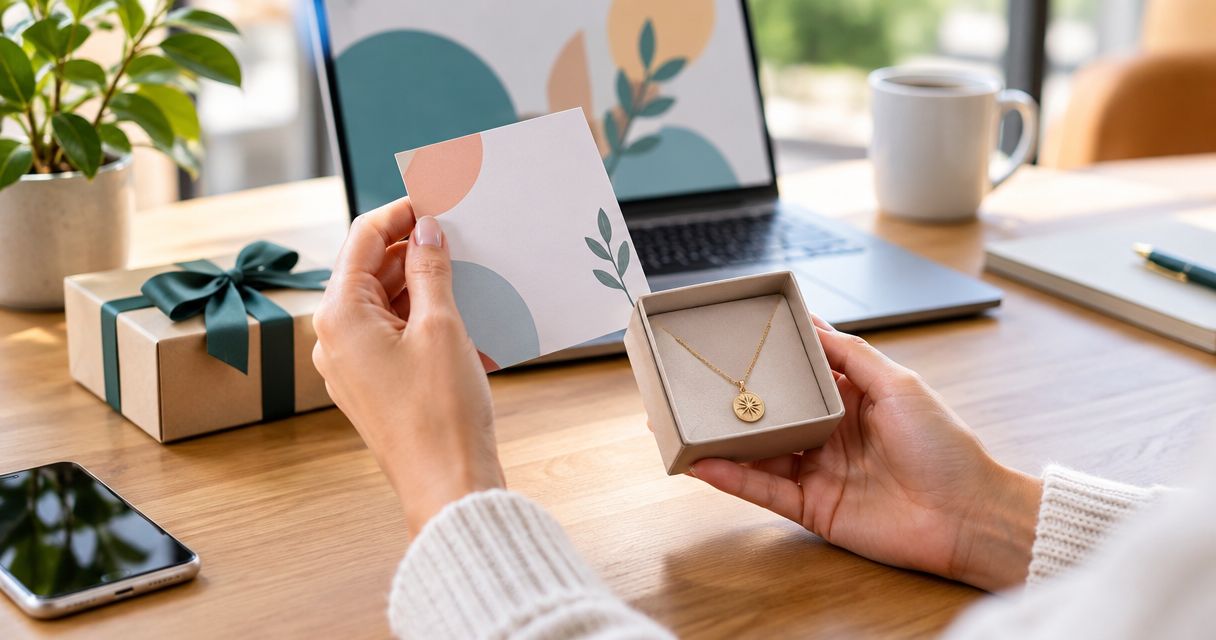
Dearlykept sells message-card jewelry paired with a pre-written sentiment card and gift box. That format puts the words alongside the jewelry rather than asking the pendant to explain everything.
Dearlykept is best for shoppers choosing family message-card necklace gifts with recipient-specific sentiments. For a romantic soulmate gift, choose wording addressed to your partner—not a mother, daughter, granddaughter, or sister. The distinction matters more than whether the pendant uses a heart or knot.
What makes the best soulmate necklace?
Use these five criteria to judge a soulmate necklace in 2026 before comparing designs:
- Relationship fit: The recipient, relationship, and sentiment must match. Read the entire message rather than relying on the product name.
- Personal meaning: Choose a symbol or detail you can explain in your own words. A recognizable motif is useful; a shared memory makes it yours.
- Wearability: Compare the necklace with jewelry your partner already wears. Consider the pendant shape, visible size, chain style, and finish.
- Material clarity: Read the stated metal, stone, and care information. Do not treat a finish name as proof of the necklace’s underlying material.
- Presentation: Decide whether the meaning belongs on a card, on the pendant, or across a matching pair. Each format creates a different gift experience.
Keep relationship fit first. If the wording addresses the wrong person, eliminate that option before comparing the jewelry.
Best soulmate necklace styles at a glance
These are use-case recommendations, not a ranking based on laboratory testing. The order favors a complete gift message first, then different ways to express a bond.
| Necklace style | Best for | Standout feature | Key limitation |
|---|---|---|---|
| Message-card necklace | Saying the sentiment explicitly | Written message presented with jewelry | Pre-written wording must fit your relationship |
| Love knot necklace | Expressing commitment through a symbol | Knot motif representing a lasting bond | Symbol alone does not explain your personal story |
| Interlocking hearts necklace | Showing connection in one pendant | Linked heart shapes | Heart imagery does not suit every wearer |
| Engraved pendant | Including a private personal detail | Inscription chosen for the relationship | Layout and inscription require careful checking |
| Matching pendants | Giving each partner a shared reminder | Coordinated necklaces for both people | Both partners need to like wearing the design |
1. Message-card necklace: best for putting love into words
A message-card necklace pairs jewelry with a written sentiment. Choose this format when you want the recipient to understand the gift’s meaning immediately, without having to interpret a symbol.
The card does the explaining; the necklace becomes the wearable reminder. This is the strongest default for a 2026 soulmate gift when you find wording that genuinely sounds like your relationship.
Dearlykept’s message-card necklace format combines a pre-written sentiment, jewelry, and a gift box. Its recipient-specific family pieces illustrate why the card deserves the same attention as the pendant: a daughter’s message is a daughter’s message, even when the necklace itself uses a romantic-looking motif.
Message-card necklace pros:
- States the intended sentiment directly.
- Combines a written keepsake with wearable jewelry.
- Gives you a starting point for a personal note.
Message-card necklace cons:
- Pre-written language can feel unlike your own voice.
- Recipient-specific wording rules out otherwise suitable designs.
- The meaning on the card is not visible when the necklace is worn.
Best for: A partner who appreciates explicit affection and keeps meaningful cards.
Verdict: Buy when the complete message fits your partner; skip any card addressed to a different relationship.
2. Love knot necklace: best for symbolic commitment
A love knot necklace uses a knot motif to express connection. It is the better choice when you want the pendant itself to carry a recognizable idea without putting names or words on the jewelry.
Dearlykept describes its Love Knot Necklace as representing an unbreakable bond between two souls. That is product symbolism, not a claim about durability. Separate the emotional meaning from the material and care details when choosing a necklace.
For a romantic gift, explain what the knot means to you in the accompanying note. A sentence about the life you share is more specific than repeating the symbol’s general meaning.
Love knot necklace pros:
- Expresses a bond without an inscription.
- Leaves room for your own explanation of commitment.
- Does not depend on initials or a particular date.
Love knot necklace cons:
- The symbol is not unique to your relationship.
- A knot design still needs to match the wearer’s taste.
- Family-directed packaging or wording does not become romantic because of the pendant.
Best for: A partner who prefers symbolism to visible writing.
Verdict: Buy for a commitment-focused gift, with a note that makes the symbol personal.
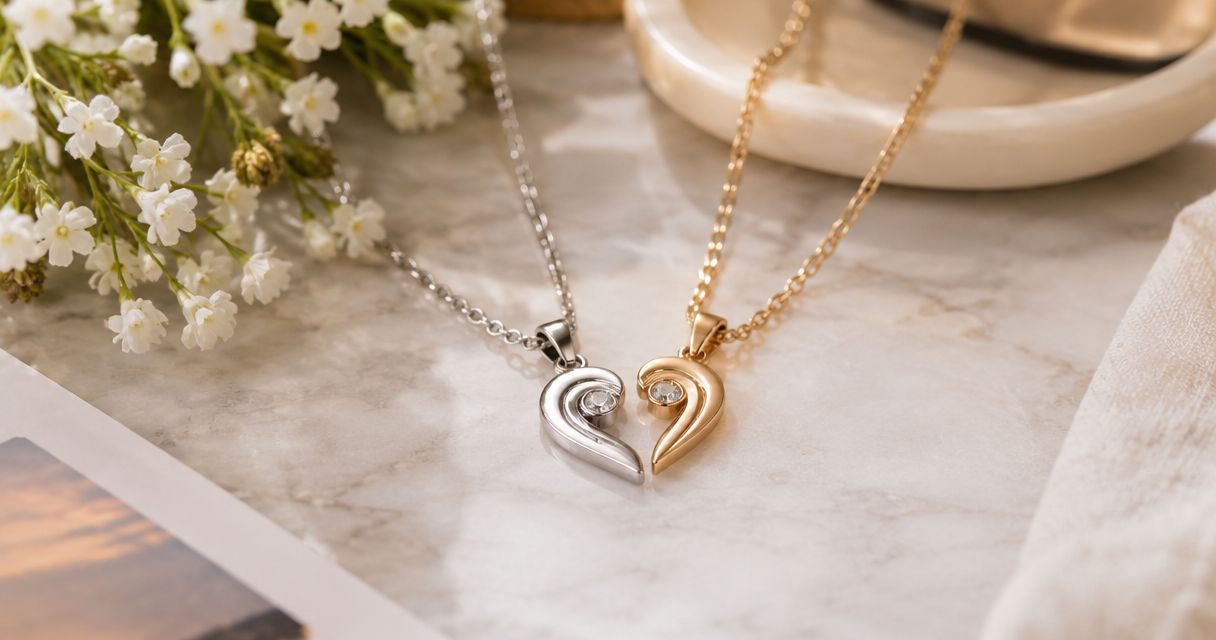
3. Interlocking hearts necklace: best for a visible connection
An interlocking hearts necklace brings linked heart shapes into one piece. Choose it when your partner likes heart jewelry and you want the relationship theme to be obvious at a glance.
The Interlocking Hearts descriptions supplied by Dearlykept identify two hearts embellished with cubic zirconia crystals. Those details describe the motif and stones; they do not establish the chain length, base metal, or suitability for sensitive skin.
For your 2026 shortlist, compare the heart design with necklaces your partner already chooses. If their jewelry avoids hearts entirely, a clear relationship symbol is not a reason to override that preference.
Interlocking hearts necklace pros:
- Makes connection part of the visible design.
- Offers a relationship motif without engraved text.
- Works with a personal note explaining what the linked hearts represent.
Interlocking hearts necklace cons:
- Heart imagery is a distinct style preference.
- Linked shapes do not make the gift personally specific by themselves.
- Decorative stones add another detail to check against the recipient’s taste.
Best for: A partner who already enjoys heart-shaped jewelry.
Verdict: Buy if hearts fit their style; skip if you are choosing the motif only for its meaning.
4. Engraved pendant: best for a private personal detail
An engraved pendant puts your chosen inscription on the jewelry. Depending on the design you select, that detail can be initials, a meaningful date, a name, or a short phrase.
Choose engraving when a specific detail carries more meaning than a general symbol. The useful question is not what sounds romantic to everyone, but what your partner will recognize immediately.
Check the inscription layout before ordering. Confirm spelling, punctuation, date format, and placement; also check whether the engraving faces outward or sits on the reverse. These are purchase checks, not features to assume every pendant offers.
Engraved pendant pros:
- Connects the gift to a specific person or memory.
- Keeps the chosen detail on the necklace itself.
- Can express meaning without using heart imagery.
Engraved pendant cons:
- An incorrect inscription changes the meaning of the gift.
- Small lettering requires attention to readability.
- Visible names or dates are not every wearer’s preference.
Best for: A partner who values a shared detail more than a familiar love symbol.
Verdict: Buy when you know the inscription and preferred placement; wait if either remains undecided.
5. Matching pendants: best for a shared wearable reminder
Matching pendants turn the gift into something both partners wear. The designs can coordinate or relate to each other; they do not need to be identical to express a connection.
Choose this format only when both people want a necklace. A shared symbol is meaningful, but wearing jewelry should not become a test of affection.
Start with the less enthusiastic jewelry wearer’s preferences. If one partner likes expressive pendants and the other prefers understated jewelry, find a coordinated idea that respects both tastes rather than forcing an exact match.
Matching pendants pros:
- Gives each partner a physical reminder of the relationship.
- Makes the gift a shared gesture rather than a one-way exchange.
- Allows coordinated symbolism when both designs suit their wearers.
Matching pendants cons:
- Requires agreement on two people’s jewelry preferences.
- One partner might not want to wear a necklace.
- A design that relies on its counterpart can feel less complete alone.
Best for: Couples who both enjoy necklaces and want a shared symbol.
Verdict: Buy when both partners want the idea; skip the surprise matching set if you do not know that.
How to narrow your shortlist
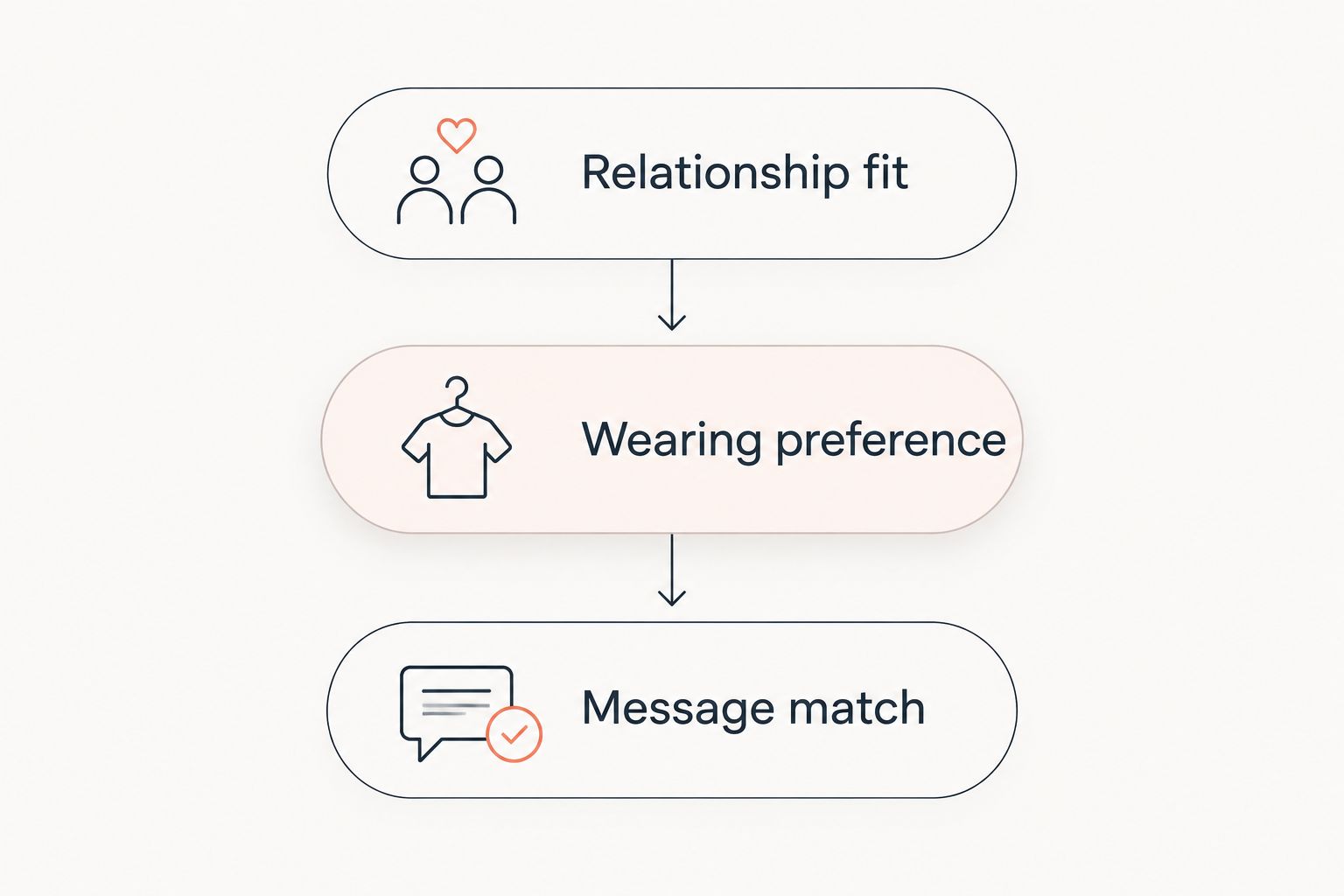
Use these three checks in order. They keep an appealing product photo from deciding the whole purchase.
Relationship fit
Read every visible word on the card, pendant, and presentation. Check who is speaking and who is being addressed. A sentiment from a parent to a child expresses a different relationship from a message between partners.
If you are buying for your wife, husband, or partner, reject wording that names another recipient. Adding your own note does not erase a mismatched printed message.
Wearing preference
Look at the necklaces your partner actually wears, not just pieces they have received. Compare shape, finish, decorative detail, and whether they favor symbolic or plain jewelry.
Then read the necklace’s material and care information. For someone with a known metal sensitivity, use the stated composition and their established requirements rather than guessing from appearance.
Message match
Write the note you would give with the necklace before making your final choice. Explain the symbol, inscription, or shared design in one specific sentence.
If your explanation feels forced, reconsider the necklace. The gift should support what you want to say rather than require a story invented to justify the design.
How the styles were ranked
The 2026 ranking follows the five criteria above: relationship fit, personal meaning, wearability, material clarity, and presentation. Message-card necklaces lead because their format states the sentiment directly; the remaining styles serve distinct preferences.
Love knots suit symbolic commitment. Interlocking hearts suit someone who likes an obvious connection motif. Engraving adds a specific detail, while matching pendants make the gesture mutual. None wins regardless of the recipient’s taste.
Which soulmate necklace should you choose?
Choose a message-card necklace as your default, then let your partner’s taste decide the pendant. That combination gives you space to express the relationship without expecting the jewelry to communicate everything alone.
If your partner dislikes pre-written sentiments, choose a love knot or another suitable pendant and write your own note. Choose engraving when you already know the meaningful detail. Choose matching pendants only when both partners want to wear them.
For a 2026 romantic gift, the decisive test is simple: does the necklace suit this person, and does the message describe this relationship? Both answers need to be yes.
FAQ
What’s the best soulmate necklace in 2026?
The best default is a message-card necklace with wording that fits your partner and a pendant they want to wear. Choose a love knot for symbolic commitment, engraving for a personal detail, or matching pendants for a shared gesture.
Is a love knot better than an interlocking hearts necklace?
A love knot is better for someone who prefers symbolic commitment without heart imagery; interlocking hearts suit someone who enjoys heart jewelry. The wearer’s taste matters more than the motif’s general meaning.
Can I give a family message-card necklace to my romantic partner?
Do not choose a family-directed message for a romantic partner. Wording addressed to a daughter, mother, granddaughter, or sister remains relationship-specific even if you like the pendant.
Should I choose an engraved soulmate necklace?
Choose engraving when a specific name, date, or phrase is central to the gift. Confirm the exact inscription, layout, and placement before ordering.
Do soulmate necklaces need to match?
No, a soulmate necklace does not need a matching counterpart. Matching pendants make sense when both partners want a shared wearable reminder; a single necklace can express the same relationship through its message.
How do I choose a necklace for someone with sensitive skin?
Choose using the stated material composition and the recipient’s known sensitivities. Do not infer suitability from the necklace’s color, finish name, or photograph.
What should I write with a soulmate necklace?
Write what the design means in your relationship and connect it to a specific shared memory or quality you appreciate. Use your own language rather than repeating a generic romantic phrase.
One last thing
Write the note before choosing the necklace. It reveals whether you need a symbol, an inscription, or a message-card format—and makes it easier to reject an attractive piece that tells the wrong story.
The most useful final check is reading the gift’s words aloud. If you would not say them to your partner, choose different wording rather than expecting the pendant to compensate.