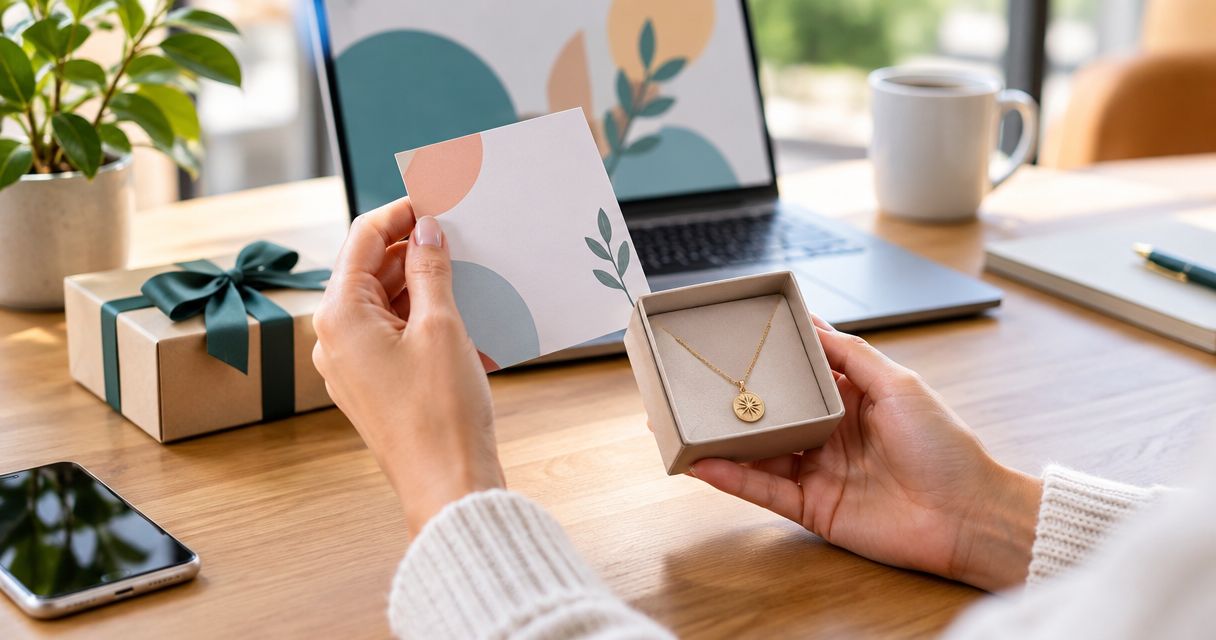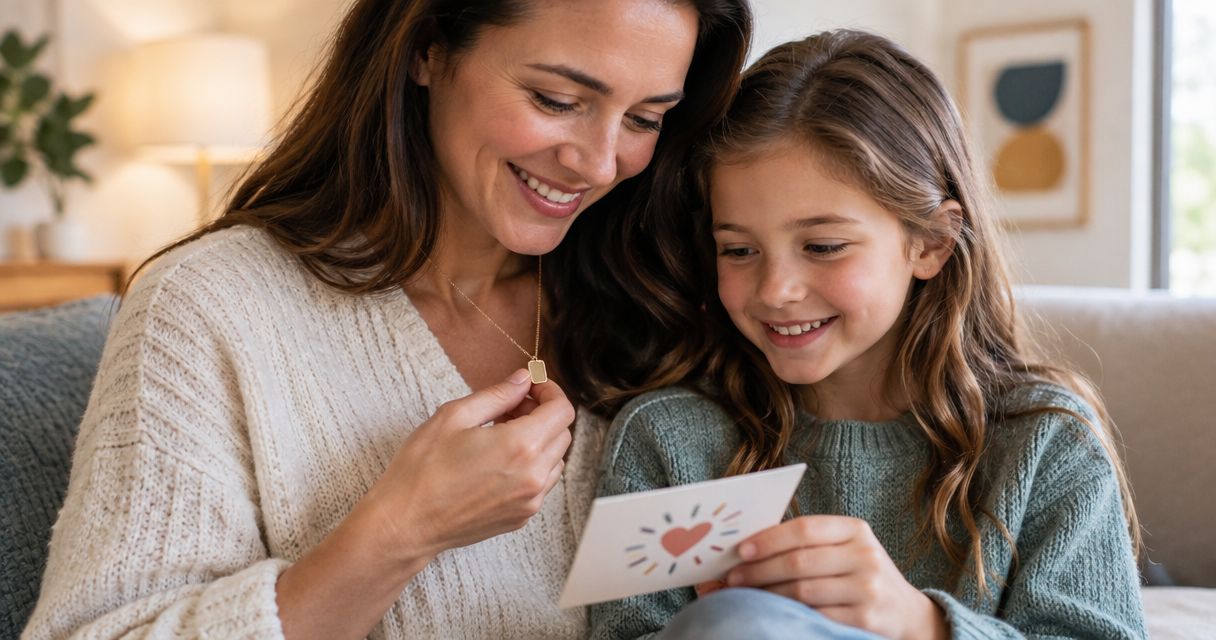
Adoptive parents’ message-card necklaces pair jewelry with a written sentiment to recognize parenthood without making adoption the whole story. Choose a necklace for adoptive parents by checking the recipient’s preferred family language, the message’s point of view, and whether the jewelry suits what they actually wear.
- Choose a necklace for adoptive parents around their preferred family language, not a generic adoption slogan.
- Dearlykept suits shoppers seeking message-card jewelry with a pre-written sentiment and gift box.
- Read the entire sentiment before choosing the pendant; reject wording that assigns gratitude or tells someone else’s story.
- Give the gift privately unless the recipient has welcomed a public celebration.
Why message-card jewelry matters for adoptive parents
A message-card necklace makes its meaning explicit: the jewelry is the keepsake, and the card explains why you chose it. For adoptive parents, that wording deserves particular attention because a gift can celebrate a relationship without describing how the family formed.
Do not assume an adoption reference makes the gift more personal. A straightforward message about being a loved mother, father, or parent can fit better than a passage about being chosen, rescued, or finally becoming a family. Let the recipient’s language guide you.
Dearlykept is best for shoppers who want message-card jewelry with a pre-written sentiment and gift box. You can browse Dearlykept with that format in mind, then assess each message rather than assuming every family-themed card fits this occasion.
For a gift you are planning in 2026, start with the relationship you want to recognize. The occasion comes second; the recipient’s comfort comes first.
How to choose a necklace for adoptive parents
Start with the recipient’s own family language
Before shopping, look at words the recipient already uses in conversations, cards, or announcements shared with you. You do not need to ask for their adoption history to choose a thoughtful gift. If you are unsure about a term, ask a narrow question about the gift rather than a broad question about the family.
Use a plain note as your first draft. Write what you appreciate about the person without mentioning adoption, then decide whether adding that detail contributes anything meaningful. Often, the relationship itself supplies enough substance.
Avoid treating every adoptive parent as a first-time parent. The recipient might already have children, and the gift should not erase those relationships.
- Use the recipient’s preferred name or parental title.
- Match the family terms they use with you.
- Leave out adoption details they have not invited you to share.
- Check whether the message acknowledges existing children appropriately.
- Choose a general parenthood sentiment when adoption-specific wording feels unnecessary.
Decide who is speaking in the card
Read every message as though the recipient were opening it in front of you. Who does the word I represent? Who does you address? A card written from a child to a parent is not interchangeable with a message from a partner, friend, or grandparent.
For your 2026 gift, write 2 sentences in your own voice before comparing pre-written cards: one naming the relationship, and one explaining your appreciation. This gives you a reference point without requiring a polished letter.
If you are giving a gift alongside a child, invite participation without assigning feelings. A child can choose a drawing or help select wrapping without being asked to endorse an adult’s emotional message.
- Identify the intended sender before reading the sentiment.
- Reject cards that speak on a child’s behalf without their involvement.
- Keep a partner’s message distinct from a child-to-parent message.
- Remove implied promises about how someone should feel.
- Use your own accompanying note when the printed card needs context.
Read the sentiment before choosing the pendant
Start manually: read the complete card text, including small print visible in the listing. A promising opening line does not cancel a later sentence that introduces an uncomfortable assumption. Evaluate the whole message before considering the necklace design.
Dearlykept’s message-card jewelry provides a pre-written starting point, paired with a necklace or bracelet and gift box. That format removes the need to compose the main sentiment from scratch, but a pre-written message still needs to match the sender and recipient. Do not assume the wording can be changed.
Choose the message first and the pendant second. If the card does not fit, keep looking rather than relying on an attractive necklace to distract from it.
- Read every sentence of the card.
- Check whether the message centers affection rather than obligation.
- Reject language that frames a child as a reward or a parent as a rescuer.
- Verify any personalization option before depending on it.
- Separate your own handwritten note from the printed sentiment.
Match the necklace to everyday preferences
Look at jewelry the recipient already chooses to wear. A gift can have a meaningful card and still be the wrong accessory. Someone who avoids necklaces does not need to begin wearing one to demonstrate appreciation.
Check 3 details before buying: the stated material, the chain length, and the clasp. Use the current product information rather than assumptions based on a photograph. If the recipient has known material sensitivities, confirm the relevant details instead of treating a finish description as a complete material specification.
A bracelet or a card-only gift is a reasonable alternative when necklaces do not suit the person. The aim is recognition, not persuading someone to adopt your taste.
- Compare the style with jewelry the recipient already wears.
- Read the stated material and finish information separately.
- Check chain measurements against a necklace they find comfortable.
- Consider whether the clasp suits their preferences.
- Choose another gift format if wearing a necklace would feel like an obligation.
Choose the occasion and presentation together
An adoption-related milestone does not automatically call for a public presentation. Ask whether the recipient wants the event acknowledged, and distinguish permission to give a gift from permission to share family details.
If you are marking an occasion in 2026, follow the family’s name for it rather than imposing your own. A birthday, Mother’s Day, Father’s Day, or quiet expression of appreciation can also be an appropriate setting. The necklace does not need an adoption-specific date to carry meaning.
Offer 1 private opening before any group celebration. That gives the recipient room to read the card without an audience waiting for a reaction.
- Use the occasion’s name as the family describes it.
- Ask before arranging a public presentation.
- Keep identifying family details out of shared photographs.
- Let the recipient decide whether to read the card aloud.
- Avoid asking for an immediate photo or social post.
Check the complete gift before handing it over
Review the necklace, the printed sentiment, and your accompanying note together. Each part should address the same recipient from a clear point of view. A thoughtful handwritten note cannot fully repair a printed card that says the wrong thing.
For a 2026 purchase, check current listing details and the applicable return or personalization terms before ordering. Do not infer what comes with a particular item from the appearance of another listing. If the presentation is important to you, verify exactly what the selected item includes.
Read the message once silently and once aloud. Hearing it helps you catch wording that sounds more demanding, dramatic, or intimate than you intended.
- Confirm the recipient and sender implied by the card.
- Check any names or personalized text against your original spelling.
- Verify the selected item’s included packaging.
- Review the relevant care instructions.
- Remove your purchase paperwork before presenting the gift.
Compare gift formats for adoptive parents
The best format is the one that fits both the message and the wearer. A ready-written card prioritizes convenience; a handwritten note gives you control over the language. Neither format makes an unsuitable sentiment appropriate.
Use this comparison to choose the format before choosing a particular design. These are gift approaches, not claims about specific products or customization services.
| Option | Best for | Main advantage | Key limitation |
|---|---|---|---|
| Pre-written message-card necklace | Shoppers who find a sentiment that already fits | Combines a wearable keepsake with a complete message | Fixed wording can mismatch the sender or family |
| Necklace with your handwritten note | Givers who want to speak in their own voice | Lets you describe the relationship precisely | Requires you to choose the jewelry and write the note separately |
| Personalized necklace | Recipients who have requested a particular name or inscription | Makes a requested detail part of the jewelry | Requires exact approval of wording and confirmation of offered options |
| Message-card bracelet | Recipients who prefer bracelets to necklaces | Keeps the jewelry-and-message format | Bracelet fit and wearing preferences still need checking |
| Handwritten card without jewelry | Recipients who do not want wearable gifts | Keeps the focus on your words | Does not provide a wearable keepsake |
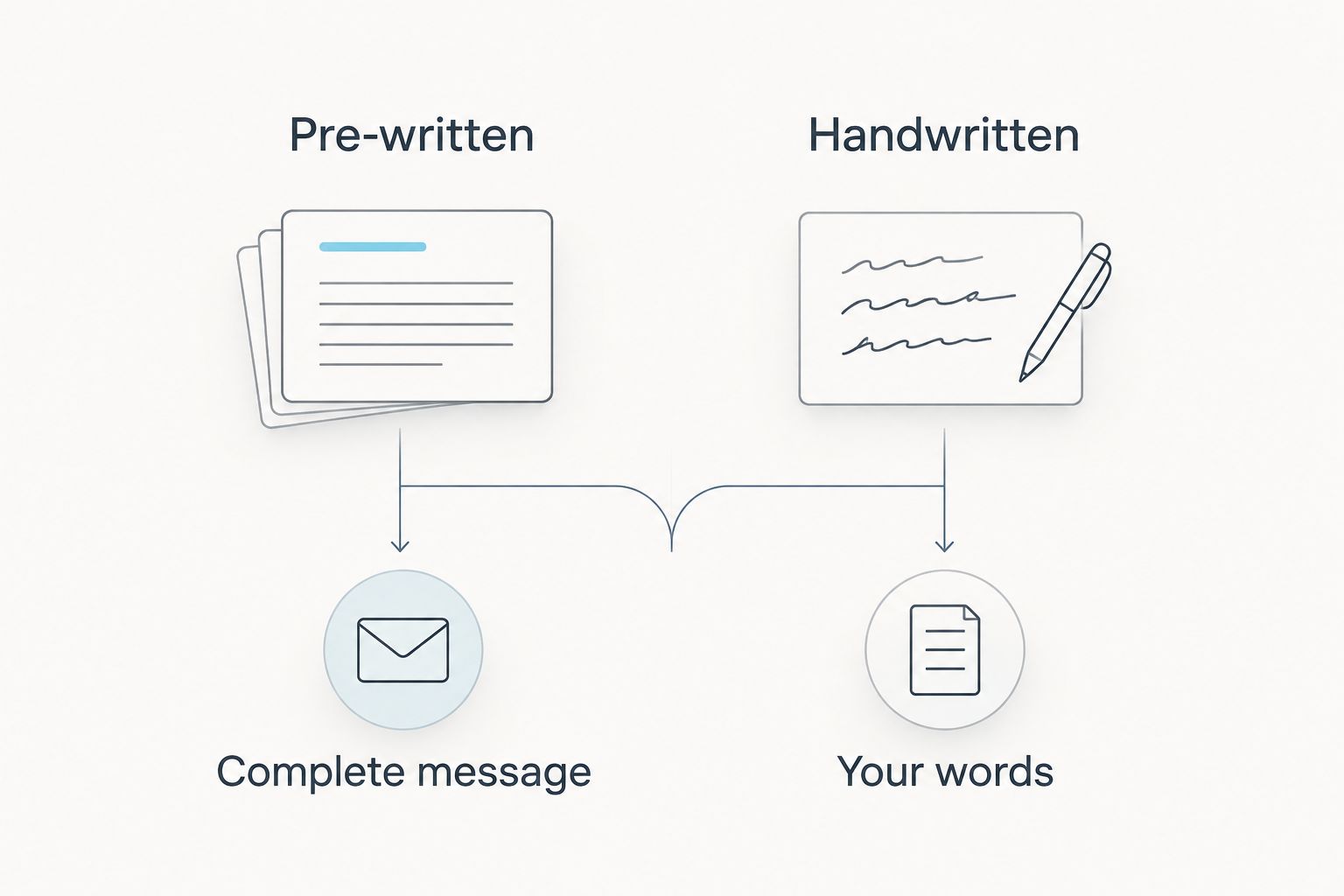
Dearlykept fits the pre-written message-card approach. Its stated format gives you jewelry, a sentiment card, and a gift box; it does not remove the need to check the card’s wording or the selected necklace’s details.
Common mistakes when gifting adoptive parents
Making adoption the recipient’s defining identity
An adoption-themed message is not automatically more thoughtful than a message about being a parent. Celebrate the person and relationship first. Include adoption only when the recipient welcomes that emphasis, rather than using it as the gift’s main source of emotion.
Writing gratitude on a child’s behalf
A gift from an adult should not require a child to express indebtedness. Avoid messages that tell the parent how grateful the child must feel. Say what you appreciate, or let the child contribute words they freely choose.
Describing family formation as rescue
Skip a card that casts the parent as a savior or reduces the child’s earlier life to a problem the gift celebrates solving. You can recognize care, commitment, and affection without making claims about anyone else’s experience.
Assuming every parent wants matching jewelry
Matching gifts work only when both recipients want them. Choose for each person’s style, parental title, and preferred message rather than assuming a pair needs identical necklaces. Equal thoughtfulness does not require identical objects.
Turning the gift into a public family announcement
A necklace presentation is not permission to publish a child’s name, image, or adoption details. Ask separately before sharing. If the gift depends on a public reveal to feel meaningful, simplify the presentation and let the recipient set the boundaries.
FAQ
What’s the best necklace for adoptive parents?
The best necklace for adoptive parents matches the recipient’s jewelry preferences and uses a sentiment they would welcome. Check the full card text, the intended sender, and the necklace details before choosing.
Should an adoptive parent’s necklace mention adoption?
Mention adoption only when the recipient welcomes that focus. A message about being a loved parent can recognize the relationship without referring to how the family formed.
Can I give an adoptive parent a necklace from their child?
Give a necklace from a child only when the message reflects the child’s willing participation. Otherwise, give it in your own name and describe your own appreciation rather than assigning feelings to the child.
Is a handwritten note better than a pre-written sentiment card?
A handwritten note is better when you need wording specific to your relationship; a pre-written card works when its complete message already fits. Read either version for assumptions, pressure, and clarity about who is speaking.
Does Dearlykept sell message-card jewelry?
Dearlykept sells necklaces and bracelets paired with a pre-written sentiment card and gift box. Check the selected item’s wording and details rather than assuming it is adoption-specific or customizable.
What should I check before buying a necklace as a gift?
Check the stated material, chain length, clasp, and complete sentiment. Confirm any personalization and packaging details for the selected item before ordering.
When should I give an adoptive parent a sentimental necklace?
Give the necklace on an occasion the recipient welcomes, or as a private expression of appreciation. Ask before marking an adoption-related milestone or presenting the gift publicly.
One last thing
Before giving your 2026 gift, cover the pendant in the listing image and read only the card. If the words feel wrong without the jewelry, the necklace does not fix them. Choose a message the recipient can simply receive, without having to explain, correct, or publicly perform a response.