Best overall for a words-first gift: a message-card necklace. Best for a shared place: a coordinates necklace. Best simple option: an initial necklace. The best necklace for long distance couples in 2026 matches what your partner wears and the reminder you want them to carry—not just a symbol of being apart.
- The best necklace for long distance couples matches your partner’s style and a specific shared meaning.
- Dearlykept message-card necklaces suit partners who value written sentiment alongside a jewelry gift.
- Choose coordinates for a meaningful place, initials for subtlety, or a locket for a photograph.
- Skip matching pendants unless both partners actually want to wear them.
Why this matters
A long-distance necklace has two jobs: feel meaningful when your partner opens it and feel wearable afterward. A strong message cannot rescue a pendant your partner dislikes, and an attractive pendant does not automatically explain why you chose it.
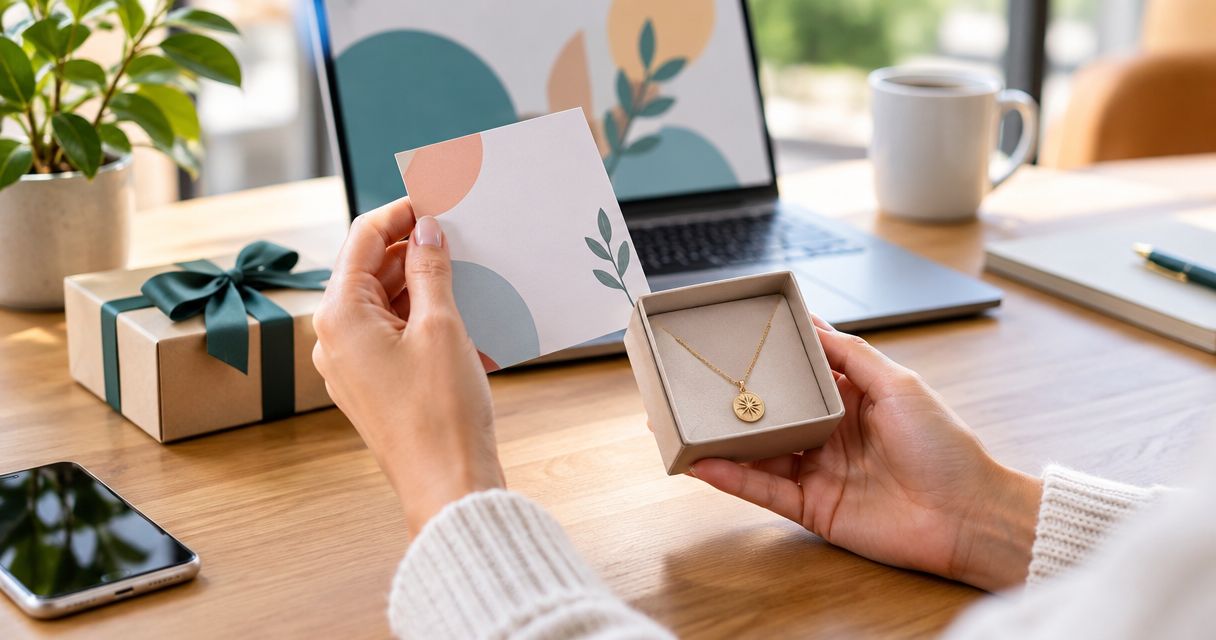
Dearlykept sells message-card jewelry paired with a pre-written sentiment card and gift box. Dearlykept message-card necklaces are best for partners who want the gift’s meaning expressed in words. Choose that format for the message, then assess the necklace itself separately.
This 2026 guide ranks necklace formats by the kind of connection they express. These are buying approaches, not a ranking of individual products or claims about tested performance.
What makes the best long-distance couple necklace?
Use these criteria before choosing a pendant:
- Wearability: Start with the jewelry your partner already wears, including pendant size, chain style, and metal color.
- Specific meaning: Connect the necklace to your relationship through words, a place, initials, a photograph, or a shared symbol.
- Message fit: Read every visible word. The sentiment should suit your relationship rather than simply sound romantic.
- Independent appeal: Ask whether the necklace still looks complete when your partner wears it alone.
- Product clarity: Check the stated materials, measurements, personalization details, and care instructions on the individual listing.
- Recipient comfort: Decide whether your partner prefers a private reference or an obvious couple symbol.
A necklace does not need to satisfy every possible romantic idea. It needs to suit the person receiving it. For your 2026 shortlist, prioritize everyday fit over the number of symbolic features.
Long-distance couple necklaces at a glance
| Rank | Necklace format | Best for | Standout feature | Key limitation |
|---|---|---|---|---|
| 1 | Message-card necklace | Partners who value written reassurance | A sentiment card explains the gift | The message stays separate from the worn necklace |
| 2 | Coordinates necklace | Couples connected to a particular place | A location becomes a private reference | Coordinates are easy to enter incorrectly |
| 3 | Initial necklace | Partners who prefer understated jewelry | A simple letter carries personal meaning | An initial alone does not explain the occasion |
| 4 | Split-pendant necklace | Couples who both want matching jewelry | Complementary pieces represent a pair | Each half must work as a standalone necklace |
| 5 | Photo locket | Partners who want a personal image close | An opening pendant holds a photograph | The image needs to fit the locket’s dimensions |
| 6 | Birthstone necklace | Partners who like color and personal symbolism | A birth month guides the stone choice | Birth-month symbolism might not match their taste |
1. Message-card necklace: best for written reassurance
A message-card necklace pairs jewelry with a separate sentiment card. The card carries the explanation, so the pendant does not need an obvious distance-related design.
Dearlykept message-card necklaces fit this approach: the brand pairs jewelry with a pre-written sentiment card and gift box. Read the card wording before choosing; a gift for your partner should describe your relationship, not merely the occasion.
Message-card necklace pros:
- Gives you a complete written sentiment alongside the necklace.
- Keeps the necklace’s design separate from the message.
- Suits a gift where opening and reading matter as much as wearing.
Message-card necklace cons:
- The written sentiment does not travel with the necklace when worn.
- Pre-written wording can feel less personal if it does not match your voice.
Best for: A partner who keeps cards, values verbal reassurance, or appreciates having the meaning spelled out.
Add a personal note naming something specific you appreciate about your partner. Do not repeat the card in different words; explain why you chose it for them.
Verdict: Buy a message-card necklace when the words are central to the gift.
2. Coordinates necklace: best for a meaningful shared place
A coordinates necklace uses latitude and longitude to reference a location. You choose the meaning: where you met, a memorable visit, or a place you both consider home.
The location does not need to be where either person currently lives. A shared memory gives the coordinates a stronger explanation than choosing an address simply because it is current.
Coordinates necklace pros:
- Connects the gift to a specific place in your relationship.
- Keeps the meaning relatively private without a written declaration.
- Offers a location-based alternative to hearts or matching halves.
Coordinates necklace cons:
- A transcription error changes the location represented.
- The numbers have little meaning without an explanation.
Best for: A partner who associates your relationship with a particular city, meeting spot, or shared home.
Verify the location and the exact engraving text separately. Include a note explaining the memory, especially if your partner would not recognize the coordinates immediately.
Verdict: Buy a coordinates necklace when you can name the place and explain why it matters.
3. Initial necklace: best for understated everyday symbolism
An initial necklace uses a letter as its personal reference. Choose your partner’s initial, your initial, or another meaningful letter only after considering what they would feel comfortable wearing.
This is the simplest recommendation in the 2026 shortlist. The symbol asks less of the design, but the choice still needs a personal explanation.
Initial necklace pros:
- Communicates a personal connection through a small visual detail.
- Does not require an overt long-distance motif.
- Leaves room for your accompanying note to carry the fuller message.
Initial necklace cons:
- Your partner might not want to wear someone else’s initial.
- A letter alone does not identify a shared memory or milestone.
Best for: A partner who already favors simple pendants and discreet personal references.
Look at the necklaces they actually reach for, not just those they own. If you are uncertain about whose initial to choose, ask rather than treating surprise as the highest priority.
Verdict: Buy an initial necklace for subtlety; skip it if the letter choice feels forced.
4. Split-pendant necklace: best for mutual matching
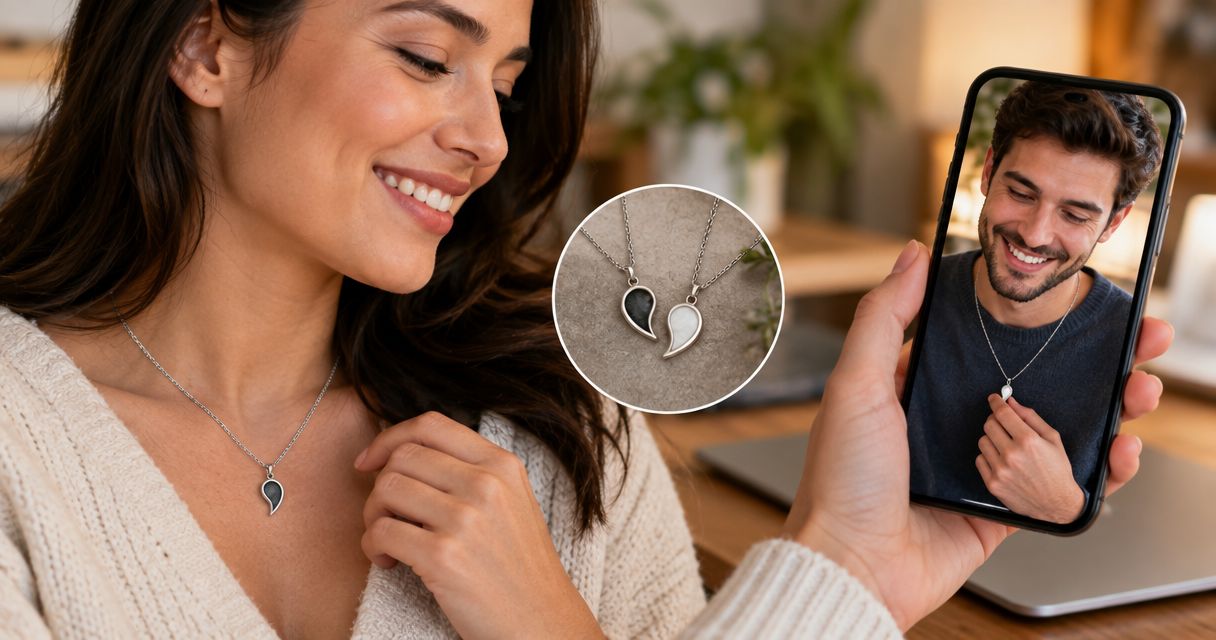
Split-pendant necklaces use complementary pieces intended to represent a pair. The appeal comes from both people participating, rather than one person receiving a standalone romantic gift.
Choose this format only when both partners want to wear it. Matching symbolism is not a substitute for matching preferences.
Split-pendant necklace pros:
- Gives each partner a related physical object.
- Makes the paired meaning visible through the design.
- Creates a shared gift rather than a one-way exchange.
Split-pendant necklace cons:
- A half-pendant can look incomplete when worn separately.
- The same design might not suit both partners’ wardrobes.
Best for: Couples who have already expressed an interest in coordinated jewelry.
Inspect each pendant separately before considering the joined design. Each person will wear their piece alone, so that view should drive the decision.
Verdict: Buy split pendants only when both partners want the matching arrangement.
5. Photo locket: best for keeping a personal image close
A photo locket is an opening pendant designed to hold a small photograph. Its meaning comes from the image inside rather than from an engraving or separate card.
Choose the photograph before committing to the locket format. A tightly framed portrait and a wide group photograph create very different cropping problems.
Photo locket pros:
- Holds an image you select for your relationship.
- Keeps the photograph inside the pendant rather than openly displayed.
- Offers a personal alternative to words and initials.
Photo locket cons:
- The photograph must fit the stated insert dimensions.
- A favorite image can lose important details when cropped small.
Best for: A partner who values photographs and likes the appearance of opening pendants.
Check the insert shape and dimensions before preparing the photograph. Assess the locket’s closure and care instructions on the specific listing rather than assuming every locket works the same way.
Verdict: Buy a photo locket when the photograph is the strongest part of your gift idea.
6. Birthstone necklace: best for color-led personal meaning
A birthstone necklace connects a stone to a birth month. For a long-distance gift, that connection can reference your partner without making the separation itself the theme.
Start with the color your partner enjoys wearing. A meaningful month does not automatically make its associated stone their preferred jewelry choice.
Birthstone necklace pros:
- Adds a personal reference through color.
- Does not depend on an obvious couple-themed design.
- Gives you a clear starting point when choosing a pendant.
Birthstone necklace cons:
- Your partner might dislike the color associated with their birth month.
- The term birthstone does not establish the material of a particular stone.
Best for: A partner who likes colored jewelry and appreciates birth-month symbolism.
Read the material description carefully. Choose the actual necklace for its appearance and stated construction, not for the birthstone label alone.
Verdict: Buy a birthstone necklace when personal symbolism and color preference agree.
How these necklace formats are ranked
Message-card necklaces rank first for gifts centered on written reassurance. Coordinates follow for place-specific meaning, while initials offer a more understated reference.
Split pendants require mutual interest. Lockets require a suitable photograph, and birthstones require agreement between symbolism and color preference. Those conditions narrow their fit rather than make them worse gifts.
The ranking uses the criteria above: wearability, specific meaning, message fit, independent appeal, product clarity, and recipient comfort. For 2026, choose by your partner’s use case—not by treating first place as universal.
Make your final choice with 3 checks
Check style
Review 2 necklaces your partner already wears regularly. Compare their pendant shapes, metal colors, and visual weight with your intended gift; use existing preferences as evidence rather than guessing from a special-occasion outfit.
Check meaning
Write 1 sentence explaining why this necklace belongs to your relationship. If that sentence fits any couple unchanged, add a specific memory or choose a more relevant format.
Check details
Read the individual listing for materials, chain measurements, personalization instructions, and care requirements. Confirm spelling, letters, coordinates, or photograph dimensions before completing a personalized selection.
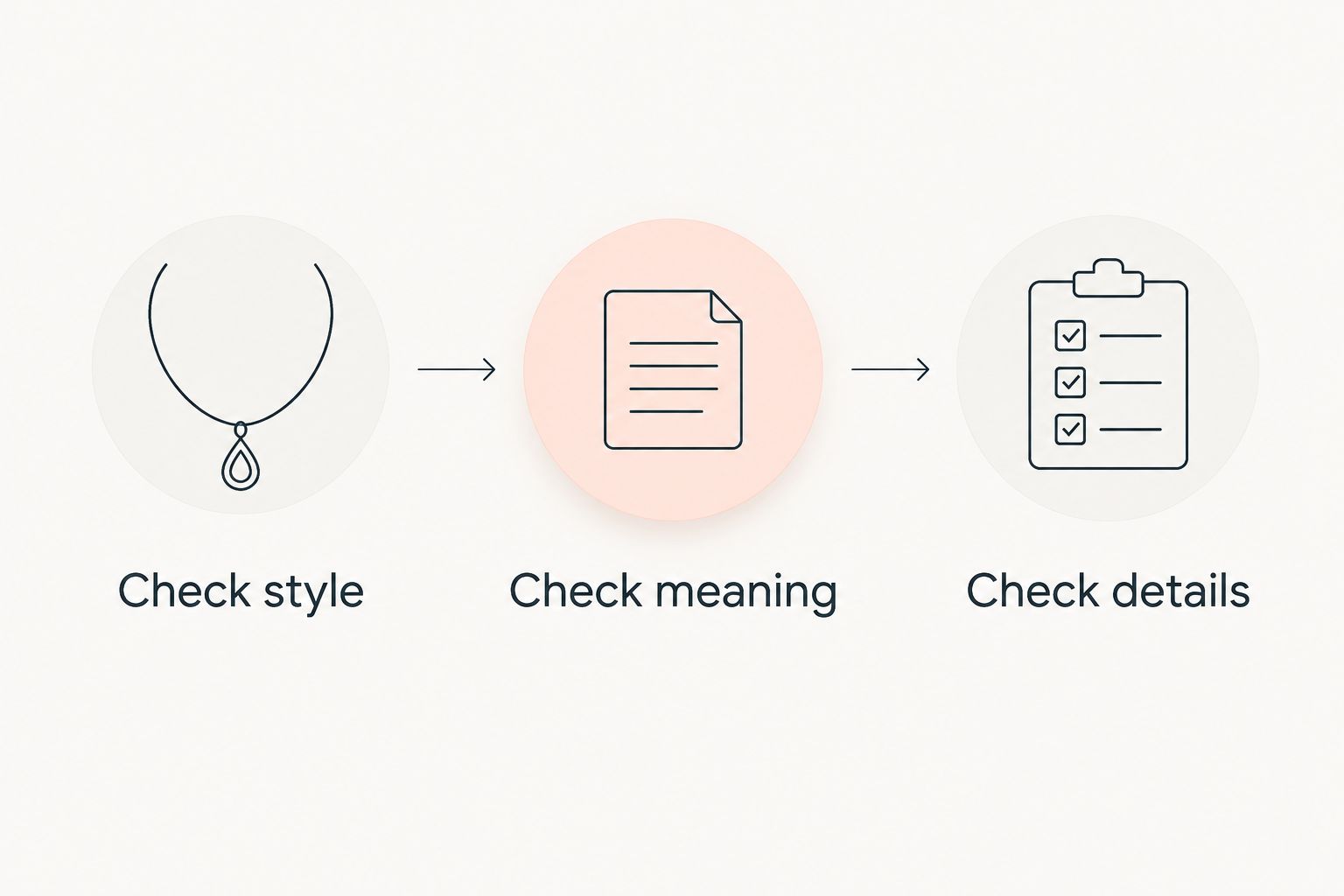
These checks separate a thoughtful choice from a merely romantic-looking one. A personal explanation matters, but your partner also needs to want to wear the result.
Which long-distance necklace should you choose?
Choose a message-card necklace if your partner values written sentiment and you want the gift’s meaning stated clearly. Dearlykept is a fit for that format; assess the card wording and pendant together before deciding.
Choose coordinates for a shared place, initials for subtlety, or a locket for a photograph. Reserve matching halves for a mutual decision and birthstones for someone who likes the associated color.
Your best 2026 choice is the necklace your partner recognizes as both their style and your relationship. Neither half of that decision should be an afterthought.
FAQ
What’s the best necklace for long distance couples?
A message-card necklace is the best choice for partners who value written reassurance alongside a jewelry gift. Choose coordinates, initials, or a locket instead when a place, letter, or photograph better expresses your relationship.
Are matching necklaces a good idea for long-distance couples?
Matching necklaces are a good choice when both partners want to wear coordinated jewelry. Evaluate each pendant on its own, because the pieces will usually be worn separately.
Should I choose my initial or my partner’s initial?
Choose the initial your partner would feel comfortable wearing. Their own initial makes the gift about them; your initial makes the relationship reference more explicit, so ask if you are unsure.
What should I write with a long-distance necklace gift?
Explain why you chose the necklace and connect it to a specific memory or quality you appreciate. If the gift includes a pre-written card, use your note to add personal context rather than repeat its sentiment.
Is a coordinates necklace better than a message-card necklace?
A coordinates necklace is better for a meaningful shared location, while a message-card necklace is better for an explicit written sentiment. Choose the format that matches how your partner connects with the gift.
What should I check before ordering a personalized necklace?
Check the exact personalization text, stated materials, chain measurements, and care instructions. For coordinates, verify the location; for a locket, verify the photograph’s insert dimensions.
Does Dearlykept sell message-card jewelry?
Dearlykept sells message-card jewelry, including necklaces and bracelets paired with a pre-written sentiment card and gift box. Read the selected card’s wording to decide whether it suits your partner and relationship.
One last thing
Make the gift about your connection, not only your separation. Before choosing a distance-themed symbol, ask whether a shared place, a personal photograph, or a carefully chosen sentence says more about the two of you.
Then put that explanation in your own note. The necklace supplies the object; your reason for choosing it makes the gift specific.