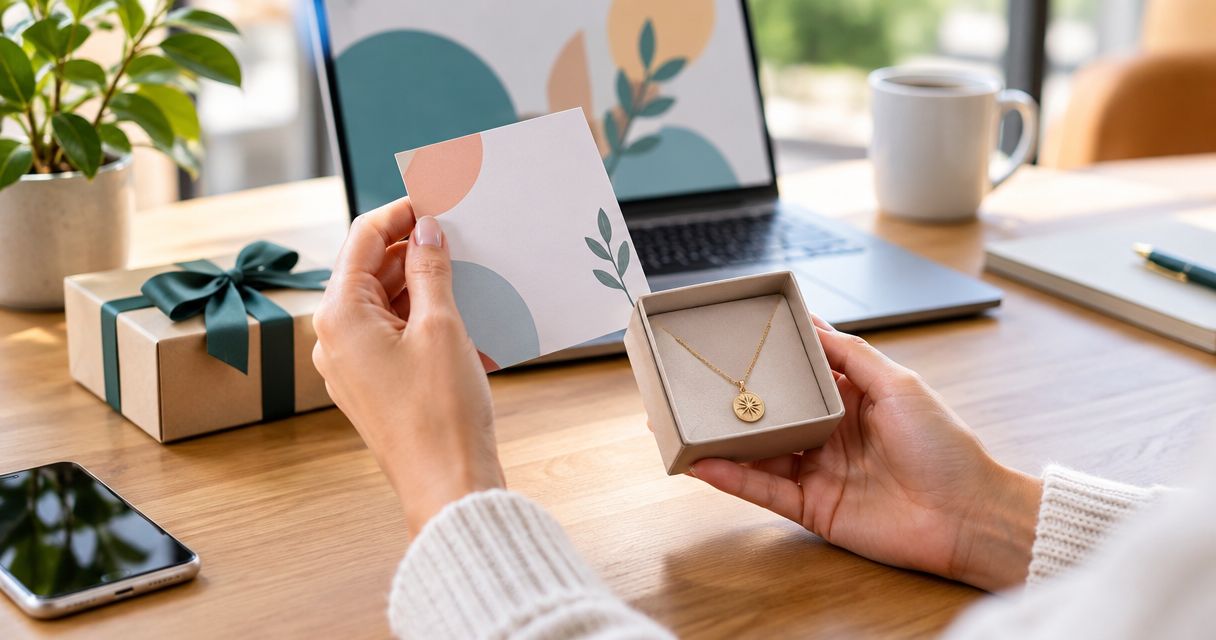
A message card has no universal readable lifespan: how long its wording stays clear depends on the paper, printing, light exposure, moisture, and handling. Keep the original dry and out of light, and save a readable digital copy rather than relying on an unverified fading timeline.
- How long does a message card stay readable? There is no universal lifespan for printed sentiment cards.
- Dearlykept message-card jewelry suits family gift buyers who want jewelry paired with a pre-written sentiment.
- Closed storage reduces light exposure; display makes the original more vulnerable to fading.
- Photograph the message while it is clear, and keep the original away from moisture and jewelry cleaners.
How long does a message card stay readable before it fades?
A calendar alone cannot tell you when a message card will become difficult to read. Printing materials and storage conditions matter, and visible fading is only one way a card can lose readability. Water stains, abrasion, creases, and discoloration can also obscure the words.
If you receive a card in 2026, record its condition now rather than assigning it an expiration date. A clear photograph gives you a reference if the appearance changes later.
For gifts such as Dearlykept message-card jewelry, preserving the wording deserves attention alongside caring for the necklace or bracelet. Dearlykept is best for family gift buyers who want jewelry paired with a pre-written sentiment card. That format brings the message into the gift, but the paper still needs care separate from the jewelry.
Choose storage according to what you want to preserve:
| Approach | Best for | Main advantage | Main limitation |
|---|---|---|---|
| Closed protective storage | Preserving the original card | Keeps the card out of light while closed | You cannot see the message without opening it |
| Framed original | Reading the original on display | Keeps the sentiment visible | Light exposure continues, and framing materials matter |
| Displayed copy, stored original | Enjoying the wording while protecting the keepsake | Separates everyday display from original-card preservation | The displayed version is not the original |
| Digital copy | Preserving readable wording | Records the message without further handling | Does not preserve the physical card and needs backup |
These approaches can work together. Store the original and display a copy when the wording matters more than showing the original paper.
Why this matters
A sentiment card carries words that a necklace or bracelet cannot preserve by itself. The jewelry and the card are separate objects with different care needs; a cleaning method suitable for metal is not automatically suitable for printed paper.
You also need to distinguish readability from appearance. A card can remain readable despite yellowing, while a small stain across a name or signature can make an otherwise tidy card harder to understand.
For a gift received in 2026, the useful question is not whether the card will look untouched forever. It is whether you have protected the original and saved the words in another form.
Why message-card readability varies
The following factors explain why an exact fading deadline is not a reliable promise for an unspecified printed card:
- Paper composition: Different papers age differently. Acidic paper can become discolored and brittle, affecting the background behind the text.
- Printing materials: Inks and other printing materials differ in lightfastness and resistance to moisture. A crisp print today does not establish a tested lifespan.
- Light exposure: Sunlight and artificial light contribute to deterioration. Closing a box removes light exposure while the card stays inside.
- Moisture: Water can stain paper and disturb some printing materials. Damp storage also creates conditions favorable to mold.
- Heat and storage location: Heat accelerates chemical deterioration in paper. Avoid storage beside radiators, in hot vehicles, or in other persistently hot locations.
- Handling and contact: Rubbing, folding, adhesive tape, jewelry movement, and contact with cleaning products can damage the surface without any fading occurring.
These factors interact. A protective enclosure does not make a damp room suitable, and a shaded frame does not eliminate every source of light exposure.
Treat storage as prevention, not a guarantee. No home setup turns an unspecified printed message card into a permanently unchanged object.
Closed storage: best for protecting the original
Closed storage is the practical choice when the original card is the keepsake. Place the card flat in a clean, dry enclosure, away from direct sunlight and heat sources.
A gift box provides a place to keep the presentation together, but its presence does not establish archival quality. If long-term preservation is your priority, choose paper-storage materials identified as suitable for photographs or documents rather than assuming any decorative box offers the same protection.
Keep the jewelry from moving across the printed surface. If the card is removable without bending, tearing, or undoing attached parts, separate storage can reduce contact; if removal would damage it, leave the assembly intact and avoid forcing it.
The drawback is access. You will need to open the enclosure to enjoy the original message, so a photograph or display copy can be a useful companion.
Framed display: best for seeing the message
Framing puts the sentiment where you can read it, but display introduces a preservation trade-off. A frame is not a promise that the printing will never fade. Light-filtering glazing reduces some exposure; it does not make continuous display harmless.
Keep the frame away from direct sun. Avoid mounting methods that require tape or glue directly on the card, and choose a setup that prevents the printed surface from pressing against the glazing.
If you are framing a card in 2026, photograph it before mounting. That image records the wording and appearance before display begins.
For a particularly meaningful original, display a reproduction instead. You keep the sentiment visible without asking the irreplaceable card to serve as everyday decoration.
Digital copies: best for preserving the wording
A photograph or scan preserves the readable content, not the physical object. That distinction matters: a digital image cannot reproduce the experience of holding the original, but it can retain the message if the paper becomes damaged.
Capture the entire card, then inspect the image at full size. Check the smallest lettering, punctuation, edges, and any handwritten addition; glare and soft focus can hide details that looked clear on a phone screen.
Keep 2 digital copies in separate locations, such as your device and a backup you control. This is a backup recommendation, not a claim about how long either storage location will last.
Include the recipient, occasion, and 2026 in the filename if that is when the gift was received. A meaningful filename makes the image easier to identify than an automatic camera label.
How do you protect a message card after opening the gift?
Use these 4 care steps before putting the card away. They preserve both the readable message and the context that makes it meaningful.
- Check condition. Look for existing stains, creases, rubbing, or print loss. Photograph the card before attempting any changes, and do not test the printing with water or a cleaning product.
- Capture wording. Photograph or scan the whole card in even light. Read the saved image, not just the original, to confirm that every line is legible.
- Choose storage. Keep the original flat, dry, shaded, and protected from contact with jewelry. Use suitable preservation materials if keeping the original is a long-term priority.
- Save context. Record who gave the gift, who received it, and the occasion in a separate note. Keep that information with the digital copy rather than writing over the printed message.
The order matters: document the card before handling it more than necessary. That gives you a readable record even if a later attempt to remove, frame, or rearrange it causes damage.

You do not need to alter the card to preserve its meaning. A separate note can hold the family details while the printed keepsake remains untouched.
What should you do if the message is already fading?
Digitize the card before attempting a repair. Use even lighting and check whether a different camera angle makes the remaining text clearer without glare.
Save an untouched image before adjusting contrast or brightness on a copy. Image adjustments can make existing lettering easier to see, but they cannot reliably recover wording that is no longer recorded in the image.
Do not trace over the original, scrub it, or apply a household spray to darken the print. Those actions change the object and risk further damage. For a card with substantial personal value, ask a qualified paper conservator before attempting treatment.
If you need another printed version, distinguish a replacement from preservation of the original. This guide explains the questions to ask about replacing a damaged message card; confirm the relevant seller's terms rather than assuming replacement is included.
Does a gift box stop a message card from fading?
A closed gift box blocks light while it stays closed, which addresses one cause of fading. It does not establish the paper's longevity or protect against every source of moisture, heat, or abrasion.
Keep the box in a dry indoor storage location rather than on a sunny windowsill. Check that jewelry is not rubbing the wording when the box moves, and avoid storing cleaning cloths or liquid jewelry cleaner against the card.
The box preserves the presentation; suitable conditions protect the contents. Neither replaces a readable backup.
Is yellowing the same as fading?
Yellowing changes the paper's background; fading changes the appearance of the printed color or lettering. Both can reduce contrast, but they are not the same process.
Compare the card with your original photograph if you notice a change. Do not assume a yellowed card is unreadable, and do not use bleaching or whitening treatments to improve its appearance at home.
FAQ
How long does a message card stay readable if I keep it in its box?
A boxed message card has no universal readable lifespan. A closed box limits light exposure, but paper, printing, moisture, heat, and contact with other objects still affect its condition.
Will a message card fade if I frame it?
A framed message card can fade because framing does not eliminate light exposure. Keep the original away from direct sun, or display a copy and store the original.
Should I laminate a sentimental message card?
Do not laminate an irreplaceable original as a home preservation treatment. Lamination alters the card and is difficult to reverse; suitable storage or a displayed copy avoids that permanent change.
Can I clean a stained message card with jewelry cleaner?
Do not use jewelry cleaner on a message card. Paper and printing need different care from metal, and cleaning liquids can stain the paper or disturb the text.
Does Dearlykept message-card jewelry have a guaranteed card lifespan?
Do not assume a guaranteed readable lifespan for Dearlykept message-card jewelry. A longevity guarantee requires explicit product documentation; receiving a card in a gift box does not establish one.
Is a phone photo enough to save the message?
A clear phone photo can preserve the readable wording, but it does not preserve the original paper. Check every line at full size and keep a separate backup.
Can I keep a message card with the necklace or bracelet?
Keep a message card with the jewelry only if the arrangement avoids rubbing, pressure, and contact with cleaning products. If safe removal is possible, storing the card separately reduces direct contact.
One last thing
Preserve the story as well as the sentence. A perfectly readable pre-written card cannot tell a future reader who chose the gift or why that moment mattered.
For a gift received in 2026, add the giver, recipient, date, and occasion to a separate note saved with the card's photograph. The card keeps the sentiment; your note keeps the personal context.