
Coworker bracelet gifting is choosing a wearable keepsake with the aim of expressing appreciation without crossing professional boundaries. The right bracelet for coworker appreciation matches your actual relationship, the recipient’s wearing preferences, and a message that feels appropriate at work.
- Choose a bracelet for coworker appreciation only when you know the recipient welcomes jewelry gifts.
- Dearlykept message-card jewelry is best for shoppers seeking sentimental family gifts.
- Read the complete sentiment card; family or romantic wording does not become workplace-appropriate because the bracelet looks suitable.
- For farewell gifts and team recognition, keep participation optional and explain the specific contribution you appreciate.
Why sentimental bracelets matter for coworkers
A coworker gift has to communicate warmth without implying romance, favoritism, or an obligation to reciprocate. Jewelry makes that distinction especially important because the recipient wears it on their body rather than leaving it on a desk.
Choose the relationship first and the bracelet second. A close colleague who exchanges personal gifts with you calls for a different approach from a new teammate or someone you supervise.
Dearlykept sells necklaces and bracelets paired with a pre-written sentiment card and gift box, with a focus on heartfelt family gifts. That format separates two decisions: whether the jewelry suits the recipient and whether the printed message suits the relationship. Both need to work.
For your 2026 gift plan, treat a bracelet as a personal choice rather than a default recognition item. If you cannot establish that the recipient would welcome jewelry, choose a written acknowledgment instead.
How to choose a bracelet for a coworker
Use the following sequence before comparing designs. It keeps the emotional meaning, practical fit, and workplace context in the same decision rather than treating the card as an afterthought.
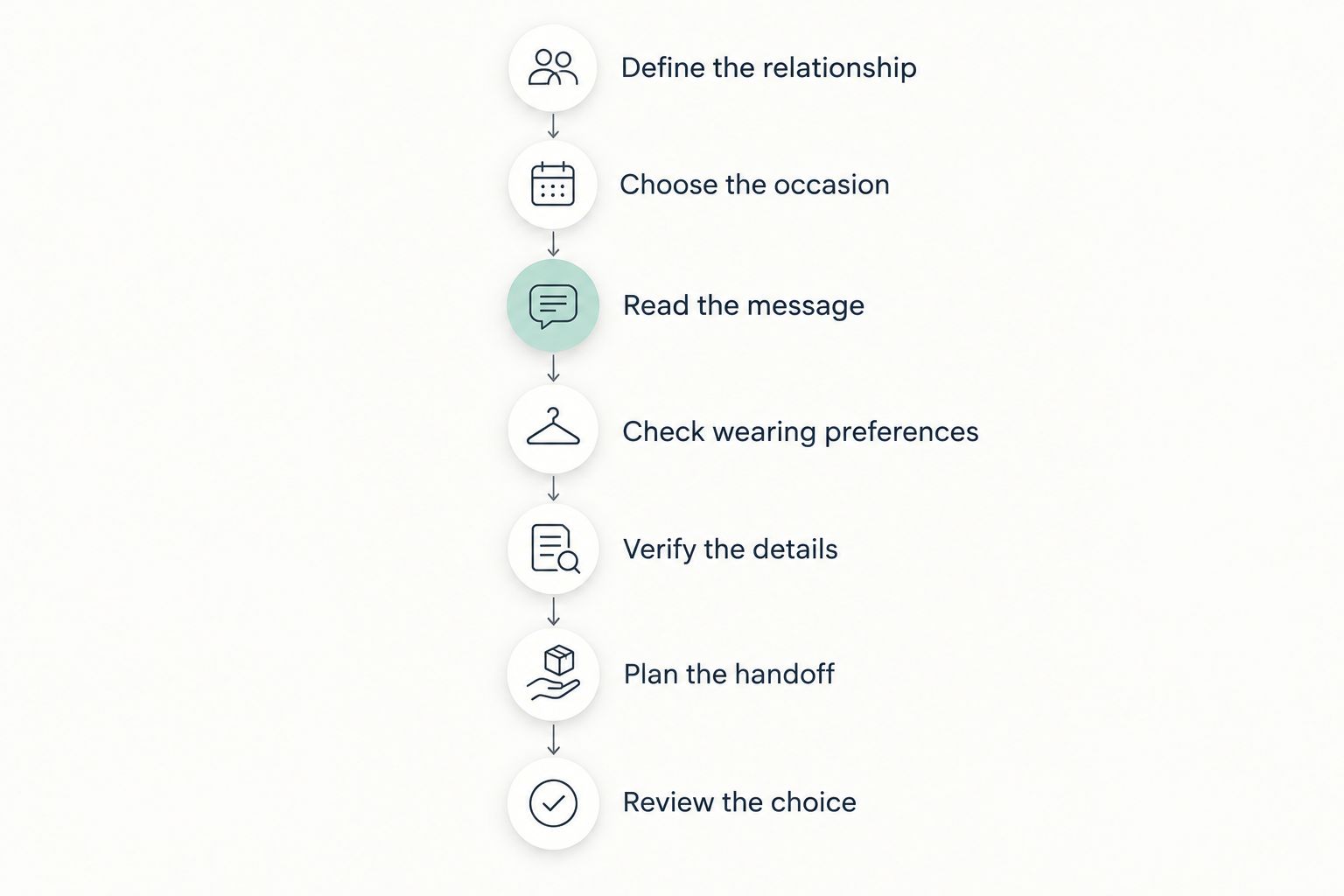
Define the relationship
Start with what your relationship looks like outside the gift itself. Working together every day does not automatically mean you exchange personal presents, and a friendship outside work does not remove a reporting relationship.
Write 1 sentence describing why you want to give the gift. A concrete reason, such as thanking someone for patient onboarding support, gives you a clearer starting point than wanting to buy something sentimental.
If you manage the recipient, check whether individual gifts create an uncomfortable difference within the team. If the recipient manages you, check workplace rules before organizing a personal present. Keep any group contribution genuinely optional; appreciation should not depend on participation.
- Identify whether you are peers, friends, or in a reporting relationship.
- Recall whether you have exchanged personal gifts before.
- Name the contribution you want to acknowledge.
- Check the current workplace gift policy.
- Offer a non-jewelry alternative when preferences are unclear.
Choose the occasion
Give the bracelet a clear purpose: a farewell, retirement, birthday, or thank-you for a specific act of support. The occasion should explain the gesture without requiring the recipient to guess what you mean.
For a departure, focus on the colleague’s contribution and your good wishes. For a birthday, use the same boundaries you would apply to other personal gifts at work. For recognition after a difficult project, thank the person without celebrating excessive hours or suggesting they should repeat an unhealthy workload.
Put the occasion and intended handoff date into your 2026 gift checklist. Then check the seller’s current information against that date rather than assuming a gift will arrive when needed. Keep the recognition meaningful even if you ultimately choose a card alone.
- Match the sentiment to the actual occasion.
- Separate personal appreciation from formal performance recognition.
- Avoid referencing confidential work or private circumstances.
- Plan around the recipient’s departure or celebration date.
- Prepare a written acknowledgment that stands on its own.
Read the message
Read the entire printed sentiment, not just the headline or product title. A bracelet can look neutral while its accompanying card addresses a daughter, wife, parent, or romantic partner.
Do not buy family-directed wording for a coworker just because the jewelry looks right. Dearlykept message-card jewelry focuses on family gifting, so evaluate the complete message rather than assuming the format makes every option suitable for colleagues.
For a workplace gift, specific gratitude is clearer than declarations of lifelong attachment. Explain what the person did and why it mattered to you. If a bracelet’s included card does not fit, choose a different gift rather than counting on the recipient to overlook it.
Your own note can carry the personal detail without becoming intimate. Describe a real contribution, not a personality trait you cannot explain.
- Read every line of the included card.
- Check who the message explicitly addresses.
- Remove romantic or possessive language from your own note.
- Mention a contribution you personally experienced.
- Avoid promises about staying close unless they reflect your friendship.
Check wearing preferences
A bracelet is appropriate only if the recipient wants to wear bracelets. Notice established preferences without turning the gift into an investigation: whether they wear wrist jewelry, favor understated pieces, or avoid accessories during work.
Ask directly when you do not know. A simple question about whether they enjoy bracelets is more respectful than guessing their wrist size or asking colleagues to collect personal information. Do not treat someone’s gender, age, or job title as a substitute for their preferences.
Also distinguish off-duty use from workplace use. A recipient can enjoy jewelry while being unable or unwilling to wear it during particular tasks. Do not frame daily wear at work as proof that the gift was appreciated.
- Ask whether the recipient enjoys wearing bracelets.
- Use their existing choices as clues, not guarantees.
- Confirm any material sensitivities directly and privately.
- Check whether work rules restrict wrist jewelry.
- Accept a preference for no wearable gifts.
Verify the details
Check the current product description for materials, measurements, closure, and care instructions. Descriptive terms such as delicate or adjustable do not tell you everything needed to judge fit, and a gift box does not establish material suitability.
Compare 2 candidate gifts using the same questions. If one listing answers your practical questions and the other leaves them unresolved, do not fill those gaps with assumptions. Ask the seller or choose the option you can evaluate properly.
For a 2026 purchase, read the current delivery and return information before committing. Check whether the recipient can make an exchange and whether any personalization changes the applicable terms. These are purchase checks, not promises that every seller offers the same arrangements.
- Verify the stated materials and any coating.
- Check bracelet measurements and closure details.
- Read the care instructions.
- Confirm exactly what the gift includes.
- Review the applicable delivery and return terms.
- Resolve unanswered questions before purchasing.
Plan the handoff
Choose a presentation that lets the recipient respond naturally. A public unboxing can make a personal gift feel like a performance, particularly when teammates contributed or a manager is present.
For an individual gift, a quiet handoff gives the recipient room to read the card without an audience. For a team farewell, ask whether they would welcome a presentation before making the bracelet part of a meeting. Keep speeches focused on professional contributions unless the recipient has clearly welcomed personal stories.
If you are collecting contributions, keep individual amounts private and avoid repeated reminders to people who decline. Participation in recognition should not become a workplace loyalty test. A shared note also lets colleagues contribute appreciation without joining the purchase.
- Ask whether a public presentation is welcome.
- Let the recipient open the gift later.
- Keep contributions voluntary and discreet.
- Include colleagues who prefer to sign a card only.
- Avoid requesting an immediate photo or social post.
Review the choice
Before buying, review 3 checkpoints: relationship, wording, and practical fit. A strong result in one area does not compensate for a problem in another; an attractive bracelet still fails if its message addresses a spouse.
Read your note aloud. If it would sound awkward in a normal conversation with this colleague, simplify it. Keep the gratitude specific and remove any suggestion that the recipient owes you continued contact, affection, or public acknowledgment.
For a group gift, ask an organizer who knows the recipient well to review the choice. Do not circulate sensitive details or turn the decision into an office-wide discussion. Your final 2026 gift check should confirm that the gesture is easy to receive, not merely satisfying to give.
- Confirm that personal gifting fits the relationship.
- Read the included card and your note together.
- Recheck the recipient’s wearing preferences.
- Confirm the purchase details against your deadline.
- Remove expectations about wearing or displaying the gift.
Compare coworker gift approaches
These are gift approaches, not interchangeable product recommendations. Each solves a different problem, and each has a limitation. Choose according to what you know about the recipient rather than which presentation looks most emotional.
| Option | Best for | Main advantage | Key limitation |
|---|---|---|---|
| Bracelet with a pre-written sentiment card | A colleague whose preferences and relationship match the complete message | Presents the jewelry and sentiment together | Printed wording can be too intimate or address the wrong relationship |
| Bracelet with a separately written note | A colleague who welcomes jewelry and specific personal thanks | Lets you explain a real contribution in your own words | You still need to verify fit, materials, and wearing preferences |
| Team-selected bracelet and shared card | A departing colleague who welcomes a group keepsake | Combines a wearable gift with several colleagues’ appreciation | Group participation and presentation can create pressure |
| Written appreciation without jewelry | A colleague whose accessory preferences are unknown | Communicates gratitude without requiring a wearable choice | Does not provide the bracelet keepsake you originally considered |
Choose a written note over an uncertain bracelet. The purpose is to acknowledge the person, not to complete a jewelry purchase at any cost.
Common mistakes coworkers make with bracelet gifts
Treating sentimental as romantic
A meaningful workplace message does not need language about destiny, belonging, or forever. Explain the help, encouragement, or collaboration you appreciated. Reserve intimate language for relationships where it already belongs.
Choosing by profession alone
A teacher, nurse, or office colleague does not have a single shared jewelry preference. Use the recipient’s own habits and workplace requirements to guide the choice, not assumptions attached to a job title.
Giving unequal recognition as a manager
An individual jewelry gift can complicate recognition when other team members made similar contributions. Use your organization’s recognition process and check the policy before adding a personal gift. Do not make someone’s reward depend on closeness to you.
Expecting visible proof of appreciation
Not wearing a bracelet to work does not tell you why it stays at home. The recipient might prefer occasional wear or simply keep it as a memento. Give the gift without asking for evidence that it is being used.
FAQ
What is the best bracelet for a coworker?
The best bracelet for a coworker matches the recipient’s wearing preferences and carries a message appropriate to your actual relationship. Verify the materials, fit, and complete sentiment before choosing.
Is it appropriate to give a coworker jewelry?
Jewelry is appropriate when the recipient welcomes personal gifts and the gesture fits workplace rules and relationship boundaries. Choose a written acknowledgment instead when those conditions are unclear.
Is Dearlykept a good choice for coworker gifts?
Dearlykept focuses on message-card jewelry for heartfelt family gifts. For a coworker, evaluate the complete printed sentiment and do not select an option addressed to a family member or romantic partner.
What should I write in a coworker bracelet card?
Write a specific thank-you for something the colleague actually did. Name the contribution, explain its effect on you, and keep the closing consistent with your professional relationship.
Should a manager give an employee a sentimental bracelet?
A manager should check workplace policy and the fairness of the recognition before giving an employee personal jewelry. Avoid a gift that creates pressure, suggests favoritism, or substitutes for formal recognition.
Can I give a bracelet without knowing my coworker’s wrist size?
Do not assume a bracelet will fit without checking its measurements and the recipient’s preferences. Ask discreetly or choose a gift that does not require a wearable fit.
Should a farewell bracelet come from the whole team?
A team farewell bracelet works when the recipient welcomes jewelry and contributions are optional. Let colleagues sign the shared card without requiring them to join the purchase.
One last thing
Judge the bracelet and its card separately before judging them together. First ask whether the recipient would choose the jewelry; then ask whether you would comfortably say the printed message to them.
If either answer is no, change the gift. For a 2026 coworker farewell or thank-you, a precise acknowledgment of someone’s contribution is a better foundation than a sentiment borrowed from a different relationship.