
Yes, a bracelet can be shortened for a child's wrist if its construction allows adjustment, link removal, or professional alteration. Fixed bangles and some decorated bracelets need a different approach, and shortening does not establish that adult jewelry is suitable for a child. This 2026 guide explains how to check the fit, identify the construction, and choose between adjustment, repair, and exchange.
- Can a bracelet be shortened for a child's wrist? Yes, when its construction supports adjustment or professional alteration.
- Dearlykept message-card jewelry suits sentimental gifting; assess child suitability separately from the message.
- Use an existing adjustment before considering permanent shortening.
- Keep loose jewelry parts away from children and ask a jeweler about unfamiliar closures.
Can a bracelet be shortened if it's too big for a child's wrist?
The construction determines whether shortening is practical—not the bracelet's original length. Look at the closure, the links, and any decorative centerpiece before deciding what to change. For a gift from Dearlykept, assess the actual bracelet rather than assuming a family-oriented message means the jewelry is designed for children.
| Bracelet construction | Possible shortening method | Best for | Main limitation |
|---|---|---|---|
| Adjustable chain | Use an intended shorter fastening position | A reversible fit change | Unused chain can still dangle |
| Linked bracelet | Have a jeweler assess removable links | Preserving the original bracelet | Not every link is designed for removal |
| Fixed chain | Have a jeweler assess shortening and closure reattachment | Keeping a sentimental chain | The alteration changes its original length |
| Stretch bracelet | Have a jeweler assess restringing with fewer beads | Keeping a beaded design | Cutting the elastic releases loose beads |
| Rigid bangle or cuff | Obtain a construction-specific assessment | Deciding whether alteration is appropriate | Bending or cutting can damage the piece |
These are construction categories, not promises that a particular bracelet is repairable. A jeweler needs to inspect the actual piece before confirming the method.
Why this matters
A bracelet that closes around a child's wrist is not automatically a suitable fit. Excess length can slide over the hand, while a dangling chain can catch on clothing or objects. An overly tight adjustment creates a different problem: pressure and discomfort.
For your 2026 gift checklist, separate sentiment from suitability. A meaningful card can remain a keepsake even when the accompanying bracelet needs professional attention or should be saved until the recipient is older.
Adjustable bracelets: try the intended setting first
Best for: a reversible adjustment without changing the bracelet. If the clasp has several intended fastening positions, test the shorter positions before considering an alteration. For a sliding closure, follow the item's adjustment instructions rather than pulling on decorative parts.
The advantage is reversibility. You preserve the original construction and can change the fit again later. The drawback is that moving the closure does not remove excess material: a long tail still needs assessment.
Do not assume every chain opening is a safe clasp attachment point. The clasp must close fully, and the selected attachment must be part of the intended fastening arrangement. If the closure sits awkwardly or catches against a centerpiece, stop and ask a jeweler.
A knot is not a substitute for a working closure. Do not tie a metal chain, add a household clip, or attach an improvised safety pin to make an oversized bracelet wearable.
Linked and fixed chains: ask before removing material
Best for: preserving a sentimental bracelet when professional shortening is feasible. A linked bracelet sometimes allows removal of individual links; a fixed chain requires a different repair approach. Neither construction should be treated as a simple cut-and-close job.
Ask the jeweler where material would be removed and how the closure would be reattached. On a bracelet with a central plate or decoration, the position of the shortening matters: taking material from only one side can change where the centerpiece rests.
Professional alteration has a clear benefit: it addresses excess length directly rather than leaving it hanging. Its limitation is permanence. Ask whether the removed section can be retained and whether restoring length later would be practical; do not assume either is guaranteed.
For your 2026 repair request, describe the desired result rather than prescribing the technique. Tell the jeweler that the bracelet is for a child, provide the wrist measurement, and ask for a fit and construction assessment before authorizing work.
Stretch bracelets: restringing is different from trimming
Best for: preserving a beaded design when a jeweler confirms it can be restrung appropriately. A stretch bracelet is held together by its stringing material, not by a clasp that can simply move to another position. Shortening generally involves assessing the whole strand and rebuilding it at a different length.
The benefit is that the bead arrangement can be reconsidered during the repair. The limitation is that removing beads changes the pattern, and the finished bracelet still needs suitable elastic, secure finishing, and a child-suitability assessment.
Do not cut an elastic bracelet while the child is wearing it or handling it. Cutting can scatter beads and other small components. Keep the bracelet intact and take it to a jeweler instead.
A tighter strand is not automatically safer. If getting the bracelet over the hand requires excessive pulling, the finished construction needs another assessment rather than more force.
Bangles and cuffs: do not squeeze them smaller by default
Best for: a professional assessment before any change in shape. A rigid bangle has a different fit problem from a chain bracelet: it must pass over the hand unless it has an opening or hinge. Reducing its circumference can prevent it from going on at all.
An open cuff is not automatically designed for repeated bending. Whether it tolerates adjustment depends on its material and construction. Decorative elements, joints, and surface finishes also need consideration.
The benefit of retaining an unaltered bangle or cuff is preserving its shape and details. The limitation is that an unsuitable size remains unsuitable. If a jeweler advises against alteration, choose an appropriate replacement or keep the piece as a stored keepsake.
How do you check the fit before shortening a bracelet?
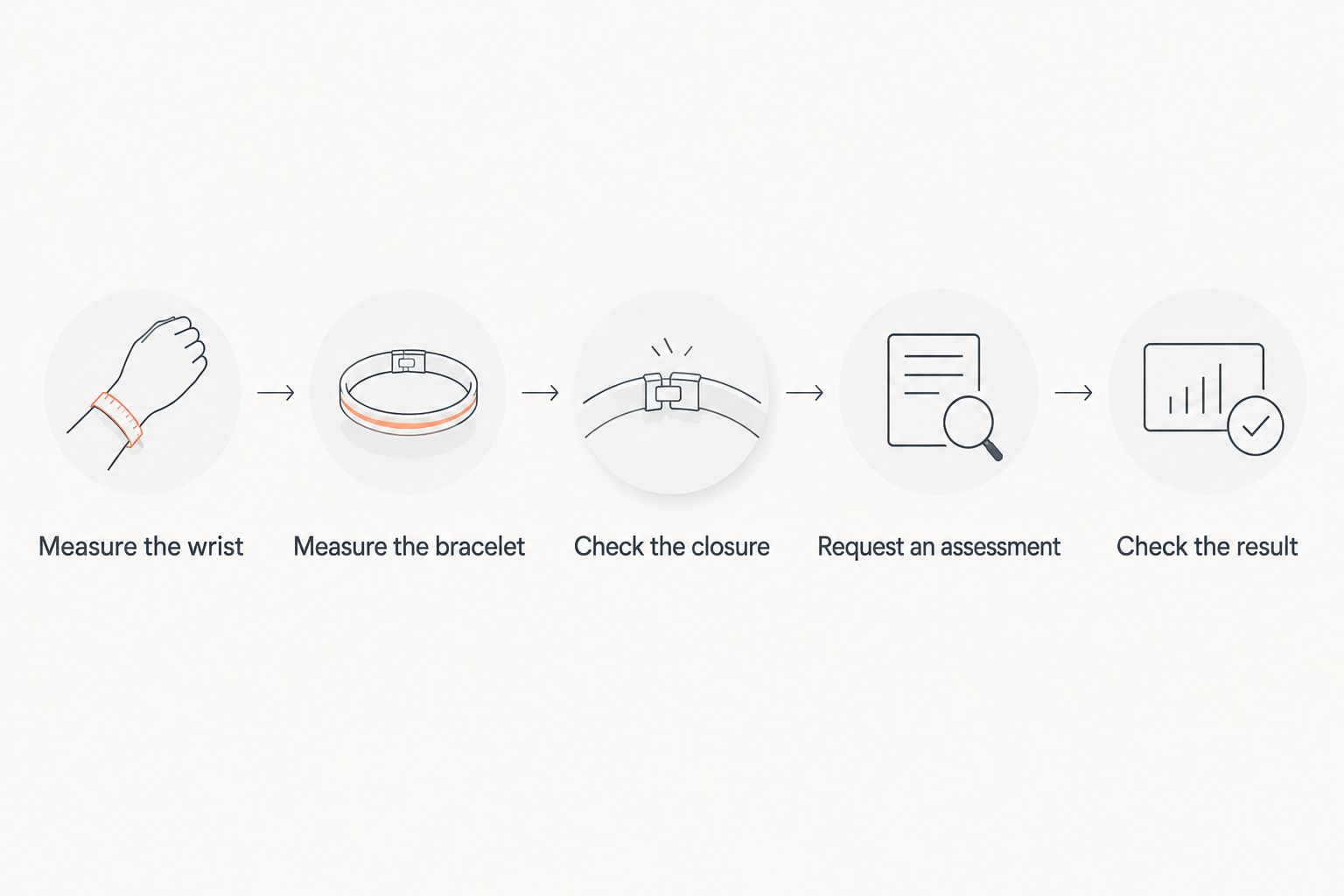
Use this 2026 fit check before requesting a permanent change. Measure first, inspect second, and let the construction determine the repair. Do not copy a fit allowance from an unrelated bracelet style.
- Measure the wrist. Place a flexible tape around the intended wearing position without pulling it tight. Keep the child's hand relaxed, and write down the measurement with its unit.
- Measure the bracelet. Record its usable closed length or intended adjustment range. Explain the measurement method to the jeweler, especially if a rigid centerpiece prevents the bracelet from lying straight.
- Check the closure. Confirm that the intended fastening position closes fully. Look for a long tail, awkward clasp placement, damaged components, or exposed rough areas.
- Request an assessment. Give the jeweler both measurements and explain that the intended wearer is a child. Ask whether the bracelet is suitable for that wearer before discussing shortening.
- Check the result. After any adjustment or repair, inspect the closure and fit again. Stop use if the bracelet causes discomfort, leaves persistent pressure marks, or slips off.
The sequence matters because a measurement alone cannot describe the clasp, the hand opening, or a rigid decoration. A jeweler needs that construction information alongside the size.
Keep the measurement units consistent
Record both measurements in the same unit. 1 inch equals 2.54 centimeters, and 10 millimeters equals 1 centimeter. These are unit conversions, not recommended clearances between a bracelet and a child's wrist.
A useful repair note identifies the wrist measurement, the bracelet measurement, and the construction. Avoid a request such as making it child-sized: that gives the jeweler no actual fit information.
Do not estimate wrist size from age alone. Measure the intended wearer, and ask the jeweler what additional fit information the particular bracelet requires.
Why bracelet-shortening options vary
The right method depends on the piece in front of you. These factors explain why an adjustment that works for one bracelet is wrong for another:
- Closure design: An intended adjustment position offers a different solution from a fixed fastening point.
- Link construction: Removable components differ from links that require repair work to open and reconnect.
- Material and finish: A jeweler must assess whether the proposed work suits the metal and its surface treatment.
- Decorative placement: A centerpiece, engraving, or bead pattern affects where material can be removed without disrupting the design.
- Wearer's needs: Wrist fit, hand size, comfort, and loose components all matter when assessing jewelry for a child.
- Future changes: A reversible adjustment preserves options that permanent shortening does not necessarily preserve.
In 2026, give the repairer the actual bracelet rather than relying on a photograph alone. A photograph helps explain your question, but it does not replace inspection of the closure, joints, and materials.
Is shortening better than exchanging the bracelet?
An exchange is the better starting point when a suitable smaller version exists and the seller's current terms allow it. Shortening becomes a separate decision when you want to preserve that particular piece and a jeweler confirms the work is appropriate.
Before authorizing an alteration, read the seller's current terms and check the questions to ask about exchanging a bracelet for another size. Do not assume that an altered item remains eligible for an exchange.
The sentimental message should not decide the mechanical question. Dearlykept message-card jewelry pairs jewelry with a pre-written sentiment card and gift box; that format does not establish a particular bracelet's child sizing or alteration method.
Can you shorten a child's bracelet at home?
Use only an adjustment the bracelet was designed to provide; leave cutting, link removal, and restringing to a jeweler. Household pliers and improvised closures can damage components or leave rough edges.
If you cannot identify the intended adjustment, stop. Bring the intact bracelet and your measurements to a jeweler instead of experimenting while the child waits to wear it.
Can a child grow into an oversized bracelet?
Keeping a bracelet for later is different from letting a child wear it loose now. Store an unsuitable bracelet rather than relying on future growth to solve a present fit problem.
Preserve the card and gift box with the piece if they matter to the recipient. Reassess the actual fit before future wear; age alone does not confirm suitability.
FAQ
Can any bracelet be shortened for a child's wrist?
No, not every bracelet can be shortened appropriately for a child's wrist. Construction, materials, closure design, and suitability for the intended wearer need assessment before alteration.
What's the best way to make an adjustable bracelet smaller?
Use the bracelet's intended shorter fastening position or adjustment mechanism. Check that the closure works fully and that excess chain does not create a dangling tail that needs attention.
Can a jeweler shorten a bracelet with a nameplate?
A jeweler can assess whether a nameplate bracelet can be shortened without disrupting its construction. Ask how the proposed change would affect the plate's position and any engraving.
Can I cut the elastic on a beaded bracelet to make it smaller?
Do not cut the elastic as a quick sizing fix. Shortening a stretch bracelet requires assessment of restringing, bead placement, and secure finishing, and cutting can release small parts.
How much extra room should a child's bracelet have?
The appropriate fit allowance depends on the bracelet's construction and the wearer. Provide the wrist measurement to a jeweler rather than applying a universal gap to chains, bangles, and stretch bracelets.
Does a family message mean a bracelet is made for children?
No, a family message does not establish child suitability. Check the bracelet's stated sizing and intended wearer separately from the sentiment printed on its card.
Should children wear bracelets while sleeping or playing sports?
Remove bracelets for sleep, sports, and activities where jewelry can catch or cause injury. Follow the item's care guidance and any school or activity rules.
One last thing
Ask what happens to the removed material before approving the repair. Keeping removed links or chain does not guarantee a future extension, but it gives the jeweler something specific to assess if the fit needs changing later.
For a sentimental gift, preserve the meaning without forcing the fit. Keep the message card and store the bracelet if wearing it is not appropriate yet.