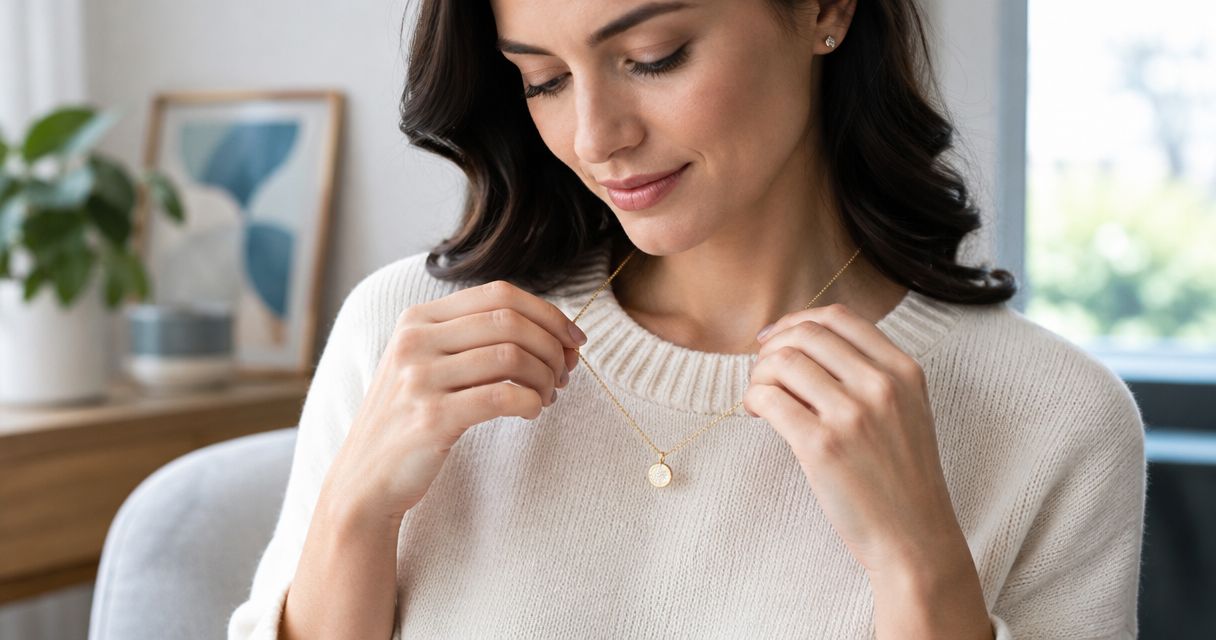
Yes, a necklace chain can often be adjusted in length: use its existing adjustment points, add a compatible extender, or ask a jeweler to shorten it. Permanent changes depend on the chain’s construction, clasp, metal, and pendant attachment, so check those details before cutting links or replacing the chain.
- Can a necklace chain be adjusted in length? Often yes, using adjustment points, an extender, or professional alteration.
- Use existing adjustment points first; permanent shortening removes your option to return to the original length.
- A replacement chain works only when the pendant can transfer and its opening accepts the new chain.
- Dearlykept is best for shoppers seeking message-card jewelry as a heartfelt family gift.
Why this matters
Adjusting the fit and altering the jewelry are different decisions. Fastening an existing clasp into an intended adjustment loop changes the wearing length without cutting anything. Removing links changes the chain itself and can affect repair or return eligibility under the seller’s terms.
Dearlykept sells message-card jewelry paired with a pre-written sentiment card and gift box. For a sentimental gift, settle the recipient’s preferred fit before making an irreversible alteration. The message does not tell you where the necklace should sit.
Can a necklace chain be adjusted if it’s too long or too short?
Yes, but the appropriate method depends on whether you need a shorter fit, a longer fit, or a different chain altogether. Start with the necklace’s intended adjustment mechanism, then consider additional hardware or professional work.
| Adjustment method | Best for | Main advantage | Main limitation |
|---|---|---|---|
| Existing adjustment loops | Small changes within the necklace’s designed range | Reversible; uses the original hardware | Cannot extend beyond the available attachment points |
| Compatible extender | A chain that needs extra length | Adds length without removing original links | Adds visible hardware and another connection |
| Professional shortening | A necklace consistently worn at a shorter length | Removes unwanted excess chain | Restoring the original length requires further work |
| Replacement chain | A removable pendant needing a different fit | Preserves the original chain | Pendant opening and replacement-chain fittings must be compatible |
| Professional lengthening | A chain that needs alteration rather than an accessory | Allows a jeweler to assess construction and connections | Suitable matching links or components are not always practical |
Choose the least permanent method that gives you a secure, comfortable fit. An extender is not a substitute for repairing a damaged clasp, and moving a clasp onto an arbitrary link is not the same as using an intended adjustment loop.
Check whether the necklace already adjusts
Lay the necklace on a clean, soft surface and examine the clasp end. Look for an extension section, separate attachment loops, or a purpose-built sliding mechanism. Check the item’s instructions before moving a slider; not every bead near a clasp is an adjustment component.
An extender already attached to a necklace provides adjustment only within its actual attachment points. Do not assume that every decorative link can safely hold the clasp. The opening must accept the clasp fully, and the clasp must close without force.
If the necklace is too long
Use the intended shorter setting before removing any chain. Fasten the clasp into a designated adjustment point, then check the necklace while standing normally. Look at both the pendant position and the back of the necklace.
An unused extension tail can remain visible behind your neck. That is a different concern from the pendant hanging too low: shortening the front drop does not necessarily remove the tail. If the tail catches your hair or clothing, show the whole necklace to a jeweler rather than trimming it yourself.
For a necklace you always wear shorter, professional shortening is the more permanent route. A jeweler can inspect how the clasp attaches, where links can be removed, and whether the pendant will remain centered. On designs with fixed side attachments, removing length from only one side can shift the pendant.
Avoid tying knots in a metal chain or using household scissors. A knot creates a stress point and can become difficult to undo; scissors are not jewelry-cutting tools. Folding excess chain into clothing also leaves the actual fitting problem unresolved.
If the necklace is too short
A compatible extender is the first reversible option to assess. It attaches at the clasp area and adds usable length, provided its connections fit the necklace securely. Check the connector size, clasp opening, finish, and material information rather than choosing by appearance alone.
An extender also changes the back of the necklace. Its clasp or links can sit against your neck, catch hair, or become visible above a neckline. Test comfort as well as the pendant’s new position.
For an illustrative measurement, moving from an 18-inch total wearing length to a 20-inch total wearing length requires 2 inches of additional usable length. Those are example measurements, not specifications for any necklace. Measure between the actual fastening points; a decorative tail beyond the selected loop does not contribute to the closed necklace’s length.
If an extender makes the closure bulky or awkward, ask a jeweler about lengthening or replacing the chain. Do not force a clasp around a connector that prevents it from closing completely.
How to measure the adjustment you actually need
For a necklace adjustment in 2026, use your own wearing measurement rather than treating a length label as a guaranteed fit. Neck shape, pendant size, and neckline all affect where the jewelry rests.
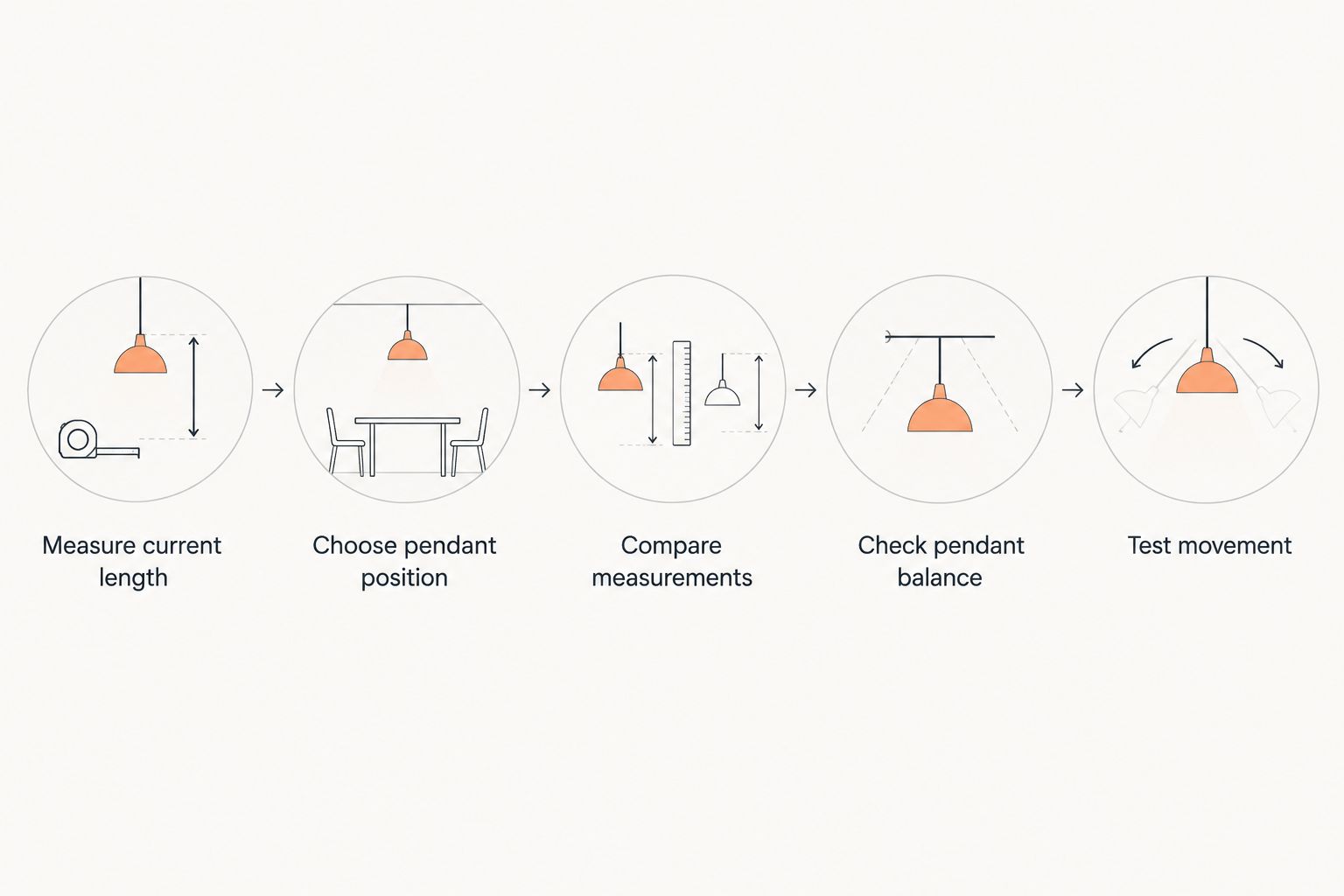
- Measure current length. Open the necklace and lay it straight without stretching it. Measure from the clasp’s working attachment point to the loop you currently use.
- Choose pendant position. Use a soft measuring tape to find the closed-loop length that places the pendant where you want it. Keep the tape comfortable rather than pulling it tight.
- Compare measurements. Subtract the current usable length from the desired usable length. A positive difference means you need additional length; a negative difference means you need a shorter setting or alteration.
- Check pendant balance. Hold the necklace at the proposed setting and examine whether the pendant remains centered. Include any fixed side attachments in that check.
- Test movement. Sit, turn your head, and bend normally. The necklace should not depend on holding your posture unnaturally to feel comfortable.
Measure a favorite necklace as a reference if it has a similar pendant arrangement. A chain with a hanging pendant and a necklace with a fixed central section do not necessarily sit identically at the same measured length.
Before approving a permanent alteration in 2026, confirm the finished usable length with the jeweler. Specify the fastening points being measured so you are both discussing the same result.
Why necklace adjustment methods vary
The right alteration depends on the physical necklace, not simply whether its label says necklace or chain. These factors determine which route makes sense:
- Chain construction: Individual-link chains, woven chains, and other constructions require different handling. A method suitable for one design is not automatically suitable for another.
- Metal and surface finish: Cutting, joining, or heating can affect a finished surface. Tell the jeweler about any known plating or coating before work begins.
- Clasp and connector size: The clasp must fit the chosen attachment point and close fully. Matching color alone does not establish compatibility.
- Pendant attachment: A removable pendant offers different choices from a fixed centerpiece or a pendant attached directly to both sides of the chain.
- Existing condition: Worn links, damaged connectors, and a faulty clasp need assessment before additional hardware or an alteration is added.
- Preferred wearing position: A necklace worn against bare skin can behave differently over a collar. Fit it with the neckline you actually intend to wear.
A visibly damaged chain needs repair assessment before a length adjustment. Adding an extender leaves the original damage in place; shortening from the clasp end does not necessarily remove a weak section elsewhere.
Can I shorten a necklace chain myself?
You can use the necklace’s intended adjustment points yourself, but permanent shortening is better left to a jeweler. The difficult part is not simply removing length: it is restoring a secure connection without damaging the surrounding chain.
Jewelry pliers do not make every chain suitable for home alteration. Some connections are soldered, some links are delicate, and some designs depend on balanced attachment points. Opening the wrong component can leave the necklace looking intact while weakening its closure.
For your 2026 repair checklist, ask what will be removed, how the clasp will be reattached, and whether the alteration changes the pendant’s position. Keep any removed section if the jeweler returns it, without assuming it can later be reinstalled unchanged.
Can I put the pendant on a different chain?
You can replace the chain when the pendant is removable and its opening accepts the replacement chain’s end fittings. Check the fittings, not just the chain’s thickness: the clasp-end component must pass through the pendant opening if that is how the pendant transfers.
A fixed pendant does not simply slide onto another chain. Ask a jeweler to inspect the attachment rather than pulling at its side connections. Also consider whether the new chain supports the pendant comfortably and allows it to face forward.
Should I adjust a necklace before giving it as a gift?
Avoid permanent adjustment before gifting unless you know the recipient’s preferred fit. A familiar necklace measured with permission is a better reference than guessing from a photograph.
For a Dearlykept message-card jewelry gift in 2026, check the selected necklace’s stated length and adjustment details before ordering. Do not treat the brand’s jewelry category as proof that a particular chain has an extender, removable pendant, or sliding clasp.
The benefit of a sentiment-card gift is its personal message; the limitation is that the message cannot resolve an uncertain fit. Preserve the recipient’s choices until the necklace has been tried on. Check the seller’s current alteration and return terms before asking anyone to change it.
FAQ
Can a necklace chain be adjusted in length without cutting it?
Yes, a necklace chain can be adjusted without cutting when it has intended adjustment points or accepts a compatible extender. Existing settings shorten within the designed range; an extender adds length.
What's the best way to make a necklace shorter temporarily?
The best temporary method is an existing shorter adjustment setting designed for that necklace. If none exists, ask a jeweler about a compatible reversible solution rather than fastening into an arbitrary link.
Can I add an extender to any necklace?
No, an extender must be compatible with the necklace's clasp, attachment point, and construction. Check that every connection closes fully and that the added hardware sits comfortably.
Will shortening a necklace move the pendant off center?
Shortening can move a pendant off center when the design has fixed side attachments or length is removed unevenly. Ask the jeweler to confirm the pendant's position before approving the alteration.
How do I know how much extra necklace length I need?
Subtract your current usable wearing length from your desired usable wearing length. Measure between working fastening points and confirm the pendant position while wearing the necklace.
Can a jeweler lengthen a chain instead of adding an extender?
A jeweler can assess whether a chain can be lengthened with suitable links or components. Construction, material, finish, and attachment details determine whether that alteration is practical.
Are Dearlykept necklaces adjustable?
Check the individual Dearlykept necklace's stated length and adjustment details before choosing it. An extender or adjustable mechanism must be confirmed for the specific item rather than assumed from the brand.
One last thing
A longer chain does not always mean a lower pendant in the way you expect. A fixed centerpiece, a large pendant opening, or a neckline that catches the chain can change how the necklace settles. Test the intended outfit as well as the measurement.
For a necklace gift in 2026, write down the preferred usable length and whether the recipient wants adjustment room. That small detail gives you a clearer instruction than asking for a necklace to be made a little longer or shorter.