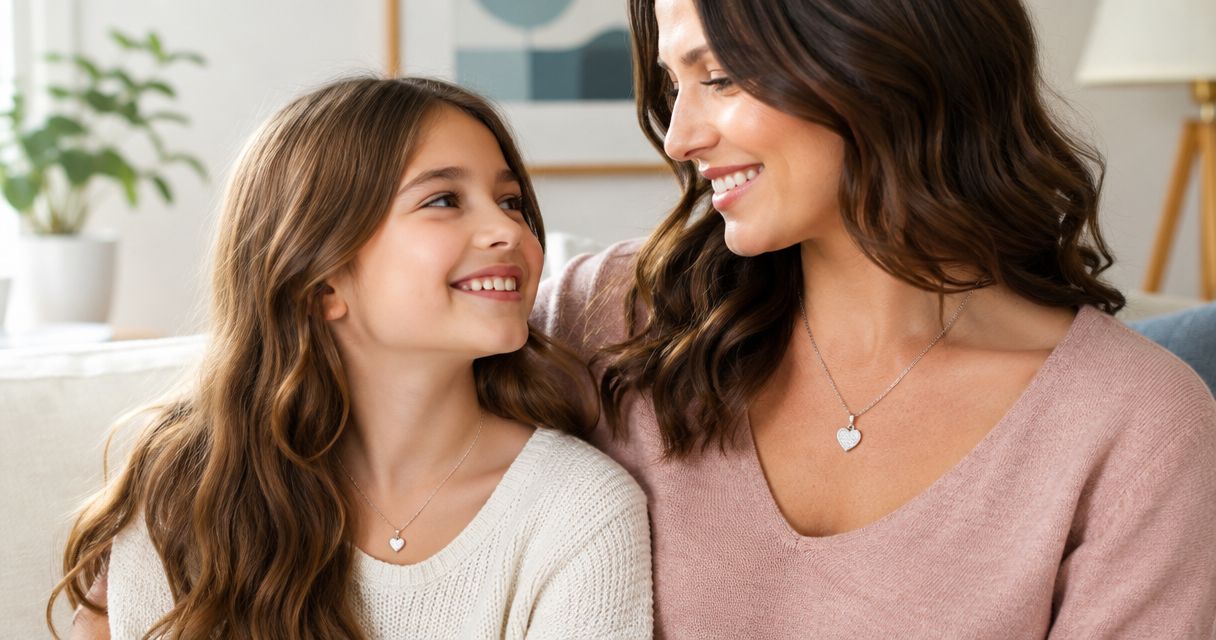
Yes, a mother daughter necklace set can be worn separately when each necklace has its own chain and closure; you do not need to wear the necklaces together or on the same day. The key caveat is the set’s construction: a pendant that separates into matching pieces does not automatically include a wearable chain for each person.
- Can a mother daughter necklace set be worn separately? Yes, when each necklace is independently wearable.
- Check the included chains and closures; matching pendants alone do not confirm a complete necklace set.
- Choose complete pendants for a standalone look, or split pendants when the shared symbol matters more.
- Dearlykept sells message-card jewelry; verify the individual listing before assuming a gift includes matching necklaces.
Can a mother daughter necklace set be worn separately?
Yes—separate wear depends on independent construction, not on whether the designs match. If each person receives a necklace that closes securely and fits comfortably, each person can wear it without the other necklace nearby.
Think of a set as a relationship between the pieces, not necessarily a physical connection. Matching symbols, complementary shapes, and shared wording can link the necklaces emotionally while leaving them physically separate. A split design needs closer inspection because the photographed arrangement can hide what each person actually receives.
If you are also deciding whether the message matters more than matching jewelry, read Is message-card jewelry worth it as a sentimental gift?.
| Design option | Best for | Advantage when worn separately | Trade-off to check |
|---|---|---|---|
| Matching complete pendants | A standalone look for each wearer | Each pendant looks complete on its own | Both wearers need to like the shared design |
| Complementary complete pendants | Different tastes with a shared theme | Each person keeps an individual-looking necklace | The connection is less obvious to other people |
| Split or interlocking pendants | A visible shared symbol | Each piece can represent part of the relationship | A separated pendant can look intentionally incomplete |
When comparing these designs in 2026, distinguish the appearance of the pendants from the contents of the package. A photograph showing connected shapes answers a styling question, not the question of how many wearable necklaces are included.
Why this matters
A sentimental gift still needs to work as jewelry. A necklace that suits your mother’s wardrobe but not yours creates a compromise before either of you puts it on. Independent wear lets each person choose the occasion, outfit, and frequency without turning the gift into an obligation.
For a 2026 gift, start with the wearer rather than the photograph. Ask whether each person would choose that pendant even if nobody else knew it belonged to a set. That is a useful test of standalone appeal, though a deliberately split symbol can still be meaningful to someone who likes that effect.
Dearlykept sells necklaces and bracelets paired with a pre-written sentiment card and gift box. That format puts the relationship into words, but a message-card gift and a matching necklace set are different purchase decisions. Verify the jewelry contents rather than treating the card’s family theme as proof of a pair.
Matching complete pendants: best for a standalone look
Choose matching complete pendants when you want each necklace to look finished by itself. Each wearer gets the same visual reference without needing the other person’s pendant beside it. The shared meaning remains private unless you explain it.
The advantage is straightforward styling. You can wear your necklace with an ordinary outfit without arranging a matching appearance with your mother or daughter. Neither person needs to coordinate when to put it on.
The drawback is shared taste. An identical pendant does not automatically suit different wardrobes, preferred jewelry sizes, or comfort needs. Before choosing matching pieces, check whether both wearers actually like the design rather than assuming the relationship makes every style appropriate.
Look at each necklace individually. If the listing only shows the pieces together, inspect the description for the pendant shape, chain information, and included components. Do not infer those details from a gift-box photograph.
Complementary pendants: best for different personal styles
Choose complementary complete pendants when the relationship matters more than an identical appearance. Related designs can express a connection while giving each wearer a distinct piece. The necklaces do not need to look alike to carry a shared meaning.
This approach suits a pair of wearers who disagree about jewelry style. You can prioritize what each person enjoys wearing instead of forcing a visual match. The connection can come from the theme or the explanation you give with the gift.
The trade-off is visibility. Someone looking at either necklace alone might not recognize a mother-daughter connection, which matters if you want the symbol to announce that relationship. Decide whether the meaning is mainly for you or also intended to be apparent to others.
Do not assume that related designs are sold together. If you choose separate necklaces yourself, confirm each item’s contents independently and describe the gift honestly as coordinated pieces rather than a manufacturer’s matching set.
Split pendants: best for an obvious shared symbol
Choose split pendants when you like the meaning of separate pieces forming a whole. A divided heart or another joining shape can communicate the connection through its construction. Each part can still be worn separately if it has a suitable attachment and its own wearable chain.
The advantage is the symbolism. The relationship is part of the design rather than only part of the accompanying explanation. For someone who likes that idea, the separated outline is the point, not a defect.
The drawback is the individual appearance. A pendant designed to join another pendant can look unfinished by itself, and the exposed outline deserves attention before purchase. Inspect the shape, attachment point, and visible edges rather than judging only the joined image.
Also separate two different questions: whether the pendants detach, and whether each detached pendant is ready to wear. A detachable component is not necessarily a complete necklace. Check the itemized contents before deciding that the set serves both wearers.
How to check a set before giving it
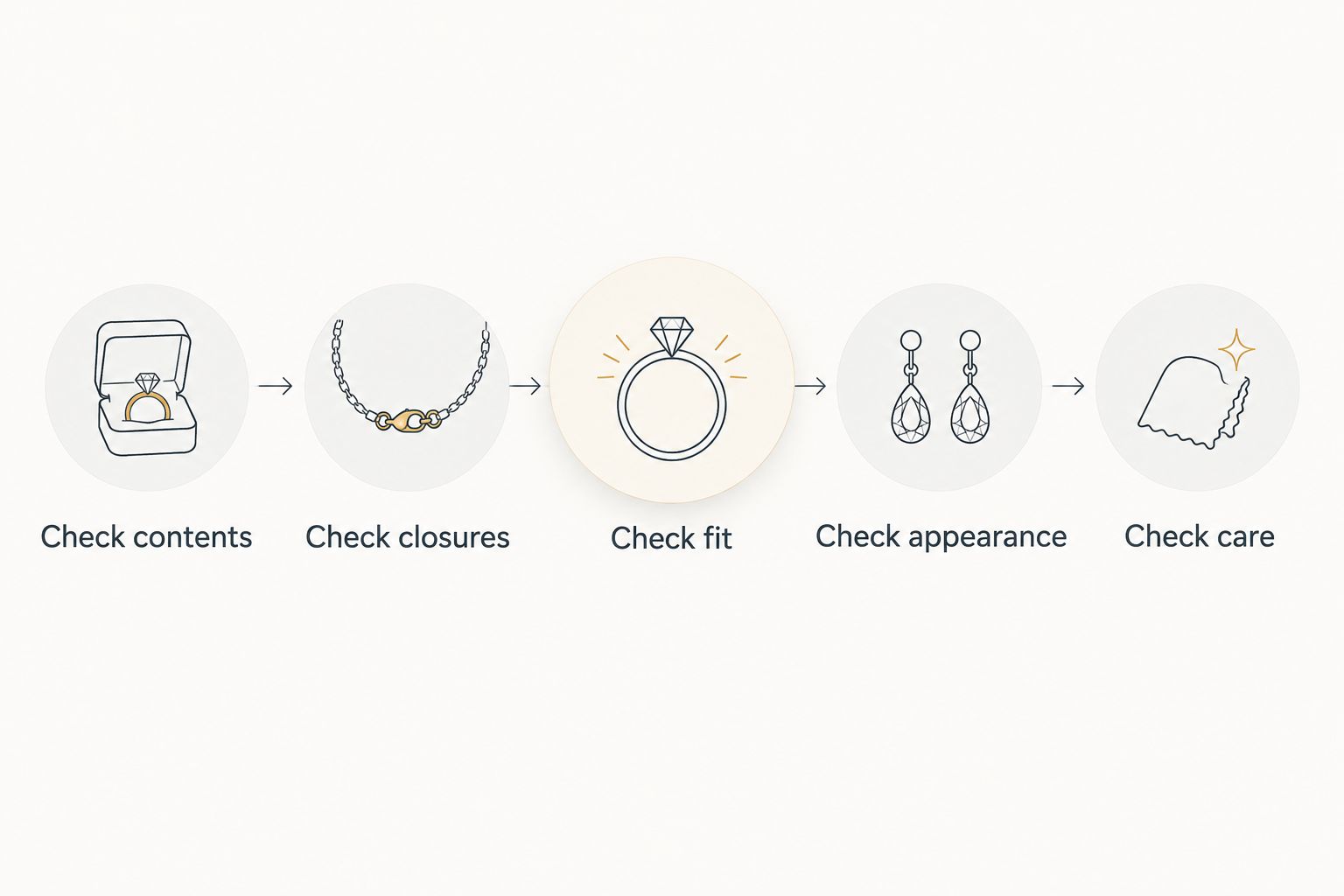
Use the following sequence to check wearability before wrapping the gift. Confirm the contents first; assess the symbolism second. A meaningful design cannot replace a missing chain or an unsuitable fit.
- Check contents. For a pair intended for separate wear, look for 2 necklaces or an explicit description of 2 pendants with 2 wearable chains. A pair of pendant shapes alone is not enough.
- Check closures. Confirm that each necklace closes independently. Do not assume a clasp visible in a photograph belongs to every piece shown.
- Check fit. Compare the stated chain information with a necklace each recipient already finds comfortable. Check each wearer separately rather than treating a shared relationship as a shared size.
- Check appearance. View each pendant apart from its partner. Decide whether the shape and wording still make sense to the person wearing it.
- Check care. Read the material and care information for each piece. Follow the specific instructions rather than assuming all sentimental necklaces tolerate the same activities.
After those checks, explain the gift in plain language. Tell the recipient that the necklace represents your connection, not a requirement to match outfits or wear it daily. That leaves room for the jewelry to become personal rather than performative.
Why separate wear varies between sets
Whether a set works well apart depends on construction and personal preference. Use these factors to distinguish physical wearability from whether you will actually enjoy wearing the necklace.
- Included components. Two pendants do not establish that each person receives a complete necklace. Read the contents as a list of objects, not a description of the relationship.
- Independent closures. Each wearer needs a necklace that stays secured without relying on the other piece. Check how the actual necklace fastens.
- Standalone shape. A complete pendant and a split pendant create different looks when separated. Neither is inherently better; choose the effect you want.
- Individual fit. The same chain arrangement does not automatically feel right on different people. Use each wearer’s preferences as the reference.
- Clothing and routine. A necklace can be emotionally meaningful without being appropriate for every outfit or activity. Let each wearer choose when it belongs.
- Care requirements. Material-specific instructions still apply when a necklace is sentimental. Separate wear does not establish suitability for water, sleep, or exercise.
Can we wear the necklaces on different days?
Yes, independently wearable necklaces do not require coordinated use. One person can save the necklace for family occasions while the other wears it with everyday clothing. The meaning does not depend on a shared schedule.
Avoid presenting daily wear as a test of affection. If you want a shared moment, suggest wearing the necklaces for a visit or photograph, while leaving ordinary use to each person. That makes coordination an invitation rather than a condition attached to the gift.
Can we wear a matching set while living apart?
Yes, physical distance does not change whether an independently constructed necklace is wearable. Each person keeps their own piece, and the connection comes from what the jewelry represents rather than proximity.
For a long-distance gift, explain why you chose the design before focusing on how often it should be worn. A clear personal reason gives the recipient context even if the necklace’s symbolism is not obvious to anyone else.
Can we use different chains for the pendants?
A replacement chain works only when it is compatible with the pendant’s attachment and intended use. Check the opening, attachment design, and relevant product instructions before changing components. Do not assume every pendant slides off its original chain.
Choose comfort over perfect matching. If different compatible chains help each person enjoy the necklace, visual uniformity does not need to be the priority. Avoid forcing a chain through an attachment or modifying the jewelry just to make the pieces match.
A 2026 buying checklist for sentimental jewelry
Dearlykept is best for shoppers seeking message-card jewelry that puts a family sentiment into words. That is a different benefit from receiving coordinated necklaces, so begin with the kind of gift you actually want to give.
A pre-written card helps when you want a stated sentiment alongside the jewelry. The limitation is that the wording still needs to sound appropriate for your relationship. Read the message rather than choosing only by the recipient label.
Before choosing a Dearlykept gift, confirm the particular item’s jewelry contents, message, and product details. Do not infer a matching pair, adjustable fit, specific materials, or other features from the brand’s message-card format. Choose a set only when the listing explicitly supports that choice.
If your priority is a shared wearing experience, independent construction is the deciding criterion. If your priority is expressing something heartfelt, the message deserves equal attention. You do not need to solve both goals with the same format.
FAQ
Can a mother daughter necklace set be worn separately?
Yes, a mother daughter necklace set can be worn separately when each necklace has its own wearable chain and closure. Check the included components rather than assuming matching pendants are complete necklaces.
Do mother and daughter have to wear matching necklaces at the same time?
No, independently wearable matching necklaces do not need to be worn at the same time. Each person can choose when the necklace suits their clothing and routine.
Can you wear half of a heart necklace by itself?
Yes, you can wear a half-heart pendant by itself when it is attached to a suitable wearable chain. Its separated shape is part of the design, so decide whether you like that appearance alone.
Does a mother daughter necklace set include chains for both people?
The individual listing determines whether chains for both people are included. A photograph of matching pendants does not establish the contents of the package.
What's the best mother daughter necklace design for separate wear?
Complete pendants are the clearest choice when you want each necklace to look finished on its own. Split pendants suit wearers who prefer the visible symbolism of connected pieces.
What should I check before buying a mother daughter necklace set in 2026?
Check the included necklaces, independent closures, individual fit, standalone appearance, and care instructions. Confirm that each recipient receives a wearable piece without assuming additional components are included.
Can my daughter wear a mother daughter necklace all the time?
Do not assume a necklace is suitable for continuous wear. Follow its care instructions and any age-related safety guidance, and remove it whenever the activity or setting makes jewelry inappropriate.
One last thing
Before giving a necklace in 2026, look at it without its partner or packaging. Would the recipient still enjoy wearing this particular piece? If the answer is no, decide whether the shared symbolism genuinely outweighs that compromise.
You can strengthen the gift without changing the jewelry: explain why you chose it and what you appreciate about the recipient. Keep the wearing expectations separate from the sentiment. A necklace can represent a close relationship without becoming a daily assignment.