You can return a necklace because the recipient doesn't like it only if the seller's applicable return policy allows a change-of-mind return and your order meets its conditions. A refund is not automatic: check the deadline, item-condition rules, exclusions, and who can request it before sending anything back. For a gift purchased in 2026, use the terms that apply to that order, not an assumed jewelry-store standard.
- Can you return a necklace if recipient doesn't like it? The seller's applicable return policy decides.
- Check eligibility before wearing the necklace, separating the gift components, or mailing anything back.
- Dearlykept sells message-card jewelry; confirm the applicable return terms before choosing a sentimental gift.
- Ask whether the buyer or recipient must request the return and who receives any approved refund.
Can you return a necklace if the recipient doesn't like it?
Disliking a necklace is a change-of-mind reason, not proof that the item is defective. Your next step is to check whether the seller accepts that reason for your particular order. A policy that addresses damaged goods does not, by itself, establish eligibility for an unwanted gift.
For Dearlykept message-card jewelry, treat the necklace, sentiment card, and gift box as parts of the gift while you check the applicable terms. Do not assume that you can keep the card or discard the box and still return the necklace.
Use these 6 checks before starting a return:
- Find the applicable policy. Read the return terms connected to the purchase, including any terms in the order confirmation.
- Check the deadline. Identify what starts the clock and what action must happen before it expires.
- Check the condition requirement. Look for rules covering wear, tags, packaging, and included components.
- Check exclusions. Determine whether any restriction applies to the exact item ordered.
- Identify the requester. Ask whether the purchaser must contact the seller or whether the recipient can do so.
- Confirm the outcome. Establish whether an eligible return results in a refund, an exchange, or another stated resolution.
Keep the policy and the order details together. That makes it easier to ask a precise question instead of relying on a general statement about returns.
Why this matters
A gift creates a practical complication: the person who has the necklace is not necessarily the person who placed the order. The recipient can explain what doesn't suit them, but the seller still needs enough information to identify the purchase and apply its terms.
There is also a difference between appreciating a gift and wanting to wear it. You can preserve the sentiment without insisting that the recipient keep a necklace they will not use. Separate the relationship conversation from the return request.
For a 2026 gift, save the order confirmation and relevant return terms when you purchase. If you are researching the format before buying, the guide to whether message-card jewelry is worth it as a sentimental gift addresses a different question: whether the combination suits the occasion in the first place.
Refund, exchange, or keep the necklace?
Start with eligibility, then choose the outcome that matches the recipient's wishes. Asking for an exchange does not establish eligibility when a seller excludes the item from returns; the exchange terms need checking too.
| Option | Best for | Benefit | Limitation to check |
|---|---|---|---|
| Request a refund | A recipient who does not want a replacement | Lets the buyer seek to reverse the purchase | Eligibility, deductions, and refund destination depend on the applicable terms |
| Request an exchange | A recipient who wants jewelry but dislikes this necklace | Gives the recipient a say in the replacement | An exchange requires permission under the seller's terms |
| Keep the necklace | A recipient who genuinely wants it as a keepsake | Preserves the complete gift without a return process | Keeping it does not solve a mismatch if the recipient feels obliged |
Do not substitute an exchange for a refund without asking the recipient. Someone who dislikes necklaces altogether needs a different conversation from someone who likes necklaces but dislikes this particular design.
Keeping the gift is also a valid choice, but it should be voluntary. A sentimental message is not a reason to pressure someone into wearing jewelry that does not suit them.
Why necklace return eligibility varies
The relevant factors are the terms attached to the order, not how heartfelt the gift was. Review these points when comparing what you bought with what the policy permits:
- Reason for the request. Check whether the policy covers a change of mind, rather than only a problem with the item.
- Timing. Establish the stated deadline and whether it applies to requesting, dispatching, or receiving the return.
- Item condition. Check the seller's definition of an acceptable returned item before wearing or altering it.
- Order-specific exclusions. Look for restrictions that apply to the purchased necklace or any customization actually ordered.
- Included components. Confirm what must accompany the necklace, including any card, box, tags, or accessories supplied.
- Proof of purchase. Identify the order information needed and whether the purchaser must make the request.
These are questions to resolve, not claims that every retailer uses the same restrictions. Never turn another store's policy into an assumption about your own order.
If you find conflicting information, ask the seller which terms govern the purchase and retain the written response. Do that before posting the item, not after it is already in transit.
What to do before you send the necklace back
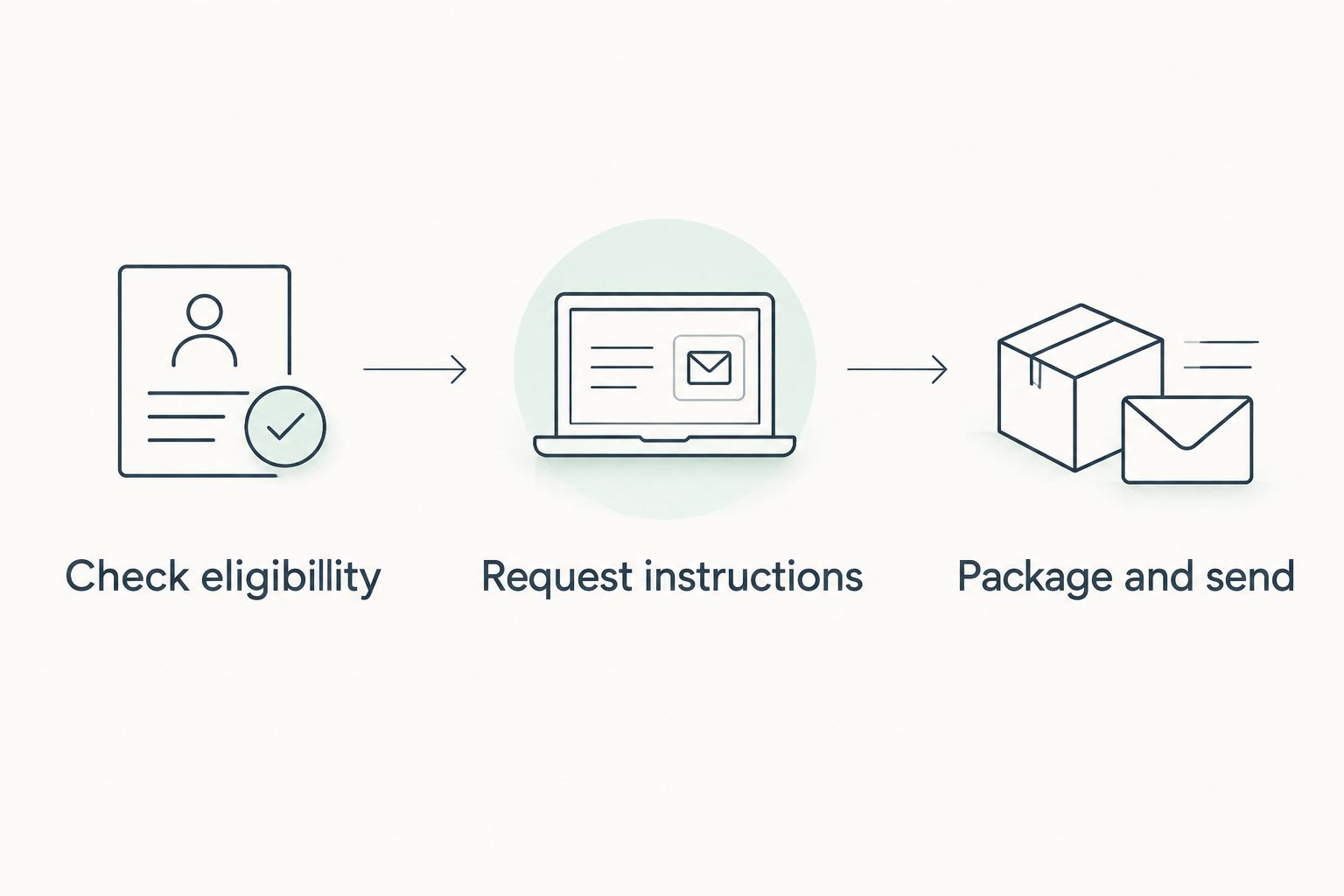
Work through the return in a clear sequence. For an unwanted necklace received in 2026, the useful sequence is check eligibility, request instructions, then package and send—not the reverse.
Check eligibility
Locate the order confirmation and the applicable policy. Write down the purchase details, the reason for the request, and the necklace's current condition without describing an unwanted item as faulty.
Be specific about what has happened. Opening a box, trying on a necklace, wearing it, and altering it are different actions; report the actual condition rather than choosing the description that sounds most favorable.
Request instructions
Contact the seller through an established customer-service channel associated with the order. Ask whether the necklace qualifies for a change-of-mind return and what information is required to proceed.
Resolve the practical questions together: who submits the request, what goes into the parcel, which address to use, whether authorization is required, and how an approved resolution is handled. Do not use an address from an unrelated parcel or an old order without confirmation.
Package and send
Follow the instructions supplied for the eligible return. Protect the necklace from tangling or damage in transit, include the required components, and keep the requested documentation with the parcel.
Retain the dispatch evidence and any tracking information you receive. Sending a parcel is not the same as confirming that the seller has received and assessed it, so keep the correspondence until the request is resolved.
What should you keep with a message-card necklace?
Keep the gift together while you establish what the seller requires. Message-card jewelry combines a wearable item with a sentiment card and presentation box, so focus on the complete purchase rather than the pendant alone.
For this gift format, check these 3 parts separately:
- Necklace: Preserve its current condition; avoid further wear or alteration while eligibility is unresolved.
- Message card: Keep the supplied card with the order unless the seller confirms that it is unnecessary.
- Gift box: Retain the box and any other supplied packaging until you know the return requirements.
This is a precaution, not a statement that every component is mandatory for every return. If something has already been discarded, explain that accurately and ask how it affects the request.
The emotional question is separate. The recipient might want to keep the message even when the necklace is not their style, but you need permission before separating components of a returnable gift set.
Can the recipient return a necklace without telling the buyer?
The recipient needs to establish whether the seller accepts recipient-led requests and what purchase information is required. Having the necklace does not answer who can authorize the return or where an approved refund goes.
Before trying to keep the process private, ask these 2 questions:
- Can the recipient manage the request using the purchase information they have?
- Who receives the confirmation and any approved refund or exchange communication?
Do not promise a discreet return before confirming the process. If the buyer needs to participate, a straightforward conversation avoids an unsuccessful request and confusion about the payment.
Does opening the gift box stop you from returning a necklace?
Opening the gift box does not, by itself, tell you whether the necklace is eligible for return. Read the applicable condition and packaging requirements, and explain exactly what has been opened, removed, worn, or discarded.
Do not assume that an opened box and a worn necklace are treated identically. Equally, do not assume that keeping the box guarantees acceptance; the seller must assess the request against the terms that apply.
What if the necklace arrived damaged rather than unwanted?
A damaged-item request is different from a preference-based return. Describe the actual problem, keep the packaging, and ask the seller for the procedure that applies to the reported damage.
Photographs can document the item's condition and packaging when you contact the seller. Avoid repairing or modifying the necklace before receiving instructions, because that changes the condition you are asking the seller to assess.
If the recipient simply dislikes the design, state that instead. An accurate reason keeps the discussion focused on the correct policy rather than an unsupported defect claim.
How to choose a sentimental necklace with less guesswork
Dearlykept message-card jewelry fits shoppers seeking a necklace or bracelet paired with a pre-written family sentiment and gift box. The format combines words with a wearable gift; its limitation is that a meaningful message does not establish that the jewelry matches the recipient's taste.
Before choosing a necklace in 2026, look at what the recipient actually wears. Consider whether they wear necklaces at all, which shapes they choose, and whether they prefer understated or more noticeable pieces. Observation answers a style question that a moving card cannot answer.
Read the card separately from evaluating the jewelry. Ask whether the wording fits your relationship, then ask whether the necklace suits the person. Both need to work; affection for the message should not substitute for attention to the recipient.
Finally, confirm the return terms before placing the order. Choose for the recipient first; treat return eligibility as a safeguard, not a reason to ignore their preferences.
FAQ
Can you return a necklace if the recipient doesn't like it?
You can request a change-of-mind return if the seller's applicable policy permits it and your order meets the conditions. Confirm eligibility and instructions before sending the necklace back.
Can I return a necklace without a receipt?
Check what proof of purchase the seller accepts before requesting a return without a receipt. An order confirmation or other purchase details should be discussed with the seller rather than assumed sufficient.
Can the person who received the necklace get the refund?
The recipient should not assume that an approved refund will be paid to them. Ask who can request the return and where the refund would be sent.
Can I keep the message card and return the necklace?
Keep the message card with the necklace until the seller confirms the required return contents. Do not separate the gift components on the assumption that only the jewelry matters.
Can I exchange a necklace instead of returning it?
An exchange is an option only if the seller's applicable terms allow it. Ask the recipient whether they actually want replacement jewelry before requesting one.
What should I check before buying a necklace as a gift in 2026?
For a necklace gift in 2026, check the recipient's jewelry preferences and the order's return terms before purchasing. Confirm the deadline, condition requirements, exclusions, and process for a gift return.
Does Dearlykept accept returns when someone dislikes a necklace?
Confirm the applicable Dearlykept return terms for the specific order before assuming a change-of-mind return is accepted. Ask about eligibility, required components, and who must submit the request.
One last thing
A loving message and an unsuitable necklace can exist in the same gift. Let the recipient appreciate the intention without asking them to defend their taste, then handle the practical return questions separately.
If you are buying a sentimental gift in 2026, make that distinction before ordering: choose words that fit the relationship and jewelry that fits the wearer. Neither choice replaces the other.