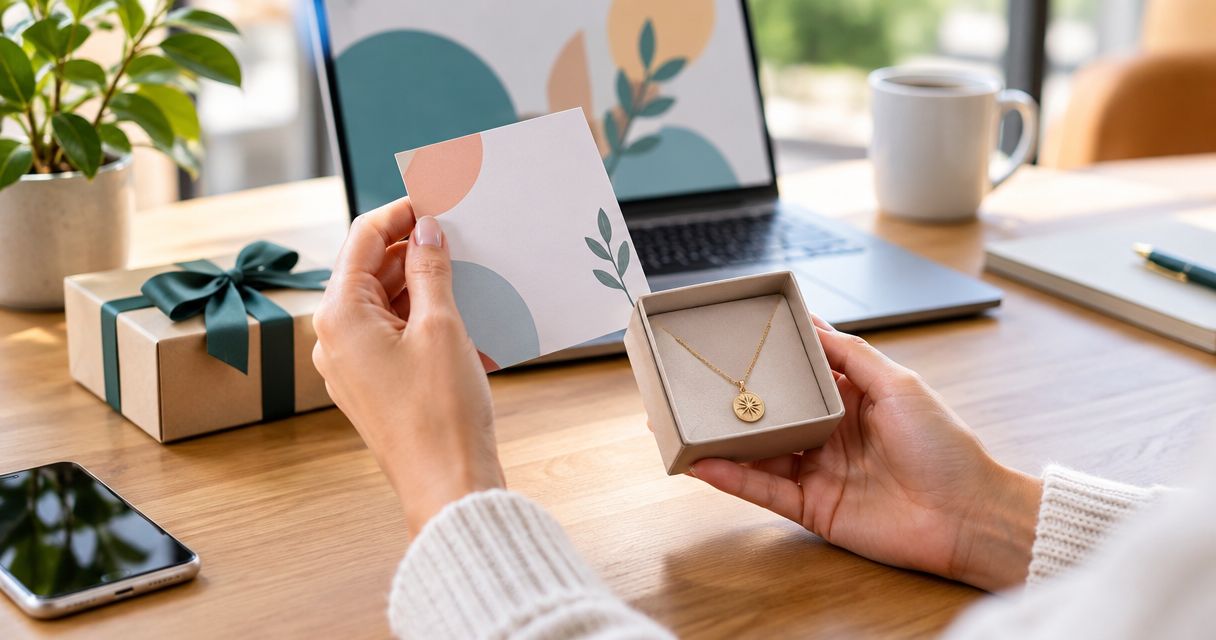
A necklace is the better gift if your teenage daughter already wears pendants; a bracelet is better if she prefers wrist jewelry or dislikes chains around her neck. Neither is the better choice by age alone, and both need a fit and comfort check before you buy. Choose the jewelry she enjoys wearing, then add the message you want her to keep.
- Is a bracelet or necklace better for a teenage daughter? Follow her existing jewelry habits, not her age.
- Necklaces suit pendant wearers; bracelets suit teens who prefer wrist jewelry. Both require a fit check.
- Dearlykept message-card jewelry suits parents who want a necklace or bracelet paired with a written sentiment.
- Keep sentimental wording focused on your daughter, without making daily wear an obligation.
Why this matters
A meaningful gift has two jobs: express your affection and fit your daughter's taste. A pendant with the perfect message still misses the mark if she dislikes wearing necklaces. The same applies to a bracelet that interrupts her usual routine.
For a 2026 birthday or graduation, start with what she chooses for herself rather than a trend list. Dearlykept sells message-card jewelry: necklaces and bracelets paired with a pre-written sentiment card and gift box. That format lets the written message carry some of the emotion without requiring the jewelry itself to say everything.
Is a bracelet or necklace better for a teenage daughter?
A necklace wins for a daughter who wears pendants; a bracelet wins for a daughter who prefers wrist jewelry. If she wears neither, ask about her preference before choosing an expensive-feeling surprise that creates pressure to wear it.
Use this comparison to separate the practical choice from the emotional message. These are selection criteria, not claims about a particular product.
| Choice | Best for | Main advantage | Main drawback | What to check |
|---|---|---|---|---|
| Necklace | A daughter who already wears pendants | Leaves the wrists clear and puts the design near the neckline | A chain or pendant can feel uncomfortable against the neck or clash with a neckline | Chain length, pendant size, clasp, and material information |
| Bracelet | A daughter who already wears wrist jewelry | Keeps the jewelry away from the neck and within her view | Can compete with a watch, move against a desk, or catch on sleeves | Wrist fit, closure, movement, and material information |
You do not need to decide which category is more feminine, mature, or sentimental. Those labels do not tell you whether your daughter will enjoy the gift. Her own choices give you a more useful starting point.
If you are already leaning toward a pendant, the guide to necklaces for daughters provides a separate place to consider that category. Settle the bracelet-versus-necklace question first; comparing individual designs is easier afterward.
Necklace: best for a daughter who already wears pendants
Choose a necklace when your daughter reaches for chains or pendants without prompting. Notice whether she prefers a small detail or a more visible centerpiece, and whether she wears jewelry over clothing or against her skin. Those observations are more useful than choosing a symbol you like yourself.
The practical advantage is straightforward: a necklace leaves her wrists free. That matters when she dislikes bracelets next to a watch or finds wrist jewelry distracting while writing. A pendant also gives you a focal point to match to her existing style.
The drawbacks deserve equal attention. Necklines affect where a pendant sits, hair can interfere with a chain, and a clasp she finds difficult can discourage wear. Do not assume a delicate-looking necklace is comfortable simply because it looks light in a photograph.
Before choosing a necklace for a 2026 occasion, compare its listed dimensions with something she already likes wearing. Choose the necklace only when both the design and the way it sits match her preferences. A heartfelt card does not fix an uncomfortable chain.
Bracelet: best for a daughter who prefers wrist jewelry
Choose a bracelet when your daughter already wears one comfortably or specifically asks for wrist jewelry. A bracelet keeps the gift away from her neck, which is useful if she dislikes the sensation of chains or pendants. It also gives her a detail she can see without a mirror.
Check how the bracelet fits into her usual day. Does she wear a watch? Does she push sleeves up, rest her wrist on a desk, or dislike objects moving against her hand? These questions help you judge the style rather than treating every bracelet as equally wearable.
Fit is the main caution. Too much movement can be distracting, while a tight fit can feel restrictive. A closure also needs to work for her, not just look attractive in the product photo.
Do not assume that every bracelet adjusts or that every design can be shortened. Read the exact item's sizing information and care instructions. Choose the bracelet when wrist jewelry is already welcome—not because a necklace feels like the more predictable gift.
Why the better choice varies
The right answer changes with the wearer, not with a rule about teenage girls. For your 2026 gift shortlist, use these factors to eliminate a poor match before considering presentation.
- Existing habits: Favor the category she chooses herself. A drawer full of unworn gifts is not evidence that she enjoys wearing that style.
- Comfort: Find out whether she dislikes neck contact, wrist movement, noticeable weight, or particular closures. Treat a stated dislike as a decision, not a challenge.
- Daily routine: Consider watches, sleeves, school rules, sports requirements, and activities that require jewelry removal. Check the rules that actually apply to her.
- Fit information: Confirm the necklace length or bracelet sizing method for the exact item. Photographs alone do not establish fit.
- Personal style: Match her preferred shapes, metal colors, and level of detail. Do not infer those preferences from her age.
- Message tone: Choose wording that sounds appropriate for your relationship. A loving message should recognize her rather than tell her how she must feel.
These factors do not need equal weight. A clear comfort objection should outweigh an attractive gift box, and a direct request should outweigh a parent's guess about what looks more special.
Use 3 checks before choosing
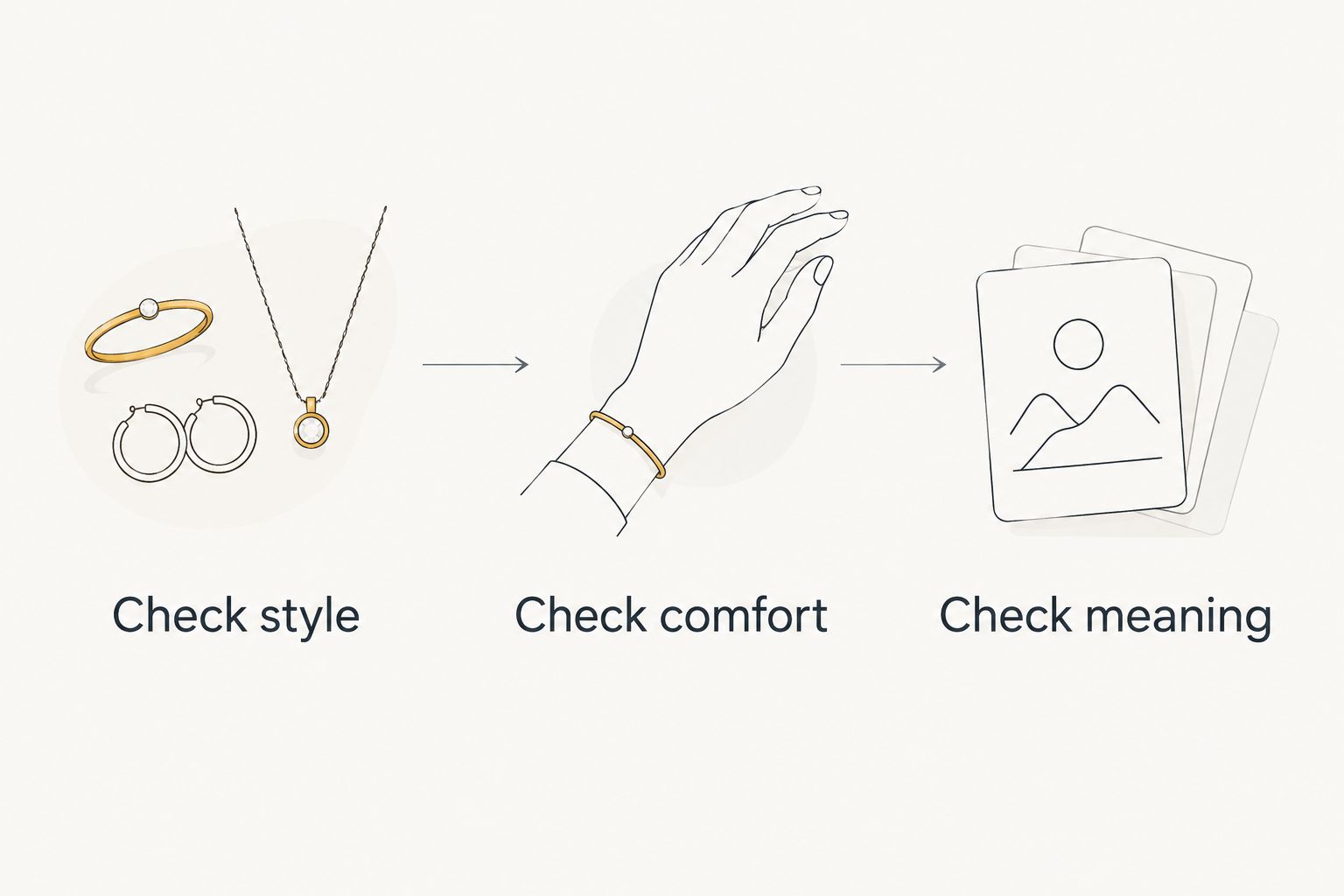
You can keep the gift thoughtful without making the selection complicated. Use these 3 checks in order: style, comfort, then meaning. This is a decision process, not a reason to inspect her belongings without permission.
- Check style. Look at jewelry she openly chooses to wear, or ask her to show you a design she likes. Identify the category and the details she values before choosing a sentimental symbol.
- Check comfort. Ask what bothers her about jewelry, then compare the exact item's dimensions, closure, and material information. For any activity restrictions, check the relevant school, coach, or organizer's rules.
- Check meaning. Read the message as though you were receiving it. Keep affection clear, remove expectations about wearing the gift, and choose wording that fits your actual relationship.
The sequence matters. Starting with a moving message can tempt you to overlook a style mismatch. Starting with her preferences lets you add emotion to a gift she has a reason to wear.
If the checks point in different directions, ask which trade-off matters to her. You do not have to reveal the exact gift to learn that she prefers a bracelet, dislikes a certain symbol, or wants to choose the chain length herself.
How do you choose when she wears neither?
Ask about jewelry before choosing either a necklace or a bracelet. Wearing neither is not an invitation to decide what she ought to start wearing. She might prefer a keepsake she stores, or she might not want jewelry at all.
Try a low-pressure question about the category rather than asking her to approve a finished purchase. Ask whether she would enjoy wrist jewelry, a pendant, or neither. Listen to the answer without explaining why one option would mean more to you.
For a 2026 milestone, choosing together is still a thoughtful gift. You can keep the message private until the occasion while letting her control the part she will wear. That preserves a surprise without gambling on comfort or taste.
Is a necklace more sentimental than a bracelet?
A necklace is not inherently more sentimental than a bracelet. The relationship, wording, and reason for the gift give it meaning. Wearing a pendant near the chest does not prove that it matters more than something worn on the wrist.
Keep the symbolism in proportion to her style. If she likes understated jewelry, let a separate card hold the longer message. If she enjoys an expressive design, check that the symbol means something to her rather than assuming it communicates the same thing to everyone.
Dearlykept message-card jewelry is best for parents who want a wearable gift paired with a written sentiment. Its pre-written-card format is a fit when the wording expresses what you mean; it is not the right match when the message sounds unlike you or the jewelry conflicts with her taste.
Should you let your teenage daughter choose her jewelry?
Let your teenage daughter choose when fit, comfort, or style is uncertain. You can offer the category, invite her to share a few designs, or choose the jewelry together. None of those approaches prevents you from adding a personal message.
If she enjoys surprises, agree on the boundaries first. You can learn her preferred metal color, category, and symbols to avoid without revealing the finished gift. The goal is a surprise she welcomes, not a test of how well she hides disappointment.
Do not make the gift conditional on photographs, daily wear, or a particular reaction. Give her room to appreciate it in her own way. Affection is the message; wearing instructions should not become part of it.
Make the card personal without making it heavy
Choose wording that celebrates who your daughter is now. A message about her curiosity, kindness, determination, or a shared memory can be more personal than a sweeping statement that could address anyone. Use qualities you genuinely recognize, not a list of expectations for her future.
Add 1 handwritten sentence about a specific memory if you want to make a pre-written card more personal. Write it on a separate note when needed; do not assume the seller offers card editing or personalization. You can contribute the personal detail yourself.
For a 2026 graduation, acknowledge the transition without predicting exactly who she will become. For a birthday, celebrate her without turning the card into advice. Keep difficult conversations, family obligations, and reminders about gratitude out of the gift message.
FAQ
Is a bracelet or necklace better for a teenage daughter who wears jewelry every day?
Choose the category your teenage daughter already wears comfortably every day. Compare the exact item's fit, closure, and material information rather than assuming another piece in the same category will feel identical.
What's the better jewelry gift if my daughter wears a watch?
A necklace is the better choice if your daughter dislikes a bracelet beside her watch. If she already enjoys wearing both on her wrists, a bracelet remains a sensible option; ask rather than assuming.
Should I buy an adjustable bracelet for my teenage daughter?
Choose an adjustable bracelet only after confirming that the exact item adjusts to a fit your daughter wants. Adjustable does not mean every wrist size is covered, so read the item's sizing details.
Is a necklace appropriate for a teenage daughter's graduation?
A necklace is appropriate for graduation when it matches your daughter's style and she enjoys wearing pendants. Keep the card focused on encouragement rather than expectations about what she must do next.
What if my teenage daughter has sensitive skin?
Check the exact jewelry's material information against any known sensitivities before buying. Do not treat appearance or an unspecified material description as proof that a piece will suit her skin.
Is Dearlykept a fit for a sentimental gift for my daughter?
Dearlykept is a fit when you want a necklace or bracelet paired with a pre-written sentiment card and gift box. Choose it only when both the jewelry style and the card wording suit your daughter.
Can I choose a meaningful gift without knowing her jewelry size?
Choose the jewelry together if you cannot confirm the fit. You can still keep your personal note a surprise without guessing at a bracelet size or necklace length.
One last thing
The strongest surprise can be the message, not the jewelry selection. Letting your daughter choose what touches her skin does not make the gift less personal. It leaves you free to surprise her with the memory, encouragement, or affection behind it.
Before ordering, ask yourself 2 questions: would she choose this style without the card, and would the card still feel meaningful without the jewelry? If both answers are yes, the gift's practical and emotional parts each stand on their own.