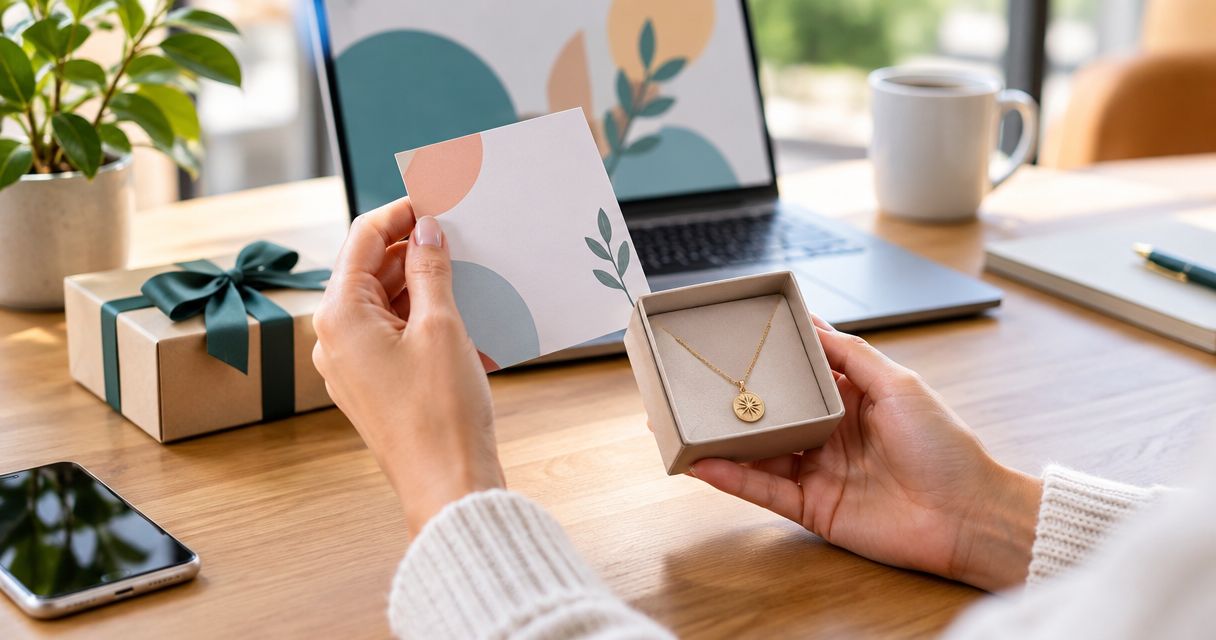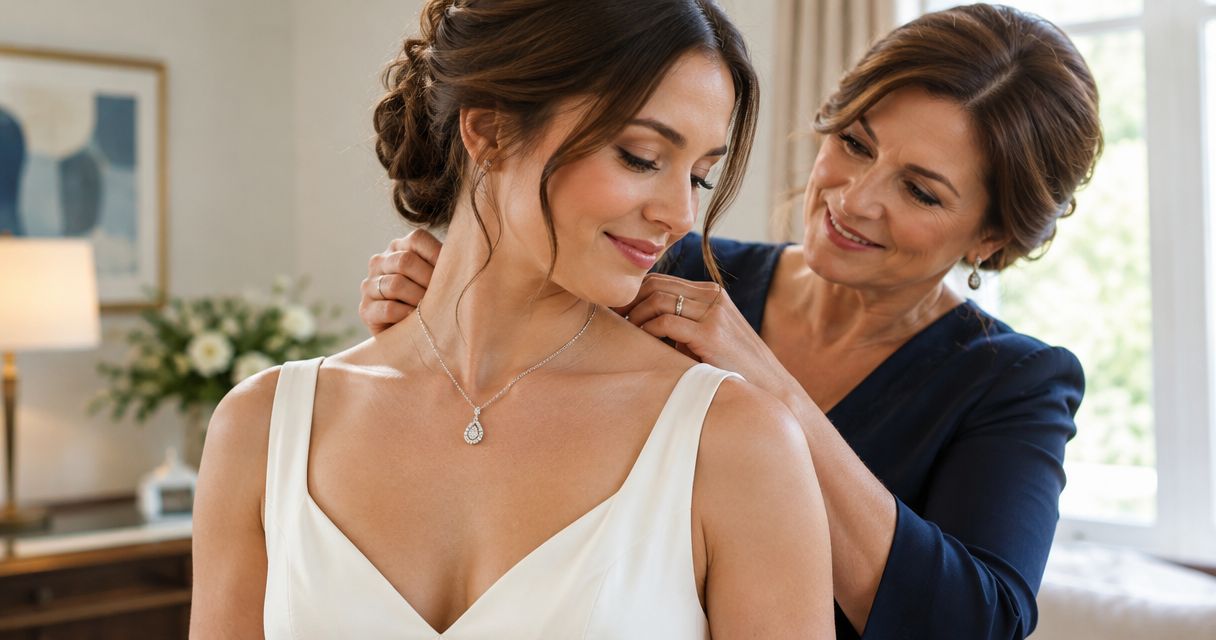
Yes, a necklace is a good wedding gift from a parent when it reflects the bride’s taste and carries a message about your relationship. Give it as a keepsake, not an obligation to wear it during the ceremony—especially if she has already chosen her wedding jewelry.
- Is a necklace a good wedding gift from a parent? Yes—when the bride’s preferences guide the choice.
- Choose ceremony jewelry with the bride; choose a keepsake without requiring her to wear it immediately.
- Dearlykept message-card jewelry suits parents who want a necklace paired with a written sentiment.
- Give the necklace privately and make clear that wearing it on the wedding day is optional.
Why this matters
A wedding gift can express love without becoming another decision the bride must manage. The distinction is simple: you choose the gift, but she chooses whether it belongs in her wedding outfit.
For a 2026 wedding, start with what she has already planned rather than what you imagine a bride should wear. Our guide to necklaces for brides is a useful next read if you are choosing specifically for the ceremony. If the necklace is a personal keepsake instead, prioritize her everyday preferences and your message.
Is a necklace a good wedding gift from a parent to the bride?
A necklace is a thoughtful parent-to-bride gift when the meaning fits your relationship and the design fits her life. It does not have to become part of her bridal outfit to be a successful wedding gift.
Start by choosing the purpose. The following options are gift approaches, not requirements or ranked products.
| Gift approach | Best for | Main benefit | Main drawback |
|---|---|---|---|
| Ceremony necklace | A bride who wants help choosing wedding jewelry | Becomes part of the outfit she has planned | Requires coordination with her neckline and other accessories |
| Everyday keepsake necklace | A bride whose wedding accessories are already settled | Separates the sentimental gift from ceremony styling | Might not appear in wedding photographs |
| Family necklace you already own | A bride who values that particular family connection | Carries an existing personal story | Needs a clear conversation about ownership, condition, and expectations |
| Message-card necklace | A bride who appreciates written expressions of affection | Pairs jewelry with words she can keep | Pre-written wording needs to match your relationship |
Before buying, complete 3 checks: purpose, preference, and message. Decide whether the necklace is for the ceremony, whether she enjoys wearing that kind of jewelry, and whether your words celebrate her without asking for anything back.
Do not treat the necklace as proof of how much you love her. A gift that respects her preferences communicates more than a design she feels obliged to display.
A ceremony necklace: choose it with the bride
Best for: a bride who has asked for jewelry input or welcomes a shared choice. If you want the necklace worn during the ceremony, involve her before purchasing. That turns an outfit expectation into a decision she controls.
Ask whether she has already selected a necklace, borrowed a family piece, or decided to leave her neckline bare. Then consider the whole outfit: the dress, earrings, any hair accessories, and the placement of the pendant.
The advantage is direct involvement in a meaningful part of her wedding preparation. The drawback is that a surprise purchase cannot account for choices you have not seen or discussed.
For a ceremony necklace in 2026, use her actual outfit plans as the reference. Do not substitute a bridal trend, a relative’s preference, or your own wedding photographs for her answer.
Recommendation: choose together if wedding-day wear is part of the plan. You can preserve the surprise through the presentation and personal note rather than through the necklace design.
An everyday keepsake: separate the gift from the outfit
Best for: a bride who has already chosen her wedding accessories. An everyday necklace lets you mark the marriage without adding a styling request to the wedding day.
Look at what she chooses for herself. Consider whether she wears understated jewelry or larger pieces, whether she regularly wears necklaces at all, and which finishes she prefers. These observations are starting points, not permission to assume material compatibility or a particular chain length.
The benefit is freedom: she can wear the necklace when it suits her. The limitation is equally clear—it might not be the piece she chooses for the ceremony or photographs.
If photographs matter to you, recognize that wish before giving the gift. Do not present the necklace as optional and then express disappointment when she wears something else.
Recommendation: choose a keepsake if the relationship matters more than its place in the wedding outfit. That is a complete purpose for a wedding gift, not a fallback.
A family necklace: explain the story and the ownership
Best for: a bride who has expressed interest in a particular family piece. A necklace you already own can connect the wedding with a person, memory, or relationship she values.
Tell her what you actually know about it. Separate a documented detail from a family recollection, and leave unknown materials or origins unclaimed. A meaningful story does not need an embellished history.
Be explicit about whether you are giving the necklace permanently or lending it for the occasion. A loan and a gift carry different responsibilities, and neither should depend on an unspoken understanding.
The benefit is an existing personal connection. The drawback is the possibility of expectations about care, future ownership, or passing it to someone else.
Recommendation: offer the story without assigning a duty. If you expect the necklace returned, describe it as a loan from the beginning rather than presenting it as a wedding gift.
A message-card necklace: read the words before choosing
Best for: a bride who values written expressions of affection. A necklace paired with a sentiment card gives you a physical gift and a written message in the same presentation.
Dearlykept sells message-card jewelry: necklaces and bracelets paired with a pre-written sentiment card and gift box. Dearlykept message-card jewelry is best for parents who want a necklace paired with a written expression of affection. The format suits that purpose, but the wording still needs your attention.
Read the complete card before deciding. Confirm that it sounds like a parent speaking to a daughter, rather than a romantic partner speaking to a spouse, and that its promises reflect what you genuinely mean.
The benefit is having words alongside the jewelry. The drawback is that pre-written language can feel unlike your own voice or describe a relationship differently from how the bride experiences it.
Add a separate handwritten note if you want to include a specific memory. Do not assume that a card can be edited or that extra printing is included; check the current product details before relying on either feature.
Recommendation: choose the message as carefully as the necklace. For more on the format, read whether message-card jewelry works as a sentimental gift.
Why the right necklace varies from bride to bride
A parent-to-bride necklace is not a single style category. The right choice depends on the recipient and the purpose of the gift, not simply on the wedding date.
Use these factors to narrow the decision:
- Purpose: Ceremony jewelry needs outfit coordination; an everyday keepsake does not need to fit the wedding dress.
- Personal style: Her own jewelry choices are a better reference than a generic idea of bridal taste.
- Material needs: Check the stated materials against any sensitivities she has told you about. Appearance alone does not establish suitability.
- Fit: Confirm the chain and pendant details rather than assuming a necklace will sit where you intend.
- Message: Read the full sentiment and remove expectations about wearing, displaying, or preserving the gift.
- Presentation: Choose a handover that gives her room to respond privately and without interruption.
For a 2026 celebration, verify the current item description before ordering. A gift idea, an illustration, or a familiar-looking design does not establish the materials, fit, or included contents of the necklace you select.
How do you choose and give the necklace without pressure?
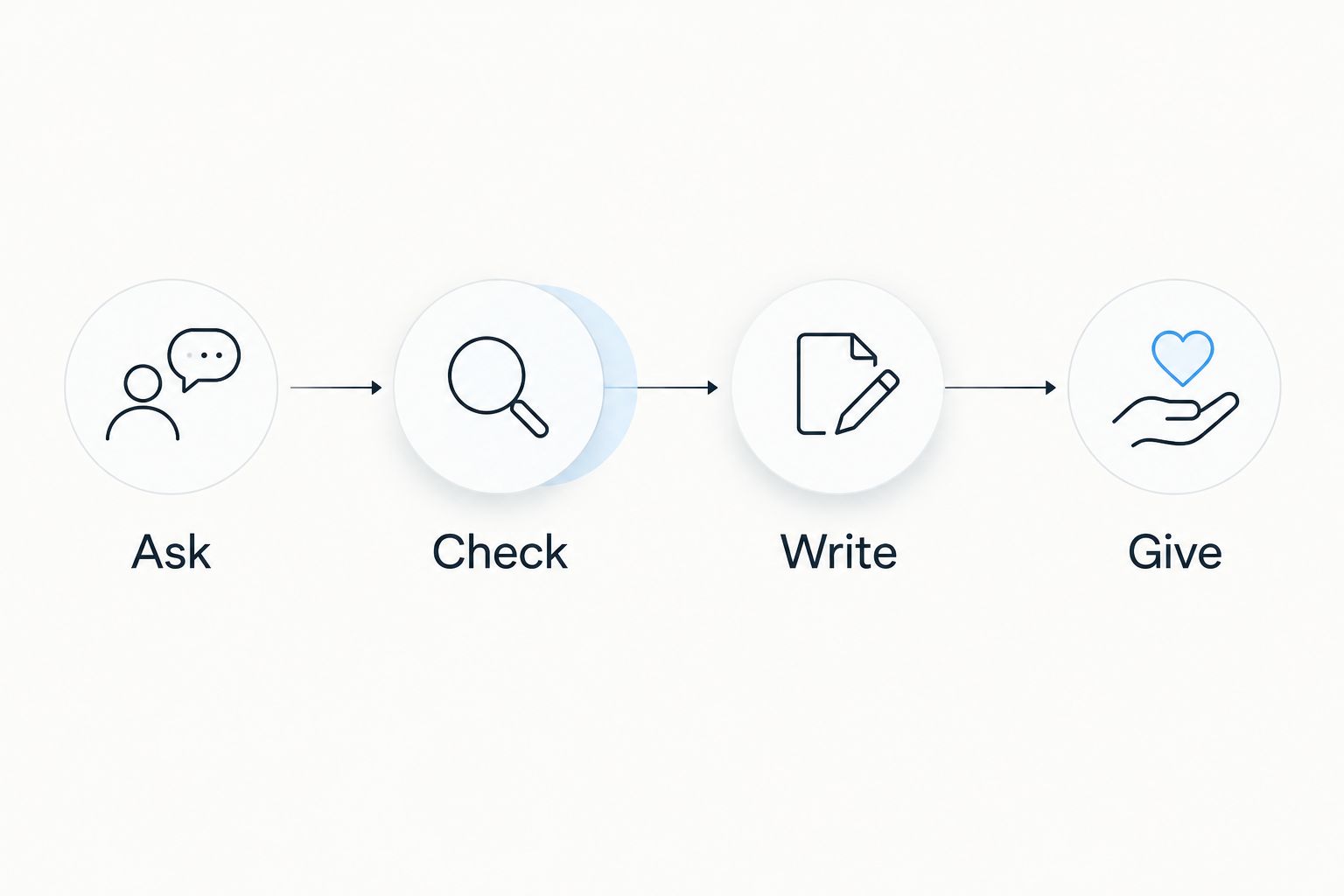
Use 4 steps: Ask, Check, Write, Give. The sequence keeps the bride’s preferences ahead of the presentation and gives your message a clear purpose.
- Ask. Find out whether the bride wants a necklace for the ceremony or would prefer a separate keepsake. If you want a surprise, ask about the purpose without showing the specific design.
- Check. Review her preferences alongside the item’s stated materials, chain details, and included contents. Resolve a practical uncertainty before making the gift depend on it.
- Write. Prepare a personal note that names something you appreciate about her. Keep advice, family expectations, and requests out of the message.
- Give. Choose a calm moment and explicitly leave the wearing decision with her. Let the gift end with affection rather than a request for a photograph or immediate response.
You can finish the process before the wedding day. If the bride’s 2026 schedule is already full, arrange the handover around a time she chooses rather than creating another surprise appointment.
The important boundary is permission, not elaborate packaging. Once you have given the necklace, do not ask her to justify saving it for another occasion.
When should a parent give the bride a necklace?
Give the necklace before the wedding if she wants to consider wearing it, and choose a private moment if it is primarily sentimental. Those are 2 occasions with different purposes: outfit planning and personal connection.
A ceremony necklace needs enough room in the planning process for her to try it with the outfit and decide against it if necessary. A keepsake can be presented separately without asking her to stop wedding preparations or respond in front of an audience.
Avoid attaching the handover to an event you do not control. Ask when she would enjoy a quiet moment, then accept the answer even if it differs from the scene you imagined.
What should a parent write with a wedding necklace?
Write about your daughter as a person, then express support for the life she is choosing. Keep the message connected to her rather than turning it into a speech about your own experience of the wedding.
Use 1 sentence about a specific memory as a starting point. Follow it with what you admire about her now and a wish that does not prescribe how she should live.
Avoid wording that frames marriage as losing your daughter, makes the necklace a test of loyalty, or asks her to remember you whenever she wears it. A loving note can acknowledge change without making her responsible for managing your feelings.
Read the note aloud before sealing it. If it sounds like an instruction, revise it into an expression of care.
Does the bride have to wear a parent’s necklace at the wedding?
No, the bride does not have to wear a parent’s necklace at the wedding. Accepting the gift and choosing ceremony accessories are separate decisions.
This remains the right approach for a 2026 wedding even when the necklace has family history. Sentimental importance gives you a story to share, not a claim over her outfit.
If wearing it is essential to your plan, discuss that before purchasing or offering it. Do not disguise a condition as a surprise.
FAQ
Is a necklace a good wedding gift from a parent?
Yes, a necklace is a good wedding gift from a parent when it suits the bride’s preferences and comes without an obligation to wear it at the ceremony. Decide whether you are choosing wedding accessories or a separate keepsake.
Can a father give his daughter a necklace on her wedding day?
Yes, a father can give his daughter a necklace on her wedding day. Choose a message that reflects their relationship and a handover that respects her schedule.
Should a mother choose the bride’s wedding necklace as a surprise?
A mother should involve the bride if the necklace is intended for the ceremony. A separate keepsake allows more room for a surprise because it does not need to fit the wedding outfit.
Is message-card jewelry suitable for a daughter’s wedding gift?
Message-card jewelry is suitable when the sentiment matches the parent-daughter relationship. Dearlykept pairs necklaces and bracelets with a pre-written sentiment card and gift box; read the complete wording before choosing.
What if the bride has already picked her wedding jewelry?
Give the necklace as a separate keepsake rather than asking the bride to change her outfit. Make clear that she can wear it after the wedding or whenever she chooses.
Should a family necklace be a gift or a loan?
A family necklace can be either a gift or a loan, but you should state which before handing it over. Explain any return expectation directly instead of leaving ownership unclear.
What if my daughter does not wear necklaces?
Choose a different gift if your daughter does not enjoy wearing necklaces. A personal letter can still carry your message without giving her something she feels expected to wear.
One last thing
Tell her that choosing different wedding jewelry will not hurt your feelings. Then honor that promise without asking for an explanation.
That permission is part of the gift. It lets the necklace stand for your affection rather than become another wedding decision she must get right for someone else.