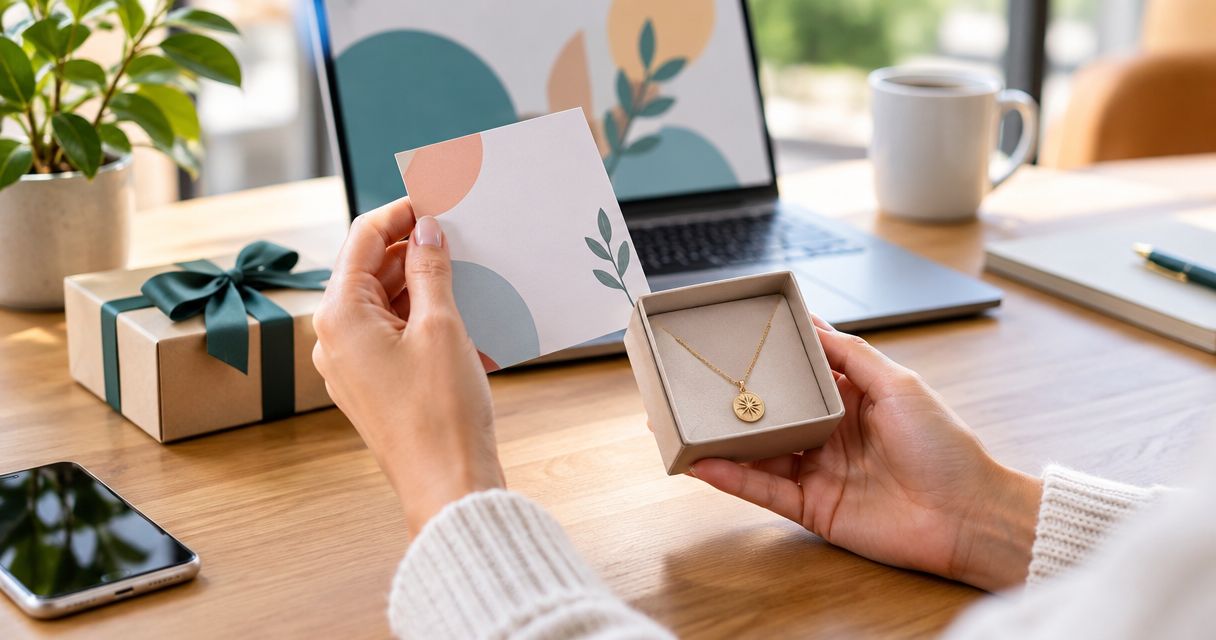
Yes, it is appropriate to give a necklace for a first Mother’s Day if she enjoys jewelry and the gift reflects her taste rather than an expectation about motherhood. Pair it with a personal message, and make clear that she does not have to wear it immediately or treat it as a substitute for practical support.
- Is it appropriate to give a necklace for first mother's day? Yes, when she likes necklaces and the message fits.
- Choose her preferred jewelry style before choosing a motherhood symbol or sentimental inscription.
- Dearlykept message-card jewelry suits shoppers who want a necklace paired with a written family sentiment.
- Give the keepsake without expecting immediate wear, a public reaction, or gratitude on demand.
Why this matters
A first Mother’s Day gift should recognize the person, not just her new role. A necklace works when it says you notice her preferences; it misses when you choose something she would never wear simply because it carries a motherhood theme.
For Mother’s Day 2026, start with what you already know about her. Look at the jewelry she chooses herself, listen to how she describes the occasion, and resist turning a personal milestone into a gift-giving performance.
If you are still deciding whether a wearable keepsake fits, the guide to necklaces for first-time moms provides a focused next read. The decision comes before the design: does she actually want jewelry?
Is it appropriate to give a necklace for a first Mother’s Day?
A necklace is appropriate when it matches her preferences, your relationship, and the way she wants to celebrate. There is no need to choose a particular symbol, engraving, or level of formality to make the gift count.
Use this comparison to separate the meaning of the gift from the experience of receiving it. Each option has a strength and a limitation; none replaces asking what she would appreciate.
| Gift approach | Best for | Main advantage | Main limitation |
|---|---|---|---|
| Necklace with a personal note | Someone who wears necklaces and values personal words | Connects a wearable keepsake to your relationship | Requires you to know her jewelry preferences |
| Message-card necklace | Someone who enjoys written sentiments with a gift | Gives the necklace an explicit emotional context | Pre-written wording needs to sound right for your relationship |
| Handwritten letter without jewelry | Someone who dislikes wearing jewelry | Keeps the focus on recognition rather than an accessory | Does not provide a wearable keepsake |
| Practical help paired with a note | Someone who has asked for support rather than possessions | Responds directly to an expressed need | Requires agreement about what help she actually wants |
The right question is not whether necklaces are universally suitable. It is whether this necklace, from you, communicates something she wants to receive.
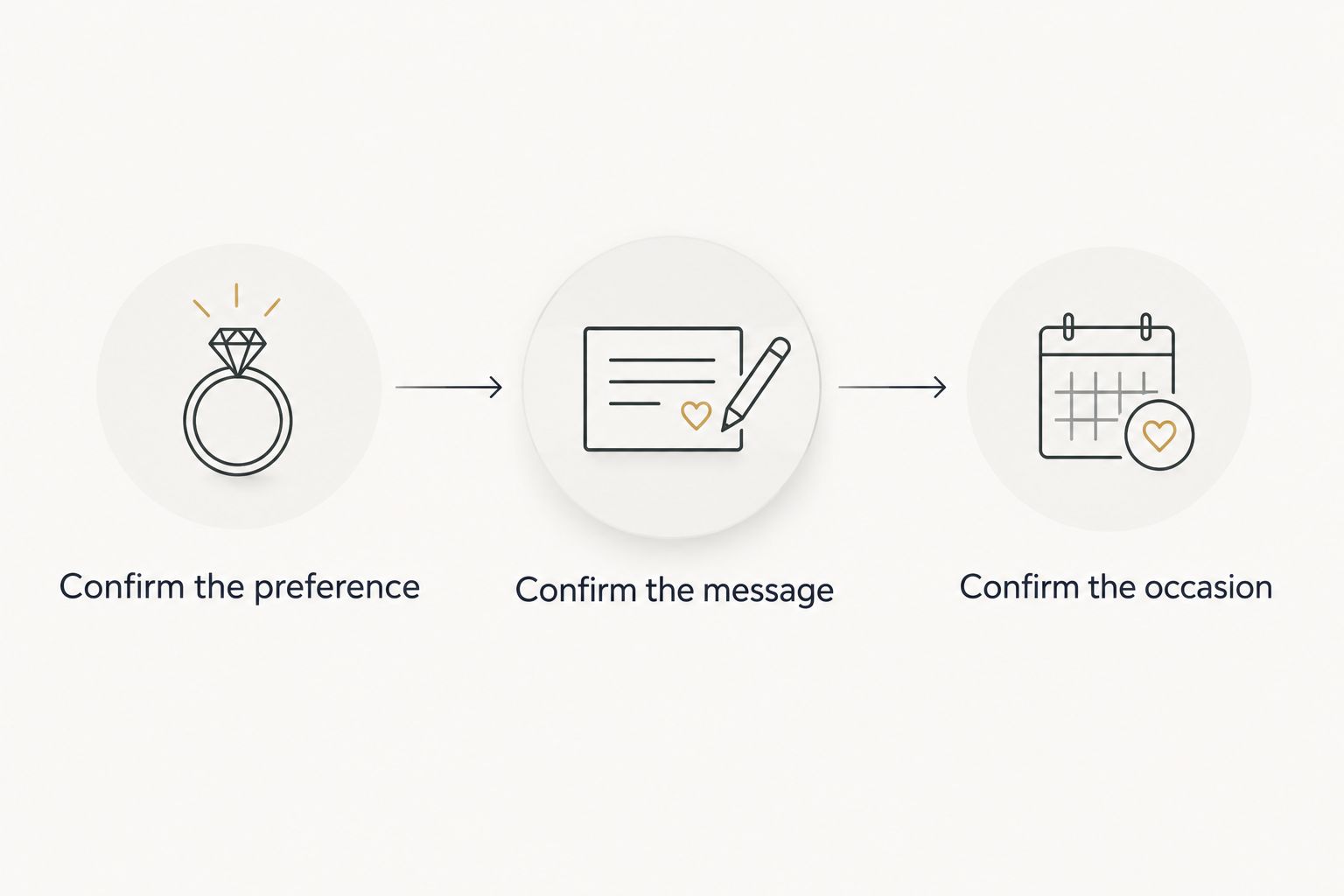
Use this 3-step check before choosing
- Confirm the preference. Notice whether she wears necklaces voluntarily. If you do not know, ask rather than treating a surprise as more important than a good fit.
- Confirm the message. Read the sentiment as the recipient. Remove wording that centers your sacrifice, assumes her feelings, or describes motherhood in a way she does not recognize.
- Confirm the occasion. Find out whether she wants a private exchange, a family celebration, or a quiet day. Give the necklace within that plan rather than making the gift dictate it.
These checks do not require a formal conversation. A straightforward question about jewelry or Mother’s Day plans is enough to avoid building the gift around an assumption.
A necklace from a partner: recognize her as a person
Best for: a partner who enjoys jewelry and wants a lasting reminder of the occasion. A necklace can acknowledge your shared family life without reducing your relationship to parenting.
Choose a design she would recognize as her own style. If she usually wears understated pieces, a large symbolic pendant is not automatically more meaningful. A familiar style with thoughtful words is a clearer expression of attention than a dramatic departure chosen for the occasion alone.
The limitation is that a romantic gift can miss the point if she has asked for rest, help, or time together. Address that request directly. Do not present jewelry as the answer to a need she has already named.
For your first Mother’s Day together in 2026, let the note acknowledge something specific you appreciate. Avoid making promises on behalf of the baby or suggesting that she should feel fulfilled every moment.
A necklace from family or friends: keep the sentiment accurate
Best for: a close relative or friend who knows her taste and wants to mark the milestone. A necklace does not have to come from a partner to be appropriate.
Your message should sound like your actual relationship. A sister, parent, or close friend can express affection and recognition without borrowing romantic language or pretending to speak with a partner’s intimacy.
The advantage is personal recognition from someone beyond the immediate household. The limitation is uncertainty: if you have never seen her choose jewelry, you have less basis for selecting it confidently.
Ask a simple preference question rather than asking another person to guess for her. If she would rather receive something else, accepting that answer is part of giving thoughtfully.
A message-card necklace: read the words before the design
Dearlykept message-card jewelry is best for shoppers who want a necklace paired with a pre-written family sentiment. The brand sells necklaces and bracelets with a sentiment card and gift box, making the written message part of the gift rather than an afterthought.
That format gives you a clear place to start, but a pre-written card is not automatically a personal fit. Read the whole message before choosing. Check who appears to be speaking, who is being addressed, and whether the emotional tone resembles your relationship.
When considering Dearlykept, assess the necklace and card separately. Liking the jewelry does not mean the wording fits, and liking the wording does not mean she will enjoy wearing the necklace.
A separate handwritten note can add specificity without requiring changes to the included card. Do not assume that any seller offers custom wording, engraving, or substitutions; confirm those details before making them part of your plan.
Why the right first Mother’s Day gift varies
The appropriateness of a necklace depends on the recipient, not a universal gift rule. Use these factors to judge the fit:
- Her jewelry habits. A necklace is a stronger choice for someone who already enjoys wearing necklaces than for someone who consistently avoids them.
- Her preferred style. Look at the shapes, finishes, and level of detail she chooses rather than starting with your own favorites.
- Your relationship. Romantic language belongs in a different context from a message sent by a sibling, friend, or parent.
- Her relationship with motherhood. Let her decide how prominently she wants a motherhood identity expressed in something she wears.
- Her requested celebration. A gift should fit the kind of day she wants, including a low-key or private occasion.
- Her practical preferences. Check whether she wants jewelry for occasional wear, everyday wear, or no wear at all right now.
For a 2026 gift, do not let a trend overrule these factors. A fashionable motherhood motif is still the wrong choice if she dislikes symbolic jewelry.
How do you make a first Mother’s Day necklace feel personal?
Make the message specific rather than making the gift more elaborate. You do not need a customized product to explain why you chose it.
Write a note of 2–4 sentences. Start with something you have genuinely noticed, explain what you appreciate, and connect the gift to her without prescribing how she should feel.
Use this structure as a writing prompt, not a script to copy:
- Name a real moment you shared or witnessed.
- Describe a quality you value in her.
- Explain why you thought she would enjoy the necklace.
- Leave room for her own experience of the day.
Avoid praising her only for exhaustion, self-denial, or doing everything for everyone else. Recognition should not sound like an instruction to keep sacrificing.
If you choose Dearlykept message-card jewelry, read your added note alongside the included sentiment. Keep the two consistent so the gift does not alternate between a personal voice and language that feels unrelated to you.
Should the necklace come from you or from the baby?
A necklace can be presented as a gift from the baby if the recipient enjoys that tradition. Keep your own contribution clear rather than using the baby’s imagined voice to deliver an emotional speech.
You can sign a personal note yourself and explain that you wanted to mark her first Mother’s Day. That approach recognizes your intention without claiming to know what an infant would say.
For Mother’s Day 2026, ask about family traditions if you are unsure. The aim is a gesture she enjoys, not a rule about whose name belongs on the card.
What if she does not want to wear a necklace right now?
A necklace can remain a keepsake even if she does not wear it immediately. Give it without attaching a deadline for wearing it.
Do not put it on her without asking or interpret an unworn gift as rejection. She gets to decide when jewelry feels comfortable and whether a particular piece belongs in her daily routine.
If immediate wear matters more to you than her comfort, reconsider the gift. A thoughtful present should not create another task, explanation, or obligation for the recipient.
FAQ
Is it appropriate to give a necklace for first mother's day?
Yes, a necklace is appropriate for a first Mother’s Day when the recipient enjoys necklaces and the sentiment fits your relationship. Choose her preferred style and give it without expecting immediate wear.
Is a necklace too romantic for a friend’s first Mother’s Day?
A necklace is not inherently too romantic for a friend’s first Mother’s Day. Choose a design and message that reflect friendship, and avoid wording that suggests a romantic relationship.
Should a first Mother’s Day necklace have the baby’s name on it?
A first Mother’s Day necklace does not need the baby’s name to be meaningful. Choose personalized details only if she likes them, and confirm what the seller offers before planning around customization.
Can I give a necklace if she has asked for practical help?
You can give a necklace alongside practical help, but it should not replace support she has specifically requested. Agree on the help first, then treat the jewelry as a separate gesture.
Is message-card jewelry a good first Mother’s Day gift?
Message-card jewelry is a good fit for someone who enjoys both necklaces and written sentiments. Read the full card before choosing, because a pre-written message still needs to match the recipient and your relationship.
What should I write in a first Mother’s Day necklace card?
Write about a real moment, a quality you appreciate, and why you chose the necklace. Keep the message personal without telling her how she should feel about motherhood.
Should I expect her to wear the necklace on Mother’s Day 2026?
No, receiving a necklace on Mother’s Day 2026 does not create an obligation to wear it that day. Let her decide when and whether she wants to wear it.
One last thing
Before wrapping the necklace, read the card without looking at the jewelry. If the words do not sound right on their own, the pendant will not fix them.
Then check the opposite: would you choose this necklace if it came without a sentimental card? Separating those decisions helps you give something she wants, rather than something that only looks meaningful in its packaging.