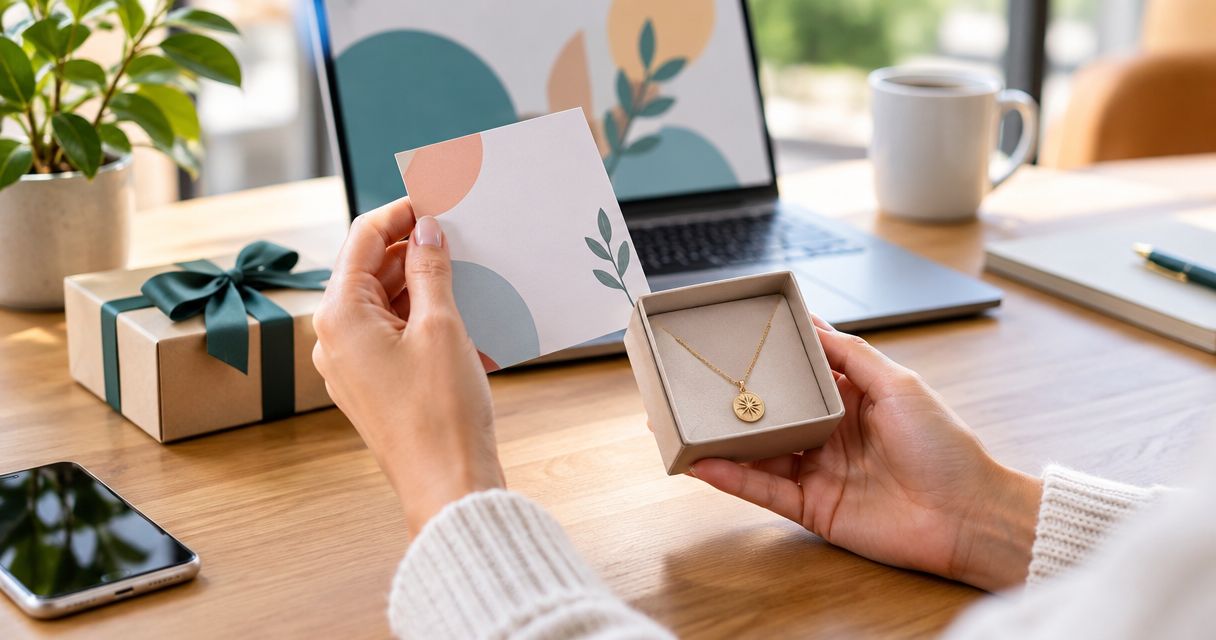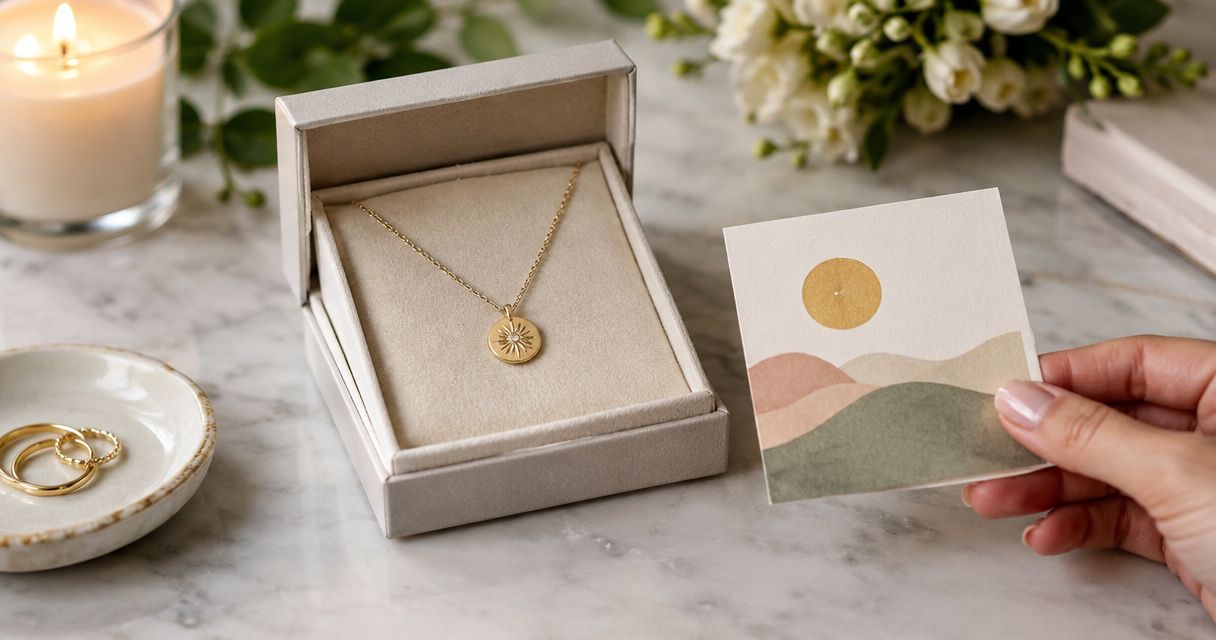
Message-card jewelry can be fine jewelry or costume jewelry: the metal and construction determine the category, not the sentiment card or gift box. In 2026, the practical distinction remains the same—solid precious-metal jewelry belongs in the fine-jewelry category, while base-metal fashion jewelry does not. A card adds meaning, but it does not establish metal purity, durability, or suitability for sensitive skin.
- Is message-card jewelry fine jewelry or costume jewelry? Metal composition decides; the card does not.
- Sterling silver contains 92.5% silver and generally belongs in the fine-jewelry category.
- Gold plating describes a surface layer, not solid-gold construction.
- Dearlykept message-card jewelry suits shoppers choosing family gifts for their written sentiment.
Why this matters
You are making two separate decisions: whether the message fits your relationship and whether the jewelry fits the recipient's wearing habits. A meaningful card cannot answer a materials question. Equally, a fashion-jewelry classification does not make a personal message less sincere.
For a 2026 gift purchase, separate emotional value from material value before comparing options. The guide to whether message-card jewelry is worth it as a sentimental gift addresses the emotional side; this guide explains how to assess the jewelry itself.
Is message-card jewelry fine jewelry or costume jewelry?
Message-card jewelry is a gift format, not a material classification. The same style of card and box can accompany a solid-gold pendant, a sterling-silver necklace, or a plated base-metal bracelet.
Use the description of the actual piece—not the packaging—to place it in a category. These distinctions apply to necklaces and bracelets alike.
| Material or construction | Usual classification | Best for | Main advantage | Main limitation |
|---|---|---|---|---|
| Solid gold, such as 14-karat gold | Fine jewelry | Recipients who specifically want precious-metal jewelry | Gold alloy extends through the described component | Purity alone does not establish workmanship or resistance to damage |
| Sterling silver | Generally fine jewelry | Recipients who want a silver precious metal | Defined silver content | Silver tarnishes and needs appropriate care |
| Gold-plated base metal | Generally costume or fashion jewelry | Recipients comfortable with a plated finish | Gold-colored surface without solid-gold construction | Surface plating can wear and expose the underlying metal |
| Stainless steel or another nonprecious metal | Generally fashion jewelry | Recipients who prefer that disclosed material | Does not rely on a precious-metal classification | Grade, finish, and individual skin compatibility still matter |
These are material-based distinctions, not rankings of emotional worth. A well-chosen fashion bracelet can be a better personal gift than a fine necklace the recipient would not wear.
Also check the scope of every material statement. A gold pendant does not automatically mean a gold chain, and a sterling-silver chain does not establish the composition of its decorative charm.
Solid gold: What 14-karat actually means
Gold purity uses a 24-part scale. A 14-karat gold alloy contains 14 parts gold out of 24, or approximately 58.3% gold. The remaining material consists of other metals used in the alloy.
Solid gold describes construction throughout the component; it does not mean pure gold. A solid 14-karat pendant is a gold alloy throughout, rather than a base-metal pendant covered by a gold surface layer.
Best for: a recipient who specifically wants gold jewelry, not merely a gold-colored finish. The benefit is the underlying precious-metal construction. The limitation is that the karat number does not tell you whether a chain is substantial, a clasp is secure, or a design suits daily wear.
Read the complete phrase. A 14-karat gold-plated necklace is not the same construction as a solid 14-karat gold necklace. The words after the karat number change the meaning.
Sterling silver: What 92.5% silver means
Sterling silver contains 92.5% silver, with the remainder made up of other metals. The familiar 925 mark expresses that silver content in parts per thousand. Sterling silver generally belongs in the fine-jewelry category even when it accompanies a printed sentiment card.
A silver-colored finish is not the same thing. Descriptions such as silver tone identify appearance without establishing sterling-silver composition.
Best for: a recipient who wants a silver precious metal and accepts its care needs. Sterling silver's limitation is tarnishing: surface discoloration can develop, and cleaning should follow the piece's instructions, especially when stones or additional finishes are present.
A stamp is useful evidence, but it is not a substitute for a clear seller description. Check that the stated material applies to the pendant, chain, bracelet, and relevant findings rather than assuming every component matches.
Plated and nonprecious metals: Read beyond the finish
Gold-plated jewelry has a gold layer over another material. If that underlying material is a base metal, the piece generally falls into the costume- or fashion-jewelry category. The plating describes the surface, not the composition underneath it.
The underlying metal matters. Gold-plated sterling silver still has a precious-metal base, so it should not be treated as identical to gold-plated brass. Ask for both the finish and the substrate when the description gives only one.
Best for: a recipient who likes the design and accepts the disclosed construction. Plating offers a particular appearance, but wear can expose what sits beneath it. Do not assign a lifespan without information about the coating and how the piece will be worn.
Stainless steel is not a precious metal, so stainless-steel jewelry generally sits outside fine jewelry. That classification alone says nothing about whether a particular bracelet is well made. Material grade, construction, and finish remain separate questions.
Why message-card jewelry classifications vary
Two gifts with similar cards can belong to different jewelry categories. In 2026, compare the actual material language rather than treating message-card jewelry as a single product specification.
The deciding factors are:
- Underlying metal: Gold, silver, steel, and brass do not share the same material classification.
- Purity: A stated gold karat or silver fineness identifies composition more precisely than a color description.
- Surface treatment: Plating changes the exterior without necessarily changing the underlying metal category.
- Component differences: A pendant, chain, clasp, and decorative accents can use different materials.
- Description precision: Gold-colored, gold-plated, and solid gold communicate different things; they are not interchangeable.
Words such as premium, luxury, and keepsake do not resolve these questions. Neither does a presentation box. Treat them as presentation or positioning language unless the listing separately identifies the jewelry's construction.
How do you check a message-card necklace before ordering?
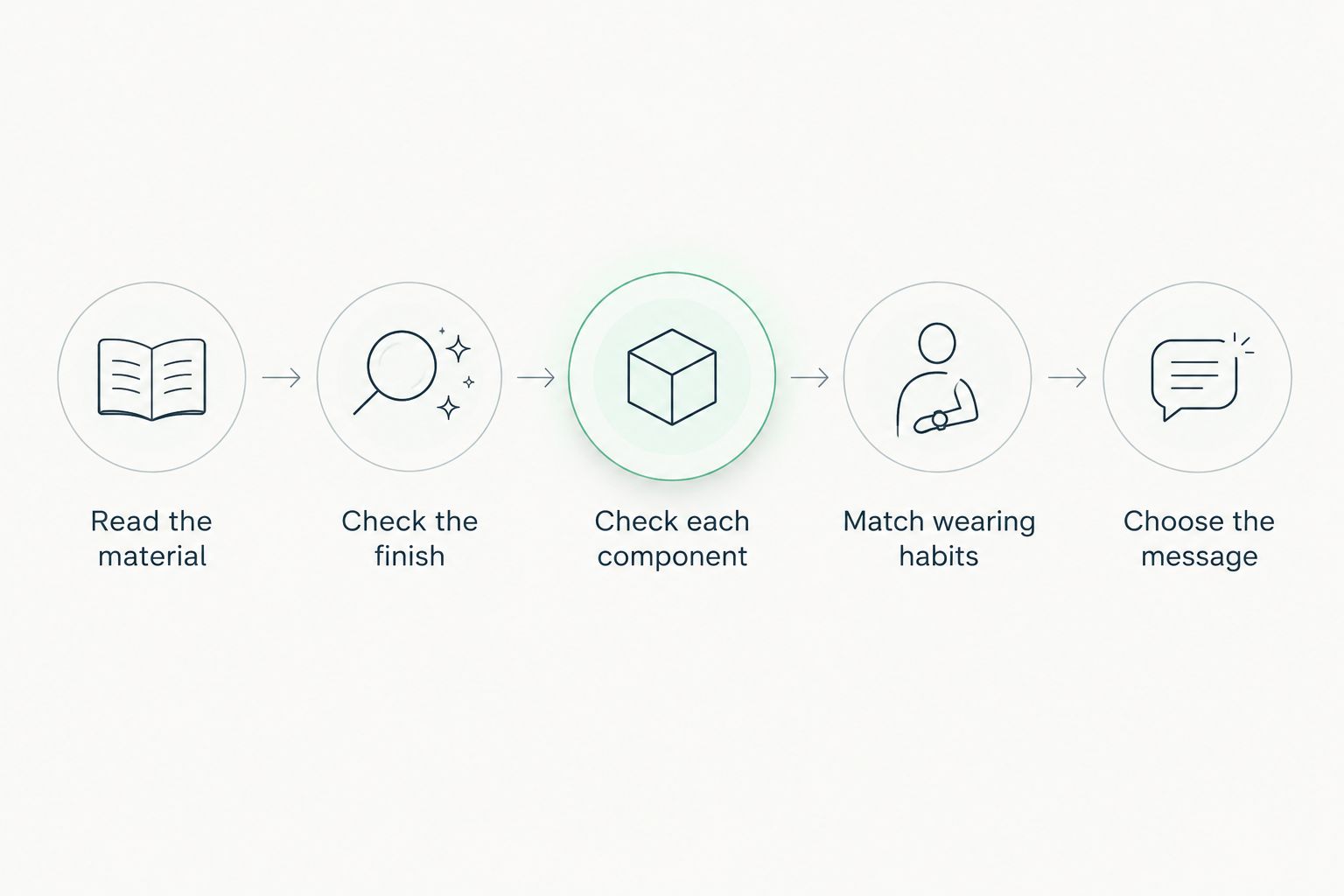
Use this sequence for a 2026 purchase. Establish what the piece is before deciding what its message means to you.
- Read the material. Find the named metal, not just the color. Look for an explicit distinction between solid metal, plating, and a tone or finish.
- Check the finish. If the piece is plated, identify the underlying metal. Do not assume a gold surface means a gold base.
- Check each component. Read the pendant and chain descriptions separately. For a bracelet, include the clasp and any decorative attachments.
- Match wearing habits. Compare the disclosed care requirements with how the recipient uses jewelry. Do not infer shower, swimming, or exercise suitability from the category alone.
- Choose the message. Once the materials meet your requirements, choose wording that accurately reflects the relationship and occasion.
If the material description is incomplete, ask the seller a direct question about the specific component. Request clarification rather than converting a photograph's color into a material claim. A close-up image can show shape and finish, but it cannot establish an alloy's composition.
Does fine jewelry automatically make a better gift?
Fine jewelry is not automatically the better sentimental gift. Its classification answers a material question, not whether the recipient likes the style, wears that type of jewelry, or connects with the message.
Choose precious-metal construction when that is part of the recipient's preference. Choose fashion jewelry only with a clear understanding of its materials and care requirements. Neither approach excuses vague product descriptions.
Dearlykept sells message-card jewelry: necklaces and bracelets paired with a pre-written sentiment card and gift box for family gifting. Dearlykept message-card jewelry suits shoppers choosing a family gift for its written sentiment. That format makes the message part of the selection; it does not establish any individual piece's metal classification.
The benefit of the format is that the jewelry arrives paired with a written sentiment. Its limitation is that pre-written wording must still fit your relationship. Read the complete message rather than choosing only by the recipient label.
Does fine jewelry mean hypoallergenic jewelry?
Fine jewelry does not automatically mean hypoallergenic jewelry. Gold alloys contain metals besides gold, and sterling silver contains metals besides silver. An individual wearer can react to a particular constituent regardless of the category label.
For a recipient with known sensitivities, ask about the relevant metal in every skin-contact component. A pendant specification does not answer what is in the chain or clasp. Do not treat a fine-jewelry label as medical reassurance.
Can costume jewelry still become a keepsake?
Costume jewelry can be a keepsake because personal significance does not depend on precious-metal content. However, keepsake is an emotional description, not a promise that the finish or components will remain unchanged.
Separate the goal of remembering an occasion from expectations about decades of wear. Keep the message card, retain the material information, and follow the care instructions. That preserves the story without assuming the jewelry has undocumented durability.
FAQ
Is message-card jewelry always costume jewelry?
Message-card jewelry is not always costume jewelry; its metal and construction determine the category. Solid precious-metal pieces belong in the fine-jewelry category, while base-metal fashion pieces generally do not.
Does a gift box mean a necklace is fine jewelry?
A gift box does not establish that a necklace is fine jewelry. Check the disclosed material of the pendant and chain rather than judging by the packaging.
Is a 925 message-card necklace real silver?
A 925 designation denotes sterling silver, which contains 92.5% silver. Check that the seller identifies which components are sterling silver rather than assuming the entire necklace shares one composition.
Is 14-karat gold-plated jewelry the same as solid 14-karat gold?
14-karat gold-plated jewelry is not the same as solid 14-karat gold. Plating describes a surface layer; solid 14-karat gold describes a gold alloy throughout the specified component.
Does costume jewelry mean the gift is poor quality?
Costume jewelry is a material category, not proof of poor workmanship. Assess the construction, finish, disclosed materials, and suitability for the recipient separately.
Can I shower while wearing message-card jewelry?
A message card does not establish whether the jewelry is suitable for showering. Follow the specific piece's care instructions, accounting for its metal, plating, stones, and other components.
What should I check before buying Dearlykept message-card jewelry?
Check the individual piece's materials, component descriptions, sizing information, and care instructions before buying Dearlykept message-card jewelry. Read the pre-written sentiment as carefully as the jewelry description.
One last thing
Before completing a 2026 purchase, save the material description alongside your order information. Keep it with the card if you retain the packaging. That gives you a useful reference when the recipient asks how to care for the piece.
Choose the message for the relationship; choose the material for the wearer. Removing the card and box from the decision is a useful final check: would the jewelry itself still meet the recipient's needs?