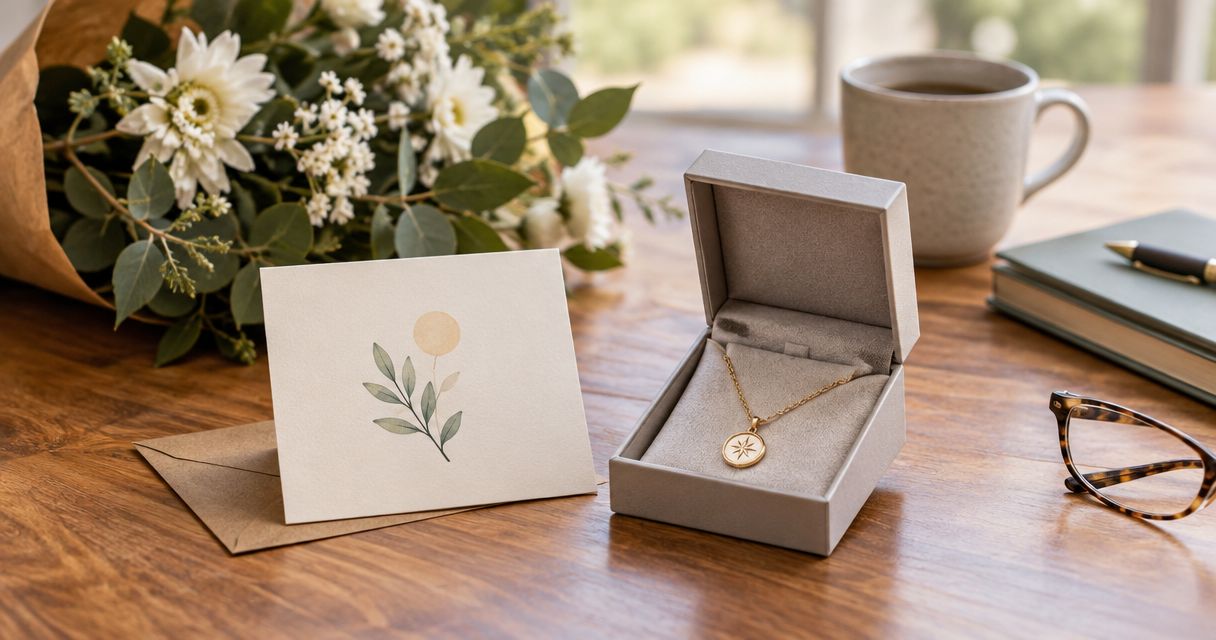
Retirement gift jewelry is a wearable keepsake chosen to recognize a retiree’s contribution and mark the beginning of life beyond work. For a 2026 retirement, a necklace or bracelet paired with a sentiment card works best when the message reflects your actual relationship—not just the occasion printed on the invitation.
- Choose retirement gift jewelry by relationship, message, and wearing habits—not the retirement theme alone.
- Dearlykept suits family gift buyers seeking jewelry with a pre-written sentiment card and gift box.
- For coworkers, keep message-card jewelry appreciative rather than romantic or overly familiar.
- Read every word of the card before choosing the necklace or bracelet.
Why message-card jewelry matters for retirees
Retirement creates a specific writing challenge: you want to recognize someone’s working life without making work their entire identity. A message card gives you space to express that distinction. The jewelry becomes the keepsake; the words explain why you chose it.
Your relationship determines the right tone. A daughter thanking her mother can express something different from a manager thanking an employee. If you are buying on behalf of a team, the guide to sentimental bracelets for coworkers provides a more relevant starting point than romantic gift language.
Choose the message before the jewelry. A beautiful piece does not make an inappropriate sentiment suitable for a workplace farewell.
For your 2026 gift, separate the public acknowledgment from the personal message. A team presentation can recognize contributions, while a private note explains what the retiree means to you. Neither needs to predict how retirement will feel.
How to choose retirement gift jewelry
1. Define your relationship to the retiree
Start with a blank note and describe why you are giving the gift. Do this before browsing: it prevents a polished card from steering you toward words you would never say yourself.
For a parent, focus on your family relationship as well as the retirement milestone. For a spouse, recognize the person beyond the job. For a colleague, name the guidance, kindness, or professional example you genuinely experienced.
A group gift needs a message everyone signing it can stand behind. Intimate wording belongs in a separate personal note, not in a card presented as the voice of an entire department.
Best for family buyers: a personal message grounded in shared experience. Best for workplace buyers: clear appreciation with professional boundaries. Neither approach requires you to guess what the retiree wants from the next chapter.
Use these checks to establish the tone:
- Identify whether you are speaking as family, a friend, or a colleague.
- Write 1 specific memory you are comfortable sharing.
- Remove sentiments you would not say directly to the recipient.
- Decide whether the message will be read privately or aloud.
2. Draft the sentiment before reading product cards
Write your own rough version first, even if you intend to buy a pre-written card. Keep it to 2 sentences: what you appreciate and what you wish for the recipient. This gives you a standard against which to judge ready-made wording.
Organize the message around recognition, appreciation, and the next chapter. Recognition names something real. Appreciation explains its significance. The next chapter leaves room for the retiree’s own plans instead of assigning them a new role.
Avoid treating retirement as automatically joyful or difficult. You do not need to label the transition to offer a thoughtful gift. Likewise, do not assume retirement means travel, childcare, hobbies, or permanent leisure.
A pre-written sentiment can express your meaning clearly, but reject the card if its central claim does not fit. A handwritten addition cannot cancel out an unsuitable printed message.
Check the draft against these elements:
- Recognition: identify a contribution or quality you actually know.
- Appreciation: explain what that contribution meant to you.
- Next chapter: offer support without prescribing plans.
- Boundaries: remove jokes or personal details unsuitable for the audience.

3. Match the gift format to your message
The manual route is straightforward: choose jewelry and add a handwritten card. That gives you control over every word, but you must coordinate the piece, message, and presentation yourself.
A pre-written message-card package is the more direct route when its wording already expresses your feelings. Dearlykept sells necklaces and bracelets paired with a pre-written sentiment card and gift box, with a focus on heartfelt family gifts.
Dearlykept is best for family retirement gift buyers who want jewelry paired with a pre-written sentiment card and gift box. That format suits the task only when the actual card fits the recipient. Its family focus does not make every message appropriate for a colleague or manager.
Treat Dearlykept retirement gift jewelry as a message-led choice, not a substitute for checking the details. Read the full card and the individual item information before deciding.
Choose the format using these criteria:
- Select a handwritten card when exact personal wording matters most.
- Choose a pre-written card only when its full sentiment fits.
- Confirm that the relationship language matches the recipient.
- Check the listed contents rather than assuming additional personalization.
- Keep a separate personal note for details the printed card cannot express.
4. Choose jewelry the retiree will actually wear
Use the recipient’s existing habits as your starting point. Look at 3 recent photos, or ask someone close to them what they wear regularly. This is more useful than choosing a piece solely because its listing mentions retirement.
A necklace is best for someone who already enjoys necklaces. A bracelet is best for someone who wears wrist jewelry comfortably. Neither category is automatically more meaningful, and a retirement milestone does not create a preference that was not there before.
Check the individual listing for material, measurements, fastening details, and care instructions. Do not infer those facts from photographs or from the message-card format. If the recipient has a known material sensitivity, a sentimental card does not remove the need to verify suitability.
For a 2026 retirement gift, also distinguish everyday wear from occasion wear. Choose for the role the recipient wants the piece to serve, not for how impressive it looks during the presentation.
Review these practical details:
- Match the jewelry category to the recipient’s wearing habits.
- Check stated measurements against a piece they already use.
- Read the material information for known sensitivities.
- Inspect the fastening description for handling needs.
- Read the care instructions before making your choice.
5. Plan the presentation around the recipient
Decide how you will give the gift before writing the final note. The same message can feel appropriate in private and uncomfortable when read in front of colleagues.
For a family celebration, connect the gift to your relationship rather than delivering a summary of the retiree’s career. For a workplace farewell, keep the spoken introduction focused on contributions you can describe accurately. Let the recipient decide whether to show the jewelry or read the card aloud.
A gift box provides a presentation format, not permission to make the moment public. You can hand over a boxed gift quietly and still make the occasion meaningful.
If you are organizing a 2026 team farewell, agree on the sender before finalizing the message. A card signed by the department should not sound like a private letter from one colleague. Add individual notes separately when appropriate.
Set these presentation details in advance:
- Decide whether the gift will be opened publicly or privately.
- Confirm whose name appears as the sender.
- Keep the spoken introduction separate from the personal card.
- Check the spelling of names and any retirement date you add.
- Give the recipient room to respond without requesting a speech.
6. Review the whole gift before giving it
Read the message and inspect the jewelry as a single gift. The words establish the emotional meaning, while the piece needs to suit the person. Neither should have to compensate for the other.
Read the card aloud privately. This catches wording that looks acceptable on a screen but sounds too romantic, formal, or exaggerated when spoken. Check whether a group message genuinely represents its signers.
For Dearlykept message-card jewelry, review the pre-written sentiment as carefully as the necklace or bracelet. Do not treat the card as decorative packaging. It is part of what you are giving.
If you add a date, verify the intended milestone. A farewell event and the retiree’s final working day are different occasions; use the one you mean. There is no need to add a year or career duration merely to make the gift feel official.
Complete these final checks:
- Read the entire card without skipping familiar phrases.
- Verify any names, dates, and career details you add.
- Confirm that the jewelry matches the item information.
- Remove unrelated paperwork from the presentation.
- Include your personal note without covering the printed sentiment.
Compare retirement gift formats
Choose the option that solves your actual problem: finding the right words, choosing something wearable, or recognizing the occasion without giving jewelry. There is no single best format for every retiree.
The trade-off is control versus coordination. A separate card gives you full control of the wording; a paired gift reduces the need to assemble the presentation yourself. Neither removes the need to understand the recipient.
| Option | Best for | Main advantage | Key limitation |
|---|---|---|---|
| Dearlykept message-card jewelry | Family buyers whose sentiment matches a pre-written card | Necklace or bracelet, sentiment card, and gift box are paired | The printed wording must fit; do not assume retirement-specific wording or customization |
| Separately chosen jewelry with a handwritten card | Buyers with a specific personal story to tell | You control the message independently of the jewelry | You must coordinate the piece, card, and presentation |
| Jewelry with an inscription, where offered | Recipients who want a brief permanent dedication | The wording stays with the piece | Space and personalization options depend on the individual item |
| A personal card without jewelry | Retirees whose jewelry preferences are unknown or who do not wear it | The appreciation stands on its own | It does not provide a wearable keepsake |
A card-only gift is not a failed jewelry purchase. It is the better choice when you cannot establish that the recipient would welcome jewelry. Likewise, an inscription is not automatically more personal than a carefully written note.
Common mistakes retirement gift buyers make
Letting retirement language replace a real relationship
A reference to retirement does not explain why you chose the gift. Add something specific about the recipient’s influence on you, while leaving out claims about their career that you cannot verify. Recognition should sound like it came from the sender, not from an event program.
Giving family-level intimacy to a workplace recipient
A message suitable for a spouse or parent can feel misplaced when it comes from a manager or team. Read the card from the recipient’s perspective. If the wording implies a relationship you do not have, choose another message rather than explaining it away.
Assuming retirement means an assigned new role
Avoid framing the retiree’s future around babysitting, travel, volunteering, or helping others unless those are plans they have shared. A gift can celebrate freedom without filling the recipient’s calendar. Express a wish for their happiness instead of making commitments on their behalf.
Choosing a symbol before checking wearability
A meaningful motif does not resolve an unsuitable length, unfamiliar fastening, or material concern. Check practical details first. If you cannot establish the recipient’s preferences, ask a trusted person or choose a non-jewelry expression of thanks.
Confusing the event date with the retirement date
Check any date you write or request as an inscription. For a 2026 retirement, the party date, final working day, and formal retirement date need not be the same. Use the intended milestone, or leave the date out entirely.
FAQ
What is the best retirement gift jewelry?
The best retirement gift jewelry matches the recipient’s wearing habits and your relationship with them. Choose the message first, then check the jewelry’s material, measurements, and fastening details.
Is message-card jewelry appropriate for a retiring coworker?
Message-card jewelry is appropriate when the coworker welcomes jewelry and the wording stays within your professional relationship. Avoid romantic language and private sentiments presented as a message from the whole team.
Should I choose a necklace or bracelet for a retirement gift?
Choose the category the retiree already wears and enjoys. Check the individual item’s measurements and fastening rather than assuming either a necklace or bracelet is easier to wear.
What should a retirement jewelry card say?
A retirement jewelry card should recognize a real contribution, explain your appreciation, and leave room for the recipient’s own plans. Add a personal memory only when it fits the relationship and presentation setting.
Does Dearlykept sell jewelry with a message card?
Dearlykept sells necklaces and bracelets paired with a pre-written sentiment card and gift box. Its focus is heartfelt family gifts, so read the individual card carefully before choosing one for retirement.
Can I personalize a pre-written retirement message card?
Personalization depends on the individual listing; a pre-written card does not establish that customization is offered. You can add a separate handwritten note to express a specific memory without assuming the printed card can be changed.
Should I put the retirement year on the gift?
Include the retirement year only if it adds meaning and you have verified the date. A gift without a date remains a complete expression of appreciation.
One last thing
Do not make the retiree perform gratitude for an audience. A quiet handover lets the recipient read a personal message on their own terms, especially when the gift comes from family during a workplace event.
Before wrapping the gift, ask whether you would still choose that card without the jewelry attached. If the answer is no, keep looking. The strongest pairing begins with words you mean and ends with a piece the recipient wants to wear.