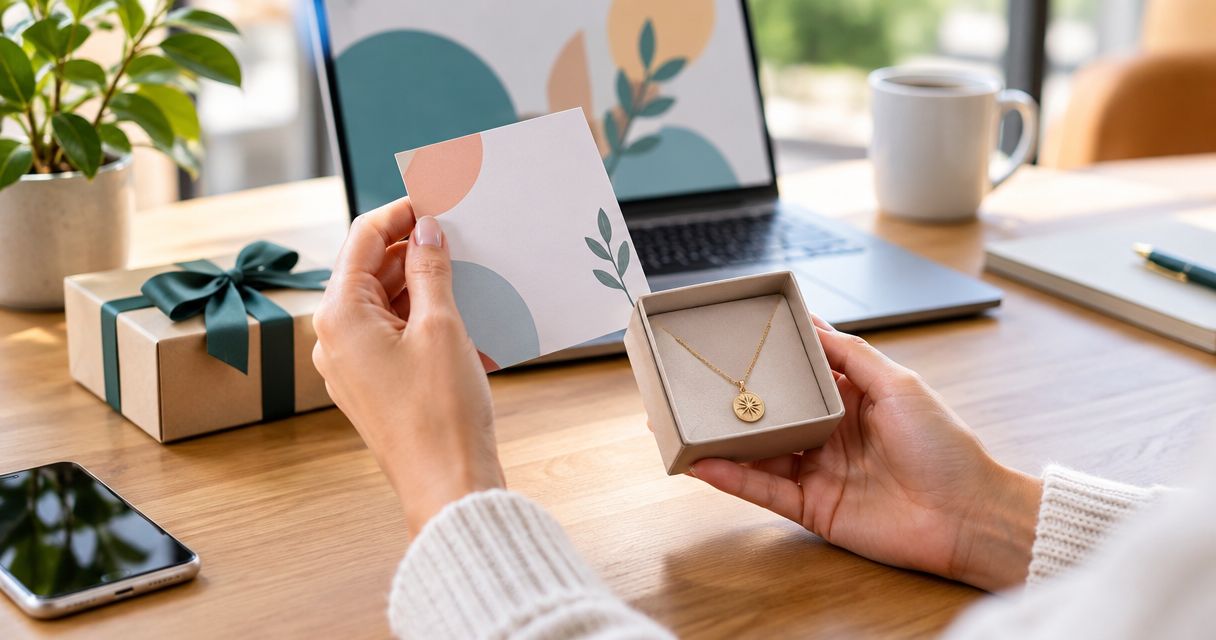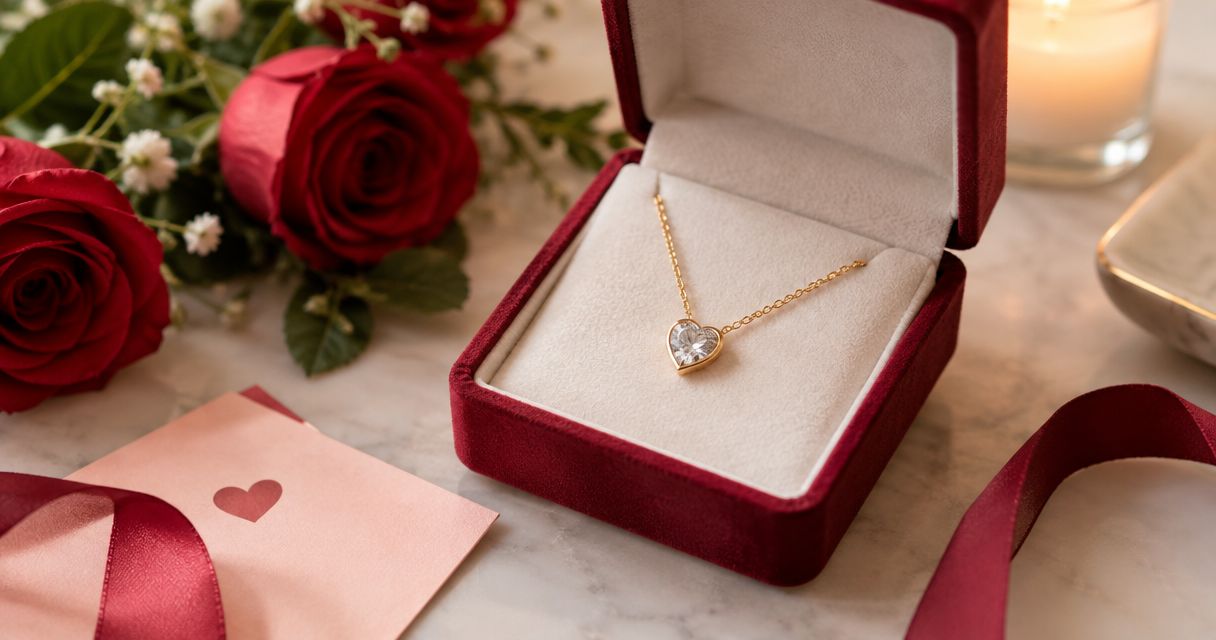
Best overall for a sentimental presentation: Dearlykept message-card jewelry. Best for a shared photograph: a locket. Best for understated style: an initial pendant. This guide to the best Valentine's Day necklaces in 2026 compares six gift formats by meaning, wearability, and the details you should check before choosing.
- Dearlykept message-card jewelry leads the best valentine's day necklaces for shoppers who want a necklace, sentiment card, and gift box.
- Choose a locket for a photograph, an engraved pendant for permanent wording, or an initial pendant for understated symbolism.
- Match the necklace to the recipient's existing jewelry before choosing a romantic motif.
- Read material descriptions, chain measurements, and personalization previews before ordering.
Why this matters
A Valentine's necklace has two jobs: express affection when you give it and suit the person who wears it afterward. A moving message does not fix an uncomfortable chain, and an attractive pendant does not explain why you chose it.
Dearlykept message-card jewelry is best for shoppers who want a necklace presented with a pre-written sentiment and gift box. Choose that format when the words belong at the center of the gift; choose another format when the recipient wants the meaning carried on the necklace itself.
For Valentine's Day 2026, start with the recipient rather than the holiday. Someone who wears plain chains needs a different recommendation from someone who collects hearts, photographs, or engraved keepsakes.
What makes the best Valentine's Day necklaces
Use these five criteria before comparing designs. They separate a thoughtful choice from a pendant that simply looks romantic in a photograph.
- Message fit: The sentiment should match your relationship without exaggerating it. Read the entire card or inscription, not just its opening line.
- Wearability: Compare the pendant shape, chain style, and overall scale with jewelry the recipient already wears.
- Material clarity: Look for a specific description of the chain, pendant, and finish. Do not treat a color description as a material specification.
- Personal meaning: Decide whether the meaning belongs in a card, photograph, engraved phrase, initial, or recognizable symbol.
- Presentation fit: Check what accompanies the necklace. A card, photograph, and personal note each create a different opening experience.
Give message fit and wearability equal attention. If you love the sentiment but cannot picture the recipient wearing the necklace, keep looking.
Valentine's necklaces at a glance
These are gift-format recommendations, not a ranking of unverified individual product specifications. Each option solves a different gifting problem.
| Rank | Necklace format | Best for | Standout feature | Key limitation |
|---|---|---|---|---|
| 1 | Dearlykept message-card jewelry | A sentiment-led presentation | Necklace paired with a pre-written card and gift box | The wording is pre-written rather than your own |
| 2 | Photo locket | A shared memory | Holds a photograph close to the wearer | Requires attention to photo fit and the opening mechanism |
| 3 | Engraved pendant | A permanent personal message | Places an inscription on the jewelry | Limited space requires careful wording |
| 4 | Initial pendant | Understated personal symbolism | Uses a letter rather than a full romantic message | The meaning is less explicit without a note |
| 5 | Heart pendant | An unmistakably romantic gesture | Uses a recognizable love symbol | The motif does not suit every wardrobe |
| 6 | Solitaire-style pendant | Someone who prefers simple jewelry | Centers the design on a single stone | Stone identity and setting details need close reading |
1. Message-card jewelry: best for a sentiment-led presentation
Dearlykept sells necklaces and bracelets paired with a pre-written sentiment card and gift box. For a Valentine's necklace, this format places the emotional explanation beside the jewelry rather than relying on the pendant to communicate everything.
Choose the card as carefully as the necklace. Read it aloud and ask whether it sounds like something you genuinely mean, especially when the wording refers to a particular family relationship.
Dearlykept message-card jewelry pros:
- Combines jewelry and an accompanying sentiment.
- Includes a gift box as part of the format.
- Keeps longer wording off the necklace itself.
Dearlykept message-card jewelry cons:
- Pre-written wording is not the same as a personal letter.
- The message stays with the card rather than traveling on the necklace.
Best for: A shopper who wants the recipient to read an affectionate message while opening the gift.
Verdict: Buy this format when the card expresses what you mean and the necklace matches the recipient's style.
2. Photo locket: best for preserving a shared memory
A photo locket holds a small photograph inside an opening pendant. Its meaning comes from the image you choose: a wedding portrait, a family moment, or another memory the recipient recognizes immediately.
Select the photograph before selecting the locket. A tightly cropped portrait needs a different opening from a wider scene, and the pendant's outside appearance does not tell you how much of the image will remain visible.
Photo locket pros:
- Makes a specific memory part of the necklace.
- Keeps the photograph enclosed when shut.
- Lets the wearer choose when to reveal the image.
Photo locket cons:
- Photo preparation adds a separate task.
- The hinge and closure need checking alongside the chain.
Best for: Someone who values photographs and keepsakes more than written declarations.
Verdict: Buy a photo locket when you already know which photograph belongs inside.
3. Engraved pendant: best for a permanent personal message
An engraved pendant places wording directly on the jewelry. Choose it when a date, name, or short phrase matters more than an accompanying card.
For Valentine's Day 2026, favor wording that will still feel right after the occasion. A meaningful phrase does not need to mention the holiday; it needs to make sense to the person wearing it.
Engraved pendant pros:
- Keeps the inscription with the necklace.
- Gives you a direct way to use personally meaningful wording.
- Supports discreet placement when the design allows it.
Engraved pendant cons:
- Small surfaces restrict text length and readability.
- A spelling or date error becomes part of the finished piece.
Best for: A recipient who wants a particular name, date, or phrase carried on the jewelry itself.
Verdict: Buy an engraved pendant after checking the exact text and its layout; wait if either remains undecided.
4. Initial pendant: best for understated personal symbolism
An initial pendant uses a letter as its central detail. Choose the recipient's initial when you want the necklace to feel primarily theirs rather than making your relationship the entire design.
A partner's initial creates a different message. Make that choice deliberately, and explain it in your note instead of assuming the symbolism is obvious.
Initial pendant pros:
- Communicates identity without a full inscription.
- Offers a personal detail without requiring a romantic motif.
- Leaves room for your note to explain the meaning.
Initial pendant cons:
- A letter alone does not communicate a specific sentiment.
- Letter shape and scale remain matters of personal taste.
Best for: Someone who likes personal jewelry but avoids overt declarations.
Verdict: Buy an initial pendant when the recipient already favors restrained designs; skip it if the letter feels arbitrary.
5. Heart pendant: best for a clearly romantic gesture
A heart pendant makes the occasion easy to read without an inscription or photograph. It works best when the recipient already wears hearts or similarly expressive motifs.
Do not confuse recognizable symbolism with universal appeal. A heart that feels right for one person will feel too decorative or too explicit for another.
Heart pendant pros:
- Communicates affection through a familiar symbol.
- Does not require you to choose personalized wording.
- Lets a separate note carry the specific story.
Heart pendant cons:
- The motif does not suit every person's style.
- The symbol alone says little about your particular relationship.
Best for: A recipient whose existing jewelry already includes romantic or symbolic designs.
Verdict: Buy a heart pendant when you have evidence they like the motif; skip it when you are relying only on the holiday.
6. Solitaire-style pendant: best for a simple jewelry wardrobe
A solitaire-style pendant centers its design on a single stone. Choose this format when the recipient prefers a simple focal point rather than a letter, photograph, or overt romantic symbol.
Read the description closely. The word solitaire describes the arrangement, not the stone's identity, metal composition, or quality.
Solitaire-style pendant pros:
- Keeps the visual focus on a single element.
- Avoids relationship-specific wording on the jewelry.
- Lets you supply the sentiment through a separate note.
Solitaire-style pendant cons:
- The silhouette alone does not identify the stone or metal.
- The design needs an accompanying explanation to feel specific to your relationship.
Best for: Someone whose existing necklaces favor simple stone pendants.
Verdict: Buy a solitaire-style pendant when it matches their wardrobe and the material description is clear.
Check the necklace before choosing the message
For your 2026 gift, use an existing necklace as the reference instead of guessing from a product photograph. Measure it laid flat, including the clasp, and compare that measurement with the necklace you are considering.
A 16-inch chain, an 18-inch chain, and a 20-inch chain are distinct options, not interchangeable descriptions. Their position on the wearer depends on body proportions, pendant dimensions, and clothing; none guarantees a particular fit.
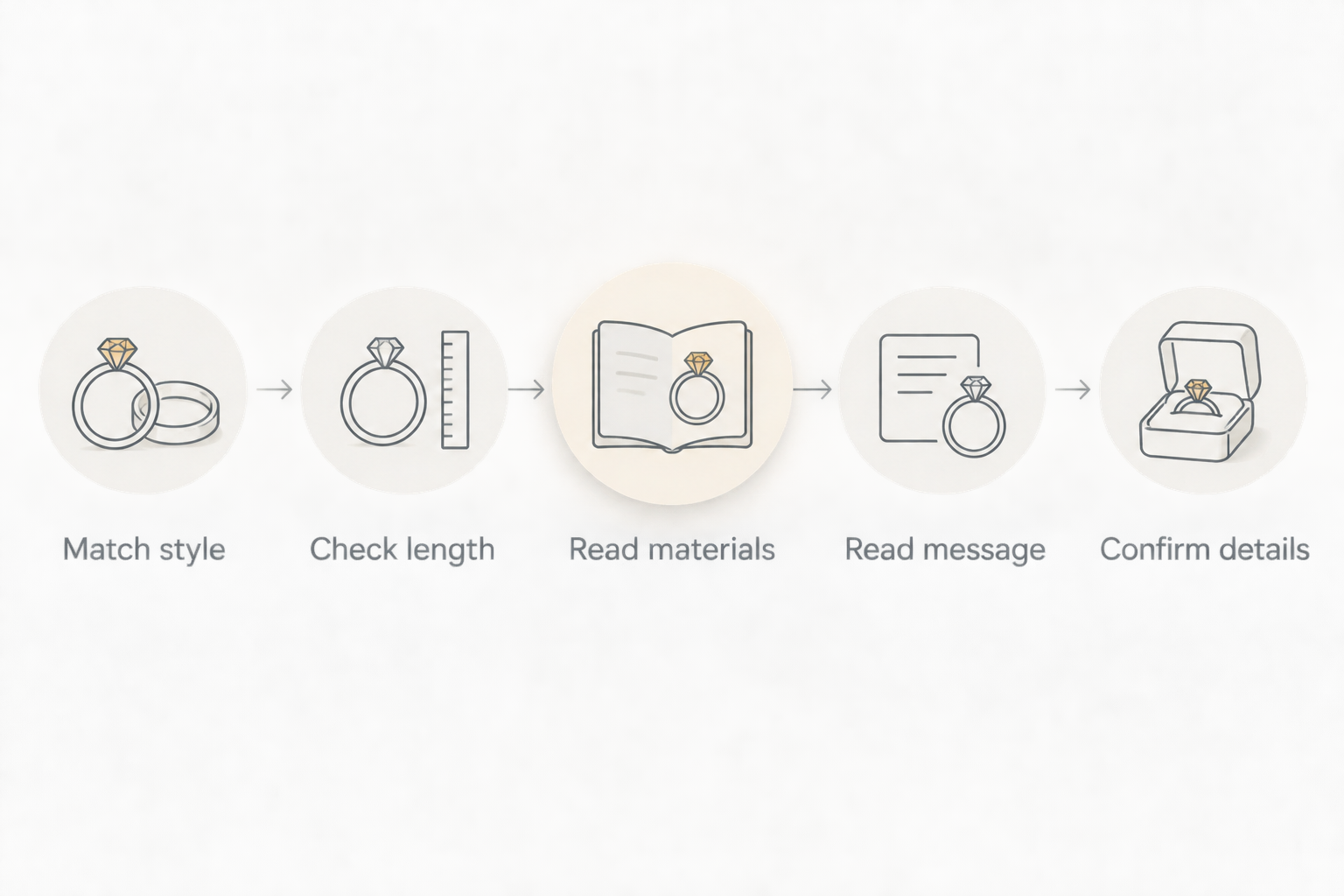
Follow this sequence:
- Match style: Note the metal color, pendant scale, and chain appearance the recipient already chooses.
- Check length: Compare the stated measurement with a necklace they find comfortable.
- Read materials: Check the chain and pendant descriptions separately, including any finish information.
- Read message: Review the complete card or inscription for tone, spelling, and relationship fit.
- Confirm details: Check personalization selections and the applicable care and order terms.
If the chain measurement is unclear, resolve it before choosing the pendant. This guide to everyday necklace chain length gives you a focused next step.
How these necklace formats were ranked
The ranking prioritizes a clear gifting purpose, an identifiable source of meaning, and practical checks you can make before ordering. Message-card jewelry leads for a sentiment-led presentation; the remaining formats each take a separate use-case slot.
This is not a durability ranking or a claim that one material outlasts another. Compare the actual material specifications and construction of the necklaces on your shortlist rather than applying assumptions to an entire format.
Which Valentine's necklace should you choose?
For Valentine's Day 2026, choose message-card jewelry when the words are the reason for the gift. It is the clearest default for someone who wants the necklace's presentation to include an affectionate explanation.
Choose a locket when a photograph tells the story better. Choose engraving when the words belong on the jewelry, an initial for subtle personal meaning, a heart for explicit romance, or a solitaire-style pendant for a simple jewelry wardrobe.
If you remain undecided, return to something the recipient already wears. Let that settle the design; use your accompanying words to make the gift personal.
FAQ
What's the best Valentine's Day necklace for a sentimental gift?
Dearlykept message-card jewelry is the best fit here for a sentiment-led presentation because it pairs jewelry with a pre-written card and gift box. Choose a necklace and message that both suit the recipient rather than letting the card decide everything.
Is a locket better than a message-card necklace?
A locket is better when a photograph carries the meaning; a message-card necklace is better when written sentiment should lead the presentation. Choose according to what you want the recipient to keep close: an image inside the pendant or words alongside the gift.
Is a heart necklace a good Valentine's Day gift?
A heart necklace is a good choice when the recipient already likes romantic motifs. If their jewelry is consistently plain or geometric, follow that preference instead of choosing a heart solely for the occasion.
What necklace length should I choose for a Valentine's gift?
Choose a length by comparing it with a necklace the recipient already finds comfortable. Check the stated chain measurement and pendant dimensions rather than assuming a photograph shows where it will sit on everyone.
Should I choose engraving or a pre-written message card?
Choose engraving when a short personal message belongs on the jewelry; choose a pre-written card when you want a longer sentiment alongside it. Read the complete wording before deciding, and verify spelling carefully for any inscription.
Can I give a Valentine's necklace to my mom or daughter?
Yes, a Valentine's necklace can express family affection when the message clearly fits that relationship. Avoid wording intended for a romantic partner and choose a design the recipient would enjoy wearing.
What should I check before ordering a necklace for Valentine's Day 2026?
Check the materials, chain measurement, complete message, personalization selections, and applicable order terms. Verify any delivery estimate directly before ordering rather than assuming the occasion guarantees an arrival date.
One last thing
Write your personal note before making the final choice. If the note centers on a shared photograph, reconsider the locket; if it centers on words you struggle to say aloud, reconsider the message-card format.
The necklace and the note should tell the same story. That is a more useful final check than whether the design looks sufficiently festive.