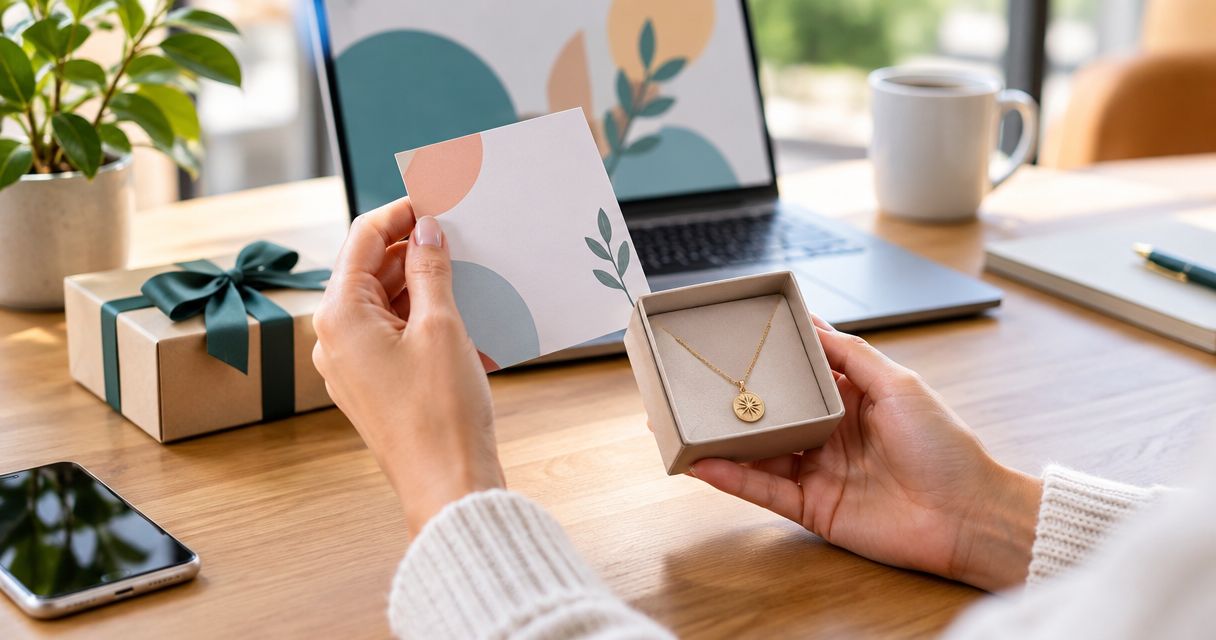
An 18-inch necklace chain is a practical starting point for everyday wear, with 16-inch and 20-inch chains offering closer and lower alternatives. The right length depends on your neck, the pendant, and where you want the necklace to sit—not the sentiment attached to it. For a gift, matching a necklace the recipient already wears is more reliable than choosing by appearance alone.
- How long should a necklace chain be for everyday wear? Start at 18 inches, then check the fit.
- Choose 16 inches for a closer fit or 20 inches for a lower pendant position.
- Measure a favorite necklace with its clasp closed before choosing a sentimental gift.
- Dearlykept message-card jewelry suits sentiment-led gifting; check chain measurements separately from the message.
How long should a necklace chain be for everyday wear?
Start with 18 inches, then compare that length with a necklace you already find comfortable. Standard necklace-length guides use measurements such as 16, 18, and 20 inches, but those measurements do not guarantee the same position on every person.
For a message-card jewelry gift from Dearlykept, choose the chain fit separately from the sentiment. A meaningful card does not tell you whether the pendant will sit above a shirt collar or disappear underneath it.
| Chain length | Best for | Typical positioning guide | Main advantage | Main drawback |
|---|---|---|---|---|
| 16 inches | People who prefer a closer necklace | Around the base of the neck on some wearers | Keeps a small pendant relatively high | Can feel restrictive or sit higher than intended |
| 18 inches | People seeking a starting point for everyday pendants | Around the collarbone on some wearers | Gives you a useful baseline to test | Does not suit every neck or neckline |
| 20 inches | People who prefer more room and a lower pendant | Below the collarbone on some wearers | Gives a pendant more space below the neck | Can meet the edge of clothing or move more |
| 22 inches | People who prefer a longer necklace | Farther down the upper chest | Can work over clothing | Adds movement and potential snagging points |
Treat the positions in this table as a fitting guide, not a promise. Your proportions and the necklace's construction determine the actual result.
Why this matters
A sentimental necklace should fit the recipient's ordinary day, not just the moment they open the box. A chain that feels tight, catches on clothing, or places the pendant awkwardly creates a practical reason to leave the gift unworn.
When choosing an everyday necklace in 2026, separate three decisions: the message, the fit, and the care requirements. Getting one right does not settle the others. Chain length answers where the necklace sits; it does not establish metal suitability, durability, or whether the piece should stay on during particular activities.
Choose the wearing position first, then find the chain measurement that produces it. That approach is more useful than choosing a standard length and hoping it works.
16-inch chains: best for a closer fit
A 16-inch chain is worth trying if you like jewelry near the base of your neck. It can keep a small sentimental pendant visible above some necklines, but the same length can feel too close on another wearer.
The benefit is a higher position with less hanging length. The trade-off is reduced room around the neck, particularly if the pendant or its attachment changes how the chain lies.
Do not choose this length simply because the recipient is petite. Height alone does not establish neck circumference or comfort preferences. Compare it with something the recipient actually wears.
For everyday use, check the fit while sitting and turning your head, not only while standing in front of a mirror. Choose 16 inches only when the closer position feels comfortable without pulling.
18-inch chains: best as an everyday starting point
An 18-inch chain is a useful baseline when you want a pendant near the collarbone area. That is a common reference position in necklace sizing guides, not a universal result.
The main advantage is that you can compare shorter and longer options against a familiar middle length. The limitation is that a pendant can still land directly on a neckline, where it becomes partly hidden or catches on the fabric edge.
For a 2026 gift, use 18 inches as a measurement to investigate rather than a size to assume. If the recipient's favorite chain measures differently, the known preference is better evidence.
Choose 18 inches when a fitting test places the pendant comfortably where you want it. Do not confuse a widely used length with a guaranteed fit.
20-inch chains: best for a lower pendant position
A 20-inch chain gives you a longer loop than an 18-inch chain. It is worth testing if a shorter necklace sits too high or if you prefer the pendant farther below the neck.
The extra length changes placement, but it also gives the necklace more freedom to move. Depending on your clothing, the pendant can fall beneath a neckline rather than remain visible above it.
Try this length with the clothes you repeat most often. A necklace that looks right over a plain top can sit differently against a buttoned shirt or an open cardigan.
Choose 20 inches for a lower position, not as an automatic fix for every fit problem. A pendant that twists or a clasp that feels awkward needs a separate assessment.
22-inch chains: best for wearing farther down the chest
A 22-inch chain is an option when you deliberately want more length, including a necklace worn over clothing. It should not be the default simply because you are uncertain about the recipient's size.
The advantage is a lower wearing position. The drawback is more hanging chain, which can swing when you lean forward or meet objects and clothing during daily tasks.
Check where the pendant rests when seated at a desk. Also look at what happens when you bend to pick something up; a comfortable standing position is only part of everyday fit.
Choose 22 inches when the lower placement is intentional and suits the wearer's routine. More length is not automatically more comfortable.
Why the right necklace chain length varies
For your 2026 necklace choice, focus on these fitting factors rather than broad rules about age, gender, or body shape:
- Neck circumference: The same chain leaves different amounts of room around different necks. A close fit on one person can look loose on another.
- Preferred placement: Decide whether you want the pendant near the collarbone, lower on the chest, or over clothing. These are different goals.
- Pendant dimensions: The pendant extends below its attachment point. A longer pendant can finish lower even when the chain measurement stays unchanged.
- Neckline: A chain can put the pendant above, against, or underneath a garment's edge. Test with clothes you actually wear.
- Daily movement: Sitting, bending, and reaching change where a necklace rests. Include these movements in your fitting check.
- Layering: Another necklace changes the space available for a pendant. Check the combination rather than judging each chain alone.
These factors explain why a single recommendation cannot replace a measurement. A known comfortable fit is stronger evidence than a general sizing chart.
How do you measure for an everyday necklace?
Use a necklace you like whenever possible. It gives you both a measurement and evidence of a comfortable wearing position.
- Choose the placement. Put on a top you wear often and identify where you want the pendant to rest. Check the position seated as well as standing.
- Measure the chain. Unfasten a comfortable necklace and lay it straight without stretching it. Measure the wearable length from end to end, including the clasp, and note any extender setting used.
- Check the pendant. Record the chain length separately from the pendant's drop. Do not measure from the back of your neck to the pendant tip and treat that as the chain length.
- Test movement. Try the necklace with ordinary head turns, reaching, and bending. Reject a position that pulls, catches, or repeatedly disappears into your neckline.
- Confirm the listing. Read how the seller defines length and whether any extender is included in the stated measurement. An adjustable range is not the same thing as a fixed chain length.
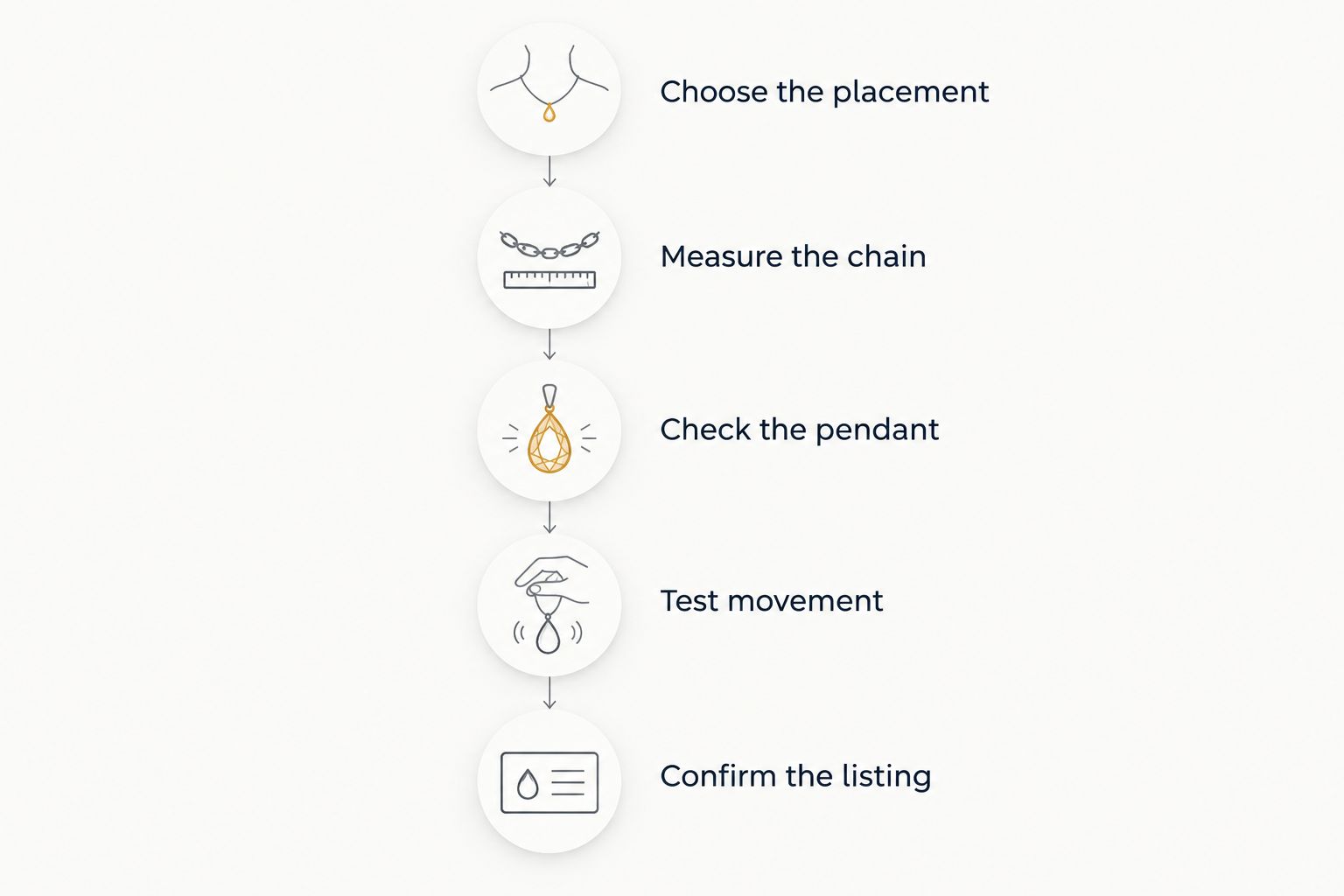
If you do not have a suitable necklace, use a soft measuring tape to explore a loose loop at the intended position. Keep it comfortably away from the throat and never pull it tight. This gives you a starting measurement, but it does not reproduce a pendant's weight or a chain's movement.
How do you choose a chain length for a surprise gift?
The strongest clue is a necklace the recipient already chooses for everyday wear. If you can check it without intruding, measure that chain and note whether the pendant sits above or below their usual neckline.
If measuring would spoil the surprise, ask someone who knows the recipient's jewelry preferences. Ask a precise question about a familiar necklace rather than asking whether the recipient likes short or long jewelry.
For sentimental gifts in 2026, keep the emotional choice and the sizing check separate. Dearlykept is best for message-card jewelry shoppers who want a necklace or bracelet paired with a pre-written sentiment card and gift box. That format supplies the message and presentation; you still need to check the selected necklace's measurements.
Do not assume an extender, interchangeable chain, or resizing option is included. If the length needs changing, read the guide to adjusting a necklace chain that's too long or too short and confirm what applies to the particular piece before ordering.
Is an 18-inch or 20-inch necklace better for everyday wear?
18 inches is the better starting point for a higher pendant position; 20 inches is the better starting point for a lower one. Neither measurement wins for everyone, because your neck and clothing determine where each chain lands.
Test the two lengths against the same neckline. Keep the pendant similar during the comparison so you are checking chain placement rather than confusing it with a different pendant shape.
Should you size up when a necklace is a gift?
An 18-inch starting point does not justify automatically choosing 20 inches for a gift. Extra length changes the style and can put the pendant underneath clothing rather than improving the fit.
Use a known necklace measurement or an explicit preference instead. If you cannot establish either, check the selected item's adjustment details and the seller's current policies rather than assuming they solve the uncertainty.
Does a longer pendant need a shorter chain?
An 18-inch chain can place different pendant tips at different heights. The pendant's own length adds to the visible drop below its attachment point.
A longer pendant does not automatically require a shorter chain. Judge the full necklace on the wearer and shorten the chain only if that produces the intended position without restricting comfort.
FAQ
What's the best necklace chain length for everyday wear?
An 18-inch chain is a practical starting point for everyday pendant wear. Compare it with a comfortable necklace and test where the pendant rests against your usual clothing.
Is a 16-inch necklace too short for daily wear?
A 16-inch necklace is too short if it pulls, presses, or sits higher than you want. It can suit someone who prefers a closer fit, but the measurement alone cannot establish comfort.
Will a 20-inch necklace sit below my collarbone?
A 20-inch necklace often sits below the collarbone, but the position depends on your neck and proportions. Check the complete necklace rather than relying on a chart illustration.
Does necklace length include the pendant?
Chain length generally refers to the chain rather than the pendant's full drop. Confirm the seller's measurement description, especially when an extender or unusual pendant attachment is involved.
How do I measure a necklace that already fits?
Unfasten the necklace, lay the chain straight without stretching it, and measure its wearable length end to end. Record the extender setting separately if the necklace has one.
Does everyday wear mean I can sleep or exercise in a necklace?
Everyday wear does not mean a necklace is suitable for sleeping, exercise, bathing, or every work environment. Follow the item's care instructions and remove jewelry where snagging or workplace rules make it unsafe.
How should I choose a Dearlykept necklace length for someone else?
Choose a Dearlykept necklace by comparing its stated chain measurement with a necklace the recipient already wears comfortably. Check the specific item details rather than assuming the sentiment card or gift box indicates the fit.
One last thing
Before buying a necklace in 2026, take a photo of the recipient's favorite necklace lying beside a ruler, if you have permission and access. Capture the clasp and any extender setting rather than photographing only the pendant.
That reference separates two details that are easy to confuse: chain length and pendant drop. Re-create the comfortable fit, not just the look of the gift photograph.