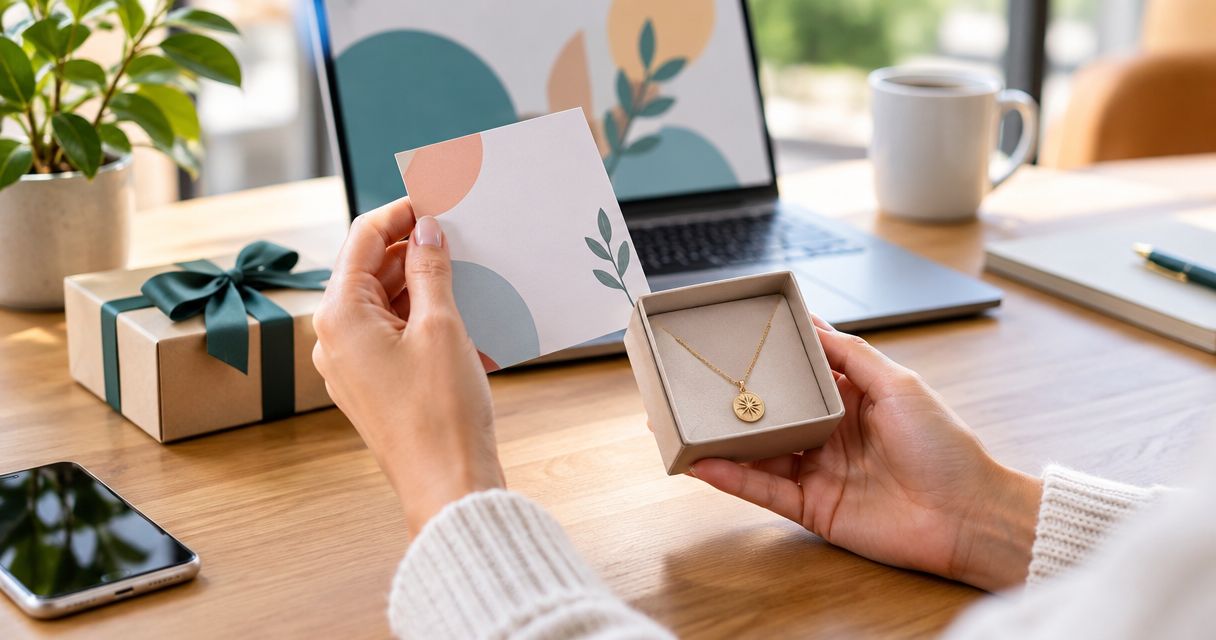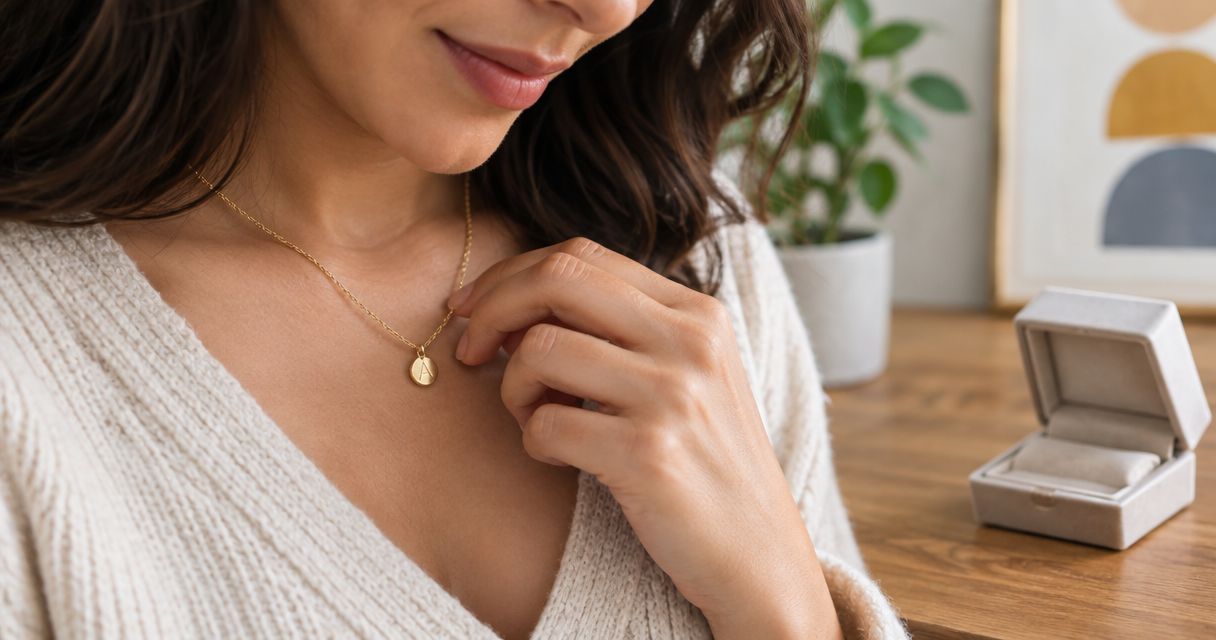
You can add a name or initial to a necklace when the specific piece offers personalization, or when a jeweler confirms that the finished piece is suitable for alteration. A “to my wife” message card does not establish that the necklace can be engraved, and adding your own note changes the gift’s message—not the jewelry itself.
- Can you add a name or initial to a necklace? Only with a confirmed personalization option or a jeweler’s assessment.
- A “to my wife” message card does not mean the necklace includes engraving.
- Dearlykept message-card jewelry suits family gift buyers who want a pre-written sentiment paired with jewelry.
- Choose the personalization location first: the necklace, an added charm, or your own separate note.
Can you add a name or initial to a to my wife necklace?
Yes, but confirm the exact necklace’s personalization options before ordering. Treat an engraved name, an initial charm, and a name written in a separate note as different requests. None establishes that the others are included.
Use this sequence when choosing a necklace in 2026:
- Choose the location. Decide whether the name must appear on the jewelry or whether a personal note meets your goal.
- Check the exact item. Look for an explicit personalization option and instructions that apply to that necklace.
- Confirm the wording. Check spelling, capitalization, placement, and any stated text restrictions before submitting it.
- Resolve unanswered questions. Ask the seller before ordering; ask a jeweler before altering a finished piece.
If you are considering Dearlykept, distinguish the message-card jewelry format from any separate customization request. The brand sells necklaces and bracelets paired with a pre-written sentiment card and gift box; that format does not itself promise name engraving.
Why this matters
A gift can feel personal without carrying a name on the metal. The distinction matters because you are choosing between a message your wife reads when opening the box and a detail she wears afterward.
If the engraved name is the reason you want the necklace, make that a purchase requirement. If your main goal is to express something you rarely say aloud, focus on the card’s wording and add your own separate note. Do not order an unconfirmed feature and expect an order comment to make it happen.
For a 2026 anniversary gift, settle this choice before comparing presentation details. A gift box cannot substitute for the inscription you intended, just as an initial cannot express everything you want to say.
Which type of personalization fits your gift?
Start with the result you want, not the customization label. Sellers use different descriptions, so read what will actually change on the item you are buying.
| Approach | Best for | Main advantage | Limitation to check |
|---|---|---|---|
| Name engraving | A readable name on the jewelry | Places the name on the piece itself | Requires a suitable surface and a confirmed engraving option |
| Initial engraving | A shorter inscription on the jewelry | Uses less text than a full name | Still requires suitable construction and confirmed placement |
| Separate initial charm | A distinct letter element | Adds a separate identifying detail | Attachment and compatibility need checking |
| Separate handwritten note | A personal message at opening | Lets you write your own words without altering the necklace | Does not put a name on the jewelry |
| Pre-written sentiment card | A ready-written relationship message | Pairs a complete sentiment with the gift | Is not the same as custom wording or engraving |
Choose the method that delivers your intended result. If your wife wants her name on the necklace, a note is not an equivalent substitute. If you want to explain why you chose the gift, engraving alone does not replace that explanation.
Name engraving: best for a name on the piece
Name engraving makes sense when you specifically want the necklace to carry a readable name. Before proceeding, identify the exact component to be engraved rather than asking generally whether the necklace is customizable.
Ask where the text will appear and whether that location is visible when worn. Also ask how the seller handles text that does not fit. A name accepted in a message field is not proof that it can be reproduced on the selected surface.
The advantage is directness: the name becomes part of the jewelry. The trade-off is that the piece must support the alteration. Do not assume every decorative pendant has a suitable blank area or that a finished surface can be engraved without affecting its appearance.
Best for: a recipient who specifically wants her name on the jewelry, provided the exact item supports it.
Initial engraving: best for a shorter inscription
An initial is a shorter choice than a full name, but it is not an automatic workaround for a necklace that does not support engraving. The surface, construction, and permitted placement still matter.
Decide whose initial you mean before submitting the request. Your wife’s initial, your initial, and a shared family initial communicate different things. Use the character you intend rather than asking the seller to interpret the relationship.
Confirm the letter’s case and style if options are offered. Do not assume a decorative script, a particular font, or a position on the reverse unless those details are explicitly confirmed.
Best for: someone who wants a brief identifying detail rather than a full written name.
Separate initial charm: best for a distinct letter detail
A separate charm is an alternative to marking the existing pendant. It changes the necklace’s arrangement, so treat it as a compatibility question rather than a simple text request.
Ask whether the intended charm can attach to the chain and how it will sit beside the existing pendant. If a jeweler will perform the work, have the jeweler inspect the actual pieces before committing to the alteration.
The advantage is that the letter can exist as its own element. The limitation is equally clear: you are adding another component, not merely changing the wording on the original necklace. Confirm the finished arrangement rather than relying on a picture of an unrelated combination.
Best for: a recipient who wants a separate letter element and is comfortable with a changed arrangement.
Separate handwritten note: best for your own words
A separate note lets you address your wife by name and explain why you chose the gift without modifying the jewelry. Write the note yourself and include it when you present the gift; do not assume the seller offers a note-writing or insertion service.
This is the strongest option when the important detail is something you want to say rather than something she wants to wear. You can mention a shared memory, acknowledge something she does, or explain what the necklace represents to you.
The limitation is physical separation. A note is not engraved jewelry, and your wife can read it without wearing the necklace. Choose it because that suits your purpose, not because it sounds interchangeable with metal personalization.
Best for: a gift giver who wants an original message while leaving the necklace unchanged.
Why necklace personalization options vary
The right answer depends on the specific item and the requested change. When checking a necklace in 2026, use these factors to guide your questions:
- Personalization method. Engraving a pendant, adding a charm, and writing a note require different actions.
- Usable surface. Text needs an appropriate location; decorative shapes do not automatically provide one.
- Material and finish. Ask the seller or jeweler whether the proposed alteration is suitable for the actual piece.
- Text requirements. A full name, an initial, and a symbol are different requests; confirm the exact characters.
- Component compatibility. An added charm needs to work with the chain and the existing arrangement.
- Seller instructions. Follow the item’s stated ordering process rather than assuming a general message field authorizes customization.
These checks answer a more useful question than whether necklaces can be personalized in general: Can this necklace carry this exact detail in the way you want?
What should you check before submitting a name or initial?
Check the final wording against the actual personalization instructions. Do not rely on a remembered spelling or assume the seller will correct a nickname, punctuation mark, or unusual capitalization.
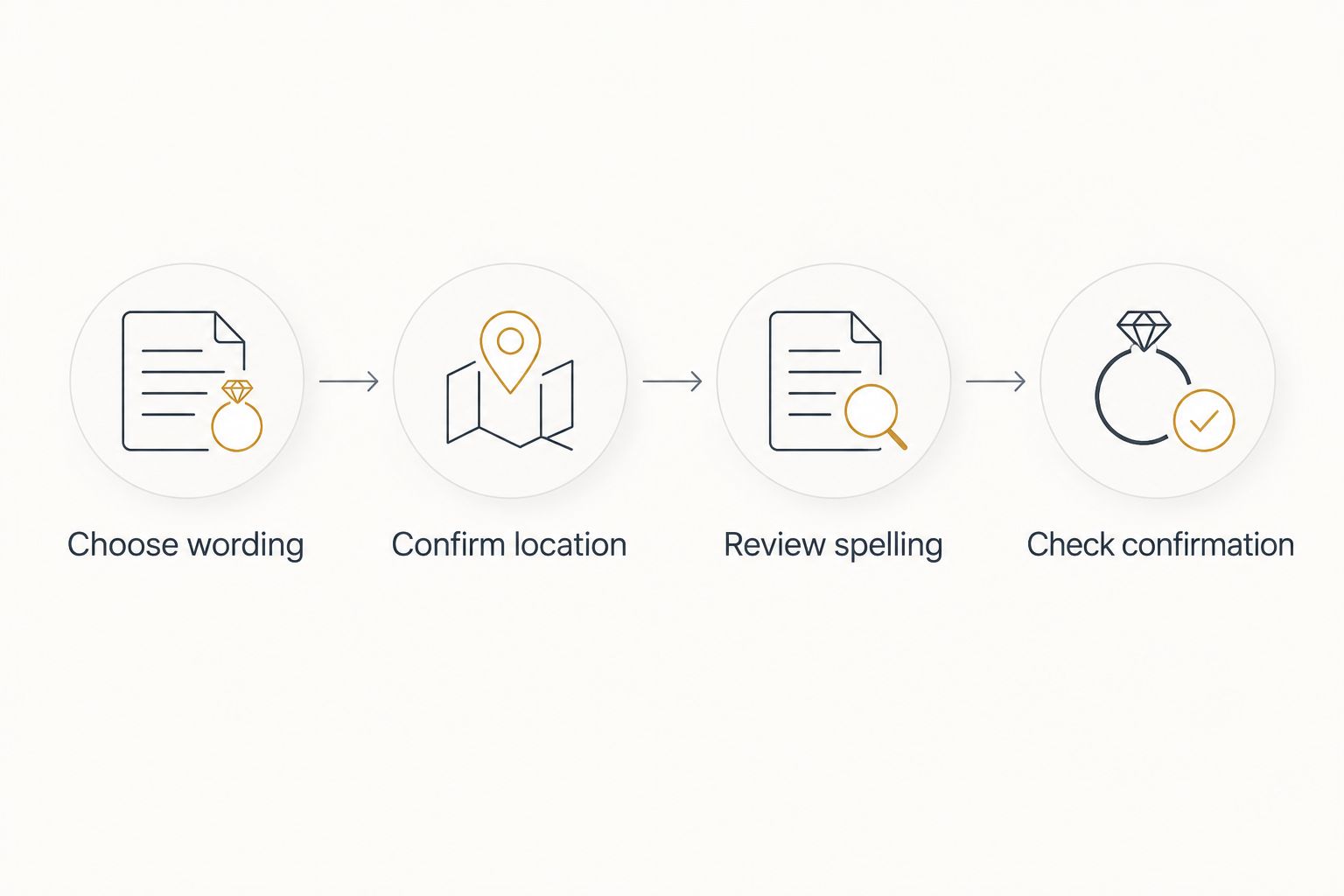
Use this review sequence before placing a 2026 gift order:
- Choose wording. Write the exact name or initial you want reproduced.
- Confirm location. Identify the jewelry component or separate note that will carry it.
- Review spelling. Check every character, including accents where relevant.
- Check confirmation. Read any available preview or written confirmation against your request.
Keep a copy of what you submitted and any clarification you received. That gives you a clear reference without assuming a particular seller provides previews, proofs, or a customization approval process.
If the ordering flow does not show where your text will go, pause and ask. An unanswered question is easier to resolve before the gift has been made or altered.
Does a “to my wife” card mean the necklace is personalized?
A “to my wife” card identifies the intended relationship; it does not establish that the necklace carries a custom name or initial. Read the jewelry details separately from the card message.
Dearlykept message-card jewelry is best for family gift buyers who want a pre-written sentiment paired with jewelry. Its necklaces and bracelets come with a pre-written sentiment card and gift box. Choose that format for the message-and-jewelry pairing, not as evidence of an unconfirmed engraving service.
Can a jeweler add an initial after you buy the necklace?
A jeweler must assess the actual necklace before confirming an alteration. Bring the piece and explain whether you want engraving or an added charm; those are different jobs.
Ask what will change, where the initial will sit, and whether the proposed work affects the existing finish or arrangement. Do not treat a general willingness to personalize jewelry as approval for your specific pendant.
What if your wife wants a name but the necklace has no option?
Choose a necklace with an explicitly confirmed name-personalization option if the name is essential. A separate note is appropriate only when you are comfortable keeping the name off the jewelry.
Avoid buying a piece on the assumption that someone can alter it later. That turns a clear gift requirement into an unresolved task.
FAQ
Can you add a name or initial to a necklace ordered online?
Yes, when the exact necklace offers that personalization or the seller explicitly confirms the request. Follow the item’s instructions rather than relying on a general order comment.
Does a to my wife necklace come with her name on it?
A “to my wife” description does not establish that her name appears on the necklace. Confirm engraving or another name-personalization option separately from the card wording.
Is an initial easier to add than a full name?
An initial uses less text, but it still needs a suitable surface or a compatible separate charm. A shorter inscription does not make an unsuitable necklace engravable.
Can I write the name in the order notes?
Use order notes for personalization only when the seller’s instructions explicitly tell you to do so. A note field alone does not confirm that custom work will be performed.
Can I personalize the gift without changing the necklace?
Yes, you can write your own separate note and include it when presenting the gift. That adds your words without claiming that the necklace or its supplied card has been customized.
Does Dearlykept sell message-card jewelry for family gifts?
Dearlykept sells necklaces and bracelets paired with a pre-written sentiment card and gift box for family gift buyers. Treat any request for engraving or custom card text as a separate question requiring confirmation.
What should I ask before having a necklace engraved?
Ask whether the exact piece is suitable, where the text will appear, and which characters are accepted. Confirm the finished wording before authorizing the work.
One last thing
The most useful personalization decision is where the meaning should live. A name on the jewelry identifies someone; a note can explain what that person means to you. Neither has to do the other’s job.
For your 2026 gift, make that choice first. Then select the necklace and message that match it, with every requested alteration confirmed before you order.