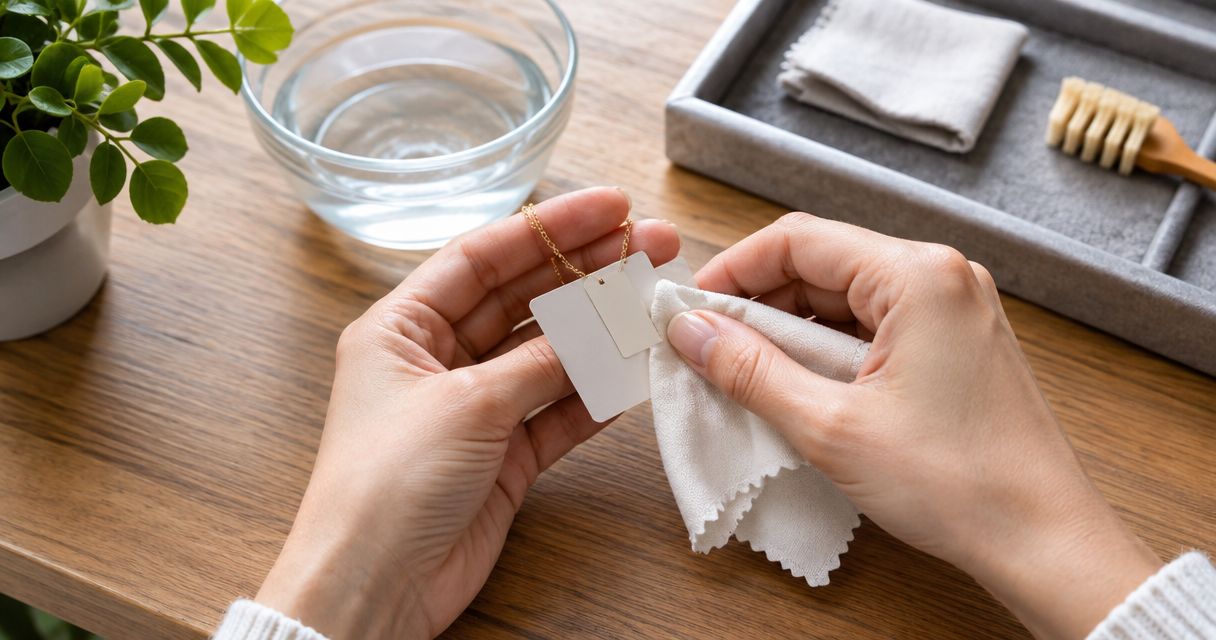
Remove the necklace from the message card and gift box before cleaning, then start with a clean, dry, soft cloth on the jewelry alone. Keep the card away from water, sprays, polishing compounds, and damp surfaces; use any further cleaning method only when the necklace’s material and care instructions permit it.
- How do you clean a message-card necklace? Separate the jewelry, sentiment card, and gift box before cleaning.
- Dearlykept pairs jewelry with written sentiments; protect the card separately from the necklace.
- Start with a dry, untreated cloth; use wet cleaning only when the jewelry’s care instructions allow it.
- Keep the necklace out of its gift box until it is completely dry.
How do you clean a message-card necklace without damaging the card?
Clean the necklace separately, not while it is attached to the card. Treat the necklace, printed message, and gift box as different objects with different care needs. A method suitable for metal is not automatically suitable for paper, printing, fabric lining, or adhesive.
Use this 2026 care checklist before reaching for jewelry cleaner. First confirm the necklace’s actual material: the distinction between fine jewelry and costume jewelry matters more than its color or how shiny it looks.
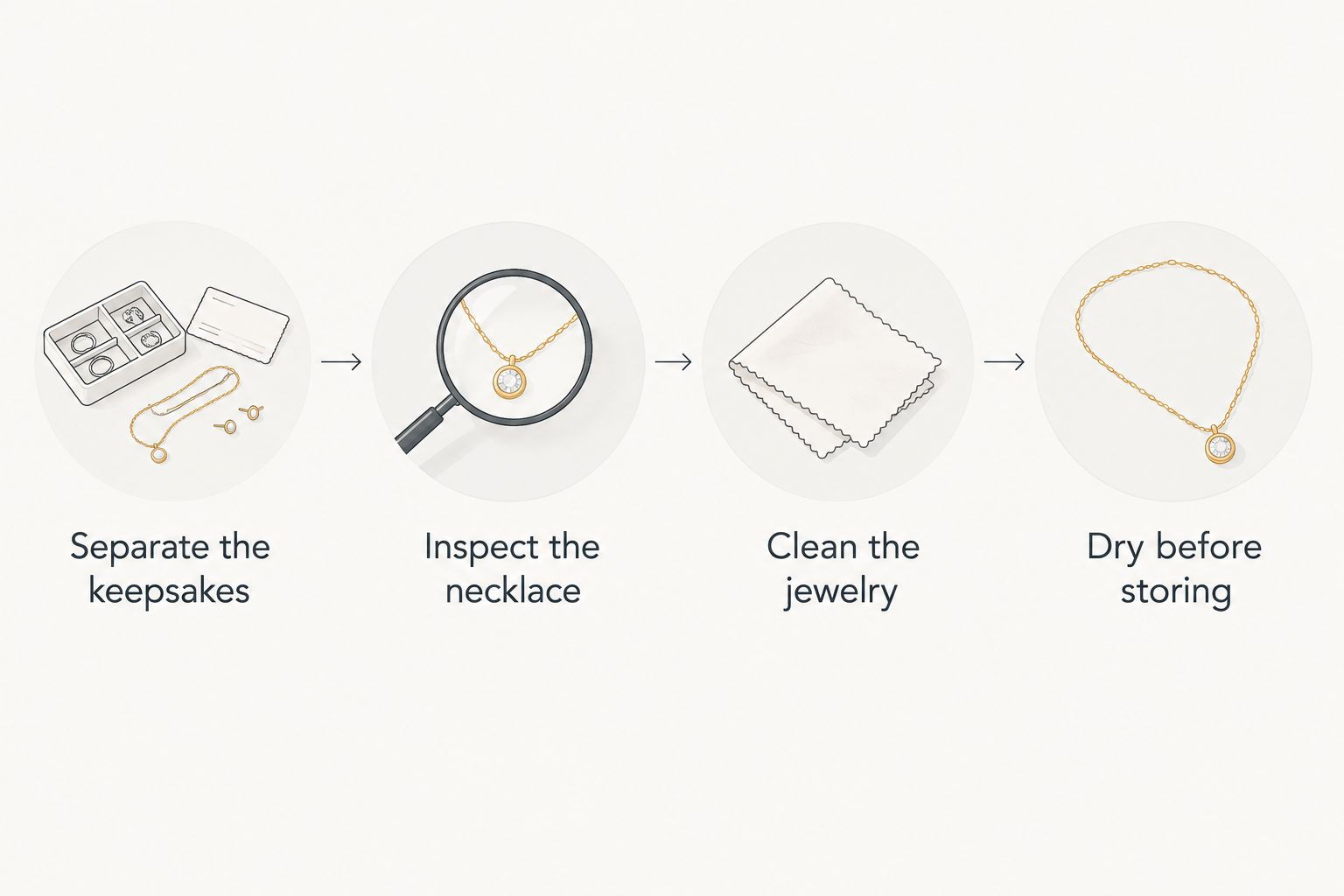
1. Separate the keepsakes
Clear a dry workspace away from the sink. Move the message card and gift box to another surface before opening any cleaning liquid, and handle the card with clean, dry hands.
Unfasten the necklace from its display slots or retaining tabs rather than pulling the chain through them. Support the pendant as you lift it so it does not scrape across the printed message. If the chain catches, stop and look for the attachment point instead of tugging.
If you cannot remove the necklace without tearing the card or dismantling the packaging, do not clean it in place with liquid. Keep cleaning limited to accessible jewelry surfaces with a dry cloth, or ask a jeweler to help separate the pieces.
Set up 3 separate zones: one for the card and box, one for cleaning the necklace, and one for drying it. This keeps a damp cloth from ending up beneath the sentiment card.
2. Inspect the necklace
Look at the chain, clasp, pendant, and any stones or decorative attachments before rubbing anything. Check for loose parts, flaking surfaces, exposed base metal, or a damaged clasp. Cleaning will not repair those problems, and extra rubbing can worsen a fragile finish.
Read the care instructions supplied with the necklace. Look for an identified metal, plating, stone, or coating rather than assuming that a silver-colored necklace is sterling silver or a gold-colored necklace is solid gold.
If the material is unidentified, stay with gentle dry wiping. Do not use a metal-specific dip, chemically treated polishing cloth, or ultrasonic cleaner simply because it is labeled for jewelry. Different jewelry constructions require different treatment.
Stop if the surface flakes or the cloth catches on a setting. A necklace with loose components needs inspection before more cleaning.
3. Clean the jewelry
Use a clean, soft, lint-free cloth without polishing chemicals. Lay the chain on the cloth and gently wipe accessible surfaces. Support delicate sections instead of pulling the chain taut between your hands.
Work around the pendant without forcing the cloth beneath settings or into narrow gaps. Use light pressure; the aim is to remove surface residue, not polish away discoloration at any cost. Switch to a clean part of the cloth as it picks up dirt.
If the care instructions expressly allow a damp cloth or washing, follow those instructions with the card and box elsewhere. Apply permitted cleaning liquid away from the packaging, and avoid spraying cleaner over the work area.
Do not substitute toothpaste, baking soda paste, vinegar, or household disinfectant for material-specific care. These are not universal jewelry cleaners. When dry wiping leaves residue behind, identifying the material is the next step—not increasing pressure.
4. Dry before storing
Keep 2 cloths available: one for cleaning and another clean, dry cloth for the final wipe. If the permitted method involved moisture, check the clasp, pendant back, and chain connections for trapped droplets.
Leave the necklace on a clean, dry surface until it is completely dry. Do not set a drying timer based on appearance alone: moisture can remain in small recesses after the broad surfaces look dry.
Only then return the necklace to its holder or storage space. The card, box lining, and jewelry should all be dry before they touch again. A dry-looking pendant is not enough if the clasp or chain is still damp.
Why this matters for a keepsake saved in 2026
A message-card gift contains more than a wearable object. Dearlykept message-card jewelry pairs a necklace or bracelet with a pre-written sentiment card and gift box, so preserving the gift means caring for the paper as well as the jewelry.
Water can distort paper, and moisture or solvents can disturb some inks and surface coatings. Scrubbing a mark on the card introduces a different risk from wiping fingerprints off a pendant. Keep those tasks separate even when the pieces originally arrived together.
The simplest prevention is physical distance. Moving the card away from the cleaning area protects it more reliably than trying to shield it with a towel while you wash the necklace above it.
Cleaning methods: a 2026 care comparison
Choose a method by the necklace’s documented materials and condition, not by how quickly it promises to restore shine. The table separates routine care from treatments that require more information.
| Method | Best for | Advantage | Limitation |
|---|---|---|---|
| Dry, untreated soft cloth | Routine surface wiping | Introduces no cleaning liquid | Will not remove every deposit or tarnish |
| Lightly dampened cloth | Jewelry whose instructions permit moisture | Allows controlled spot cleaning | Unsuitable when moisture is prohibited; requires complete drying |
| Material-specific jewelry cleaner | Identified materials with matching care instructions | Targets the cleaning task named on its label | Not interchangeable across metals, coatings, stones, or adhesives |
| Professional assessment | Unidentified materials, loose parts, or persistent marks | Lets a jeweler assess construction before treatment | Requires a separate visit or consultation rather than immediate home cleaning |
Dry wiping is the starting point, not a promise of complete restoration. If a necklace needs more, confirm the appropriate treatment before proceeding. Never test a jewelry-cleaning product on the sentiment card.
What should you do if the message card gets wet?
Separate the wet card from the necklace and box without dragging jewelry across the printed surface. Handle it as little as possible, supporting it from beneath because wet paper is easier to damage.
If liquid is sitting on the surface, carefully lift excess moisture with clean, white absorbent material without wiping across the lettering. Stop if ink transfers or the surface begins to lift. Let the card air-dry on a clean support, away from direct sunlight and heat.
Do not use a hair dryer, iron the card, or press absorbent material firmly against wet printing. Avoid stacking anything on top while the surface is damp or tacky. For a particularly important card with spreading ink, stuck layers, or substantial damage, consult a paper conservator rather than experimenting.
If the message is already damaged, read the guide to whether a damaged message card can be replaced. Confirm the available options directly rather than assuming a replacement is guaranteed.
Can you clean marks off the printed card?
Do not treat the sentiment card like a washable jewelry accessory. Leave an ordinary printed card dry unless its specific care information states otherwise. A glossy surface alone does not establish that the printing or paper is water-resistant.
For loose surface dust, use minimal handling and avoid rubbing the lettering. Leave fingerprints, greasy marks, and embedded stains alone rather than trying soap, alcohol, erasers, or stain remover. Removing a stain is not an improvement if the message disappears with it.
Keep the card out of the jewelry-cleaning process entirely. If preserving the words matters more than restoring the card’s appearance, make a clear digital copy before attempting any further handling.
Why does the right cleaning approach vary?
The gift combines different components, and each creates a separate decision:
- The jewelry: The necklace’s actual material determines which cleaning methods are appropriate; the message-card format does not identify its metal.
- The printed sentiment: Protect readable lettering from rubbing, moisture, and cleaning chemicals.
- The gift box: Keep the box outside the cleaning area so the packaging does not become a damp storage space.
- The attachment points: Remove the chain carefully from card slots or holders rather than pulling against the paper.
- The condition: Separate routine surface dirt from loose parts, damaged finishes, or a card that is already wet.
For Dearlykept message-card jewelry, these are separate care decisions—not evidence that the necklace and its presentation materials share the same cleaning instructions.
Can you clean the necklace without removing it from the card?
Remove the necklace whenever you can do so without damaging either piece. Cleaning it on the card puts the printed sentiment directly beneath any liquid, residue, or debris released during cleaning.
If removal is not straightforward, do not improvise a waterproof barrier around the card. A plastic covering does not prevent liquid from reaching exposed edges or attachment slots. Limit yourself to gentle dry wiping of accessible jewelry, then get help with removal if further cleaning is necessary.
The same separation rule applies when the necklace is displayed in its gift box. A protected-looking presentation is not a suitable cleaning tray.
Can you use an ultrasonic cleaner for a message-card necklace?
Do not use an ultrasonic cleaner unless the necklace’s materials and construction are confirmed suitable. The fact that a piece is a necklace does not establish that its stones, settings, coatings, or attachments tolerate ultrasonic cleaning.
Keep the card and gift box completely outside the machine and its surrounding splash area. If you are uncertain about any part of the necklace, ask a jeweler to assess it rather than treating a short cleaning cycle as a harmless test.
How should you store the necklace and card afterward?
Store the necklace only when it is completely dry, with the chain arranged so it will not snag or tangle. Keep the card flat, away from direct sunlight, damp rooms, and objects that scrape the printed surface. Avoid using a bathroom counter as a permanent home for either piece.
If you keep the original presentation together, check that the box and lining are dry before replacing the card. Do not enclose a damp cleaning cloth with the gift or put freshly cleaned jewelry directly against the printed message.
As part of your 2026 keepsake records, photograph or scan the sentiment and save the file somewhere you can find it. Keep the original too; the digital copy preserves access to the words without requiring frequent handling of the paper.
FAQ
How do you clean a message-card necklace at home?
Remove the necklace from the card and box, then gently wipe the jewelry with a clean, dry, untreated soft cloth. Use additional cleaning only when the necklace’s documented materials and care instructions permit it.
Can I wash the necklace while it is still on the message card?
Do not wash a necklace while it is attached to its message card. Separate the paper and packaging before using any permitted wet-cleaning method.
Can I use a silver polishing cloth on any message-card necklace?
No, a silver polishing cloth is not suitable for every message-card necklace. Confirm the metal and finish first, because a treated polishing cloth is different from an untreated soft cloth.
What should I do if the message card gets damp?
Separate the damp card from the necklace and box, minimize handling, and let it air-dry away from heat and direct sunlight. Do not rub wet lettering or press materials against tacky printing.
Can I use alcohol to remove a mark from the sentiment card?
Do not use alcohol on an unidentified printed sentiment card. It can affect printing or coatings, so leave the mark alone rather than risk removing the message.
How long should I wait before putting the necklace back in its box?
Wait until the necklace is completely dry, including its clasp, chain connections, and pendant recesses. Use dryness rather than a fixed waiting period as the deciding condition.
Does a message-card necklace need a special cleaner in 2026?
The message-card format does not determine which cleaner a necklace needs. Choose care by the jewelry’s actual materials and instructions, and keep the printed card entirely separate.
One last thing
Dearlykept message-card jewelry is best for gift shoppers who want jewelry paired with a written family sentiment. Its care has the same two-part focus: maintain the wearable piece without putting the words at risk.
For a keepsake received in 2026, save a clear image of the message before routine handling leaves marks. Then make separation your habit: card away, necklace cleaned appropriately, everything dry before storage. You do not need to restore every trace of wear to preserve what made the gift meaningful.