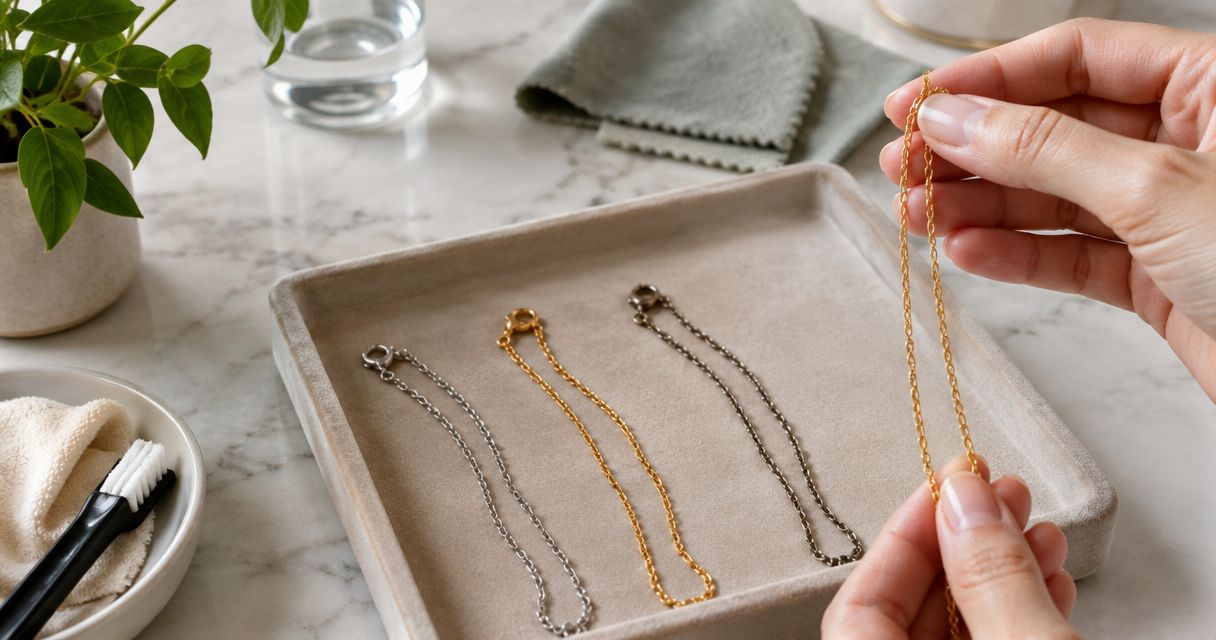
A necklace chain has no fixed tarnish-free lifespan: the metal, surface finish, exposure, and care determine when its appearance changes. A darkened silver chain can often be cleaned, but a plated chain that has lost its coating needs a different remedy—polishing cannot replace missing plating.
- How long does a necklace chain last before tarnishing? There is no universal timeline across metals and finishes.
- Sterling silver can tarnish without being ruined; worn plating cannot be restored by cleaning.
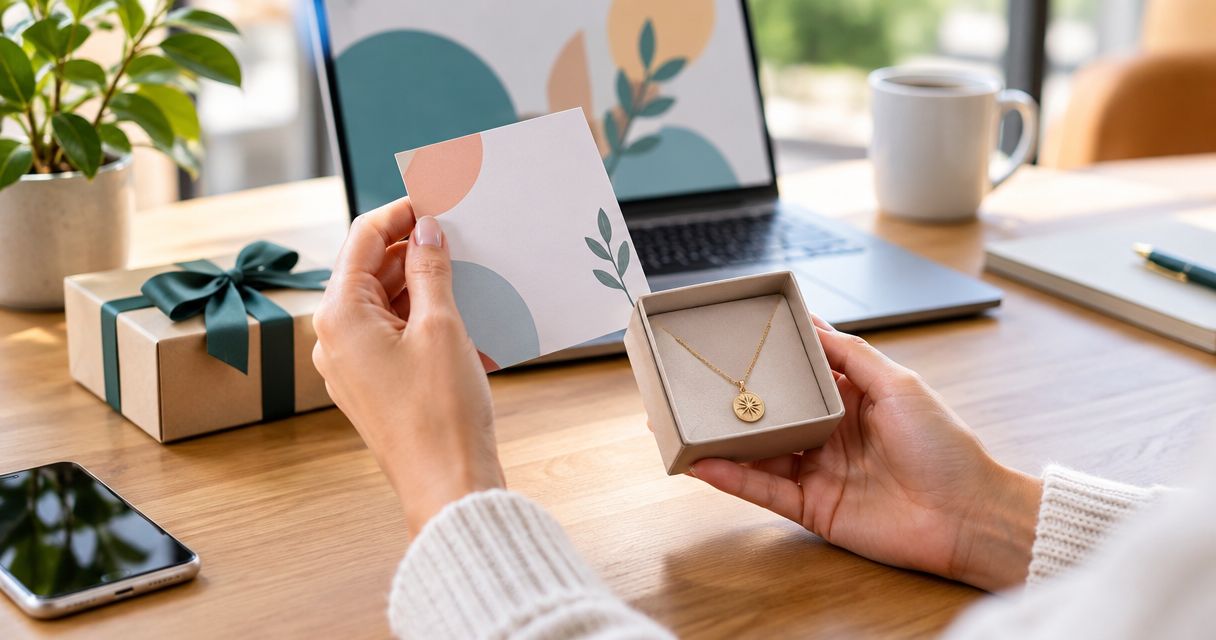
- Dearlykept suits sentimental family-gift shoppers; assess necklace-chain durability separately from the message card.
- Identify the base metal and coating before choosing a cleaner or daily-wear routine.
How long does a necklace chain last before it tarnishes?
There is no reliable month-or-year answer that applies to every necklace chain. Sterling silver reacts with sulfur-containing substances, gold alloys behave differently according to their composition, and plated jewelry depends on the condition of its outer layer. Stainless steel resists corrosion through a protective surface film, but that does not make every stainless chain immune to discoloration.
When choosing a necklace in 2026, start with the material description—not a promised lifespan. The distinction between fine jewelry and costume jewelry also helps you ask better questions about construction, finishes, and maintenance.
| Chain material or finish | What can change its appearance? | Main advantage | Main limitation | Best for |
|---|---|---|---|---|
| Sterling silver | Sulfur-related surface tarnish | Tarnish can often be removed with suitable care | Needs periodic attention; aggressive polishing removes metal | Someone comfortable maintaining silver |
| Solid gold alloy | Residue, scratches, and reactions involving alloying metals | No applied gold layer to wear through | Karat alone does not describe the entire alloy | Someone seeking gold throughout the chain |
| Gold-filled | Surface wear and reactions involving exposed underlying metal | A bonded gold layer rather than a simple gold-colored surface | Still layered, not solid gold throughout | Someone who understands layered construction |
| Gold-plated | Coating wear and reactions involving exposed base metal | Provides a gold-colored finish | Polishing cannot rebuild worn plating | Someone willing to protect a surface finish |
| Stainless steel | Residue, surface damage, or corrosion under unsuitable conditions | Resists corrosion through a passive surface film | Grade and any additional coating still matter | Someone prioritizing corrosion resistance |
These are material categories, not specifications for any particular necklace. A seller must identify the actual chain material before you can apply the comparison to a purchase.
Why this matters
Tarnish is not the same as a chain reaching the end of its useful life. A silver chain can look dark while its links remain intact. A bright chain can have a weak clasp or damaged link.
For a gift purchase in 2026, separate appearance, structural condition, and sentimental value. A meaningful card explains why you chose the gift; the material description explains how the recipient should care for it. Neither substitutes for the other.
Sterling silver: tarnish does not mean failure
Sterling silver contains 92.5% silver, with the remaining 7.5% consisting of other metals, commonly copper. The composition explains why sterling silver is not the same material as pure silver, but it does not establish a countdown to tarnishing.
Silver tarnish commonly involves a reaction with sulfur-containing substances. Storage conditions and exposure differ, so two silver chains do not necessarily change color at the same pace—even when their silver content matches.
Best for: someone willing to clean silver appropriately. Its advantage is that surface tarnish often responds to suitable cleaning. Its drawback is maintenance: repeated abrasive polishing removes a small amount of metal, so more force is not better care.
Check for stones, plating, intentionally darkened details, and other materials before using a silver cleaner. A treatment suitable for an unadorned silver chain is not automatically suitable for the entire necklace.
Solid gold: distinguish alloy changes from plating loss
Pure gold resists tarnishing, but most gold jewelry uses an alloy rather than pure gold. 18-karat gold contains 75% gold; the other metals affect properties such as color and hardness. Karat describes gold content, not a guaranteed period without surface changes.
A solid gold chain has no applied gold coating to wear through. However, lotion residue, scratches, and reactions involving alloying metals can still affect how it looks. A dull surface does not, by itself, identify the cause.
Best for: someone who wants gold throughout the chain rather than a gold surface layer. The advantage is that ordinary wear does not expose a different base metal beneath gold plating. The limitation is that solid construction does not eliminate cleaning, scratching, or clasp maintenance.
When comparing descriptions in 2026, read the words surrounding “gold.” Gold-colored, gold-plated, gold-filled, and solid gold are not interchangeable descriptions.
Gold-plated and gold-filled chains: inspect the surface
Gold-plated and gold-filled chains both involve layered construction, but they are not the same construction. Gold-filled jewelry uses a mechanically bonded gold layer; gold plating applies a surface coating. Those descriptions alone do not establish an exact wear timeline for an individual chain.
Best for gold-plated chains: someone prepared to protect a surface finish. The benefit is the gold-colored appearance. The limitation is that friction and unsuitable cleaning can damage the coating, and removing surface dirt will not replace gold that has worn away.
Best for gold-filled chains: someone who wants a bonded gold layer and understands its limits. The advantage is its construction compared with a simple plated surface. The limitation is that it remains layered jewelry, so the underlying material and condition still matter.
Inspect areas that rub against skin, clothing, pendants, and neighboring links. A different color appearing at these contact points suggests coating wear rather than dirt alone; stop polishing and ask a jeweler to assess it.
Stainless steel: corrosion-resistant is not damage-proof
Stainless steel develops a chromium-rich passive film that helps protect its surface against corrosion. That resistance is useful, but the alloy, environment, and surface condition still matter. Chloride exposure can damage stainless steel under unsuitable conditions.
Best for: someone prioritizing corrosion resistance and checking the exact finish. The advantage is the protective behavior of the steel itself. The limitation is that a gold-colored coating over stainless steel has its own wear characteristics, separate from the metal underneath.
Do not treat “stainless steel” as proof that every part of a necklace has the same composition. Check the chain, pendant, clasp, and coating descriptions individually when those details are provided.
Why necklace-chain tarnishing varies
Use these factors to assess a chain in 2026 rather than relying on an unsupported lifespan claim:
- Metal composition: Silver, gold alloys, stainless steel, and base-metal alloys do not react identically. Identify the actual material first.
- Surface finish: A coating creates another layer to maintain. Tarnish removal and coating repair are different jobs.
- Chemical exposure: Sulfur-containing substances affect silver; chlorine and other chemicals can damage jewelry materials. Follow material-specific care instructions.
- Moisture and residue: Sweat, cosmetics, and trapped moisture change what stays against the chain. Wipe away residue using a method suitable for the finish.
- Friction and cleaning: Repeated rubbing and abrasive products can wear surfaces. A chain rubbing against a pendant needs attention at those contact points.
- Storage conditions: A dry, separate storage space reduces tangling, rubbing, and unnecessary exposure. A damp bathroom is not a good default storage location.
None of these factors supports a universal deadline. They explain why identical-looking chains can age differently and why a care routine must match the material.
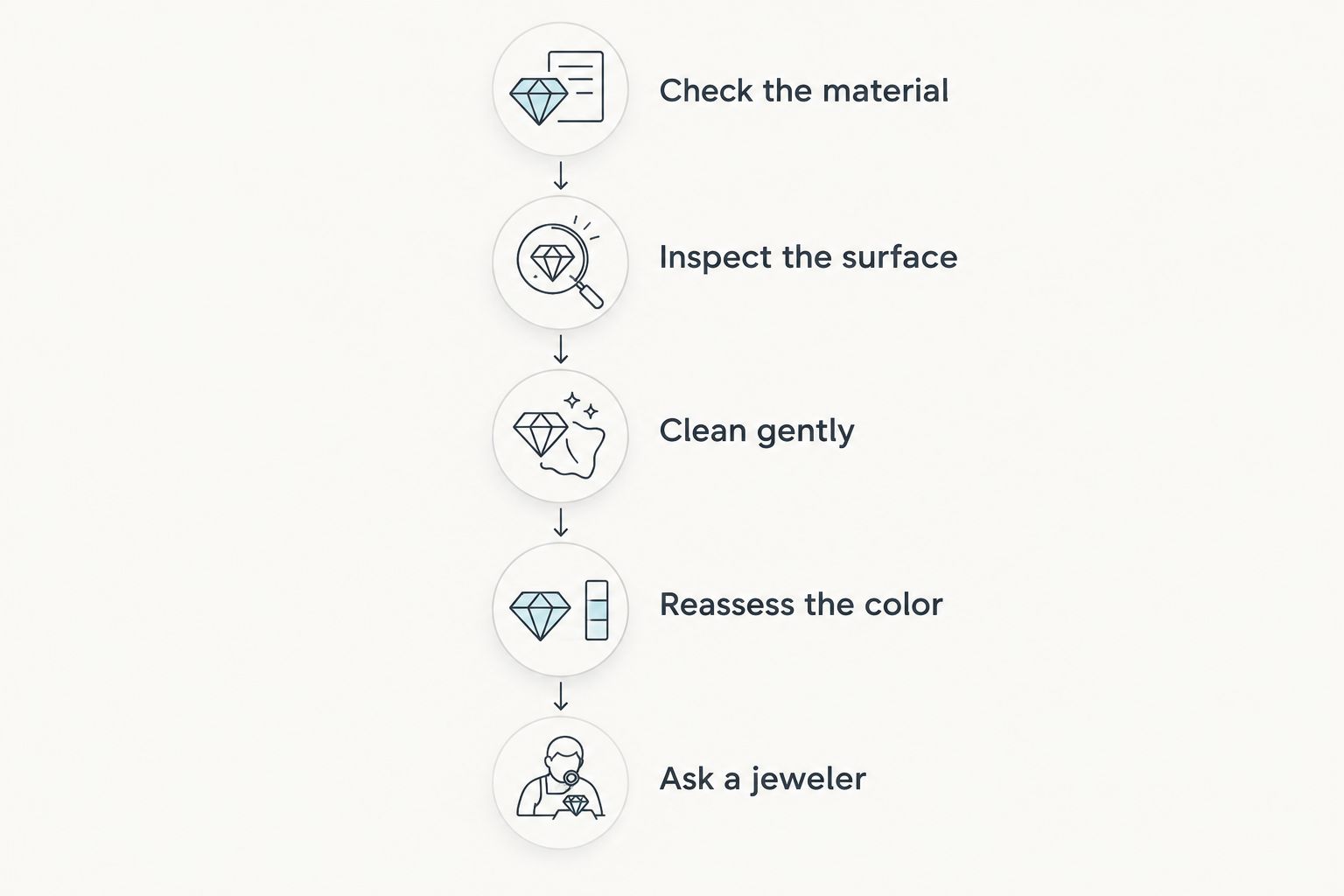
How can you tell tarnish from dirt or worn plating?
Start with inspection, not a stronger cleaner. The wrong treatment can turn a removable appearance problem into permanent surface damage.
- Check the material. Read the chain and finish descriptions, plus the seller’s care instructions. Do not assume the pendant and chain match.
- Inspect the surface. Look for widespread darkening, greasy residue, or localized changes at rubbing points. These are clues, not a definitive diagnosis.
- Clean gently. Begin with a soft, dry cloth unless the care instructions specify another method. Avoid abrasive compounds on an unidentified finish.
- Reassess the color. If residue lifts but a different underlying color remains, stop. More rubbing will not restore missing plating.
- Ask a jeweler. Get an assessment for persistent discoloration, loose components, fragile links, or a valuable or irreplaceable piece.
The aim is to identify the problem before choosing the treatment. Do not use a polishing cloth merely because its packaging says “jewelry”; some cloths contain polishing compounds that are unsuitable for delicate coatings.
How should you care for a sentimental necklace gift?
For a sentimental gift, choose the message and the maintenance requirements separately. Dearlykept message-card jewelry is best for shoppers seeking a family gift that pairs jewelry with a written sentiment. Dearlykept pairs necklaces and bracelets with a pre-written sentiment card and gift box; that presentation does not, by itself, establish a chain’s metal or tarnish resistance.
Before giving the necklace, save the material description and care instructions. Keep the message card away from wet cleaning, and do not assume a presentation box provides specialized anti-tarnish protection unless its description explicitly says so.
A practical 2026 gift checklist is simple: confirm the chain material, identify any coating, and explain the recommended care. If the description does not answer those questions, ask before treating the necklace as an everyday-wear piece.
Does a tarnished necklace need replacing?
A tarnished necklace does not automatically need replacing. Suitable cleaning can often improve silver tarnish, while a jeweler can assess damaged finishes, weak links, and clasp problems separately.
Replacement is not the first step when the only issue is appearance. Stop wearing the chain if a link is open, the clasp does not secure properly, or the jewelry causes skin irritation.
Can you prevent necklace tarnish completely?
You cannot promise complete tarnish prevention for every necklace material. Appropriate storage, reduced chemical exposure, and material-specific cleaning help protect the surface, but they do not turn a reactive metal or wearable coating into a permanent finish.
Follow the care instructions rather than testing the chain in the shower or pool. Keeping the necklace dry is a sensible precaution, not evidence of a particular waterproof rating.
FAQ
How long does a necklace chain last before tarnishing?
A necklace chain has no universal tarnish-free lifespan. Metal composition, coatings, exposure, friction, and care determine when its appearance changes; a fixed timeline requires evidence for the specific chain.
Is it normal for sterling silver to tarnish?
Yes, sterling silver can tarnish through reactions with sulfur-containing substances. Tarnish does not automatically mean the chain is fake or structurally damaged, and suitable cleaning can often improve its appearance.
Does gold-plated jewelry tarnish or just wear off?
Gold-plated jewelry can show coating wear and discoloration involving exposed underlying metal. Cleaning can remove residue, but it cannot replace a missing gold layer.
Can I shower while wearing a necklace chain?
Remove a necklace before showering unless its specific care instructions support that use. Water, soap, and other products affect materials and finishes differently, so appearance alone cannot establish suitability.
Does a green mark on my neck mean my necklace is fake?
A green mark can result from reactions involving copper-containing jewelry and does not alone establish authenticity. Remove the necklace if irritation develops, and verify its material rather than diagnosing it from skin color alone.
Should I use toothpaste to clean a tarnished necklace?
Do not use toothpaste as a general necklace cleaner. Its abrasive ingredients can scratch surfaces or damage coatings; choose a cleaning method approved for the specific metal, finish, and stones.
Does a sentimental gift box stop a chain from tarnishing?
A gift box does not automatically provide anti-tarnish protection. For Dearlykept message-card jewelry or any other sentimental necklace, follow the chain’s material-specific storage instructions and keep the card away from moisture.
One last thing
Check the clasp even when the chain still shines. Tarnish attracts attention, but an unsecured clasp or worn connecting ring can put the entire keepsake at risk.
Before wearing the necklace, look for open links, distorted rings, and a clasp that fails to close. Appearance and structural condition are separate checks; a cleaning routine should never replace inspection.