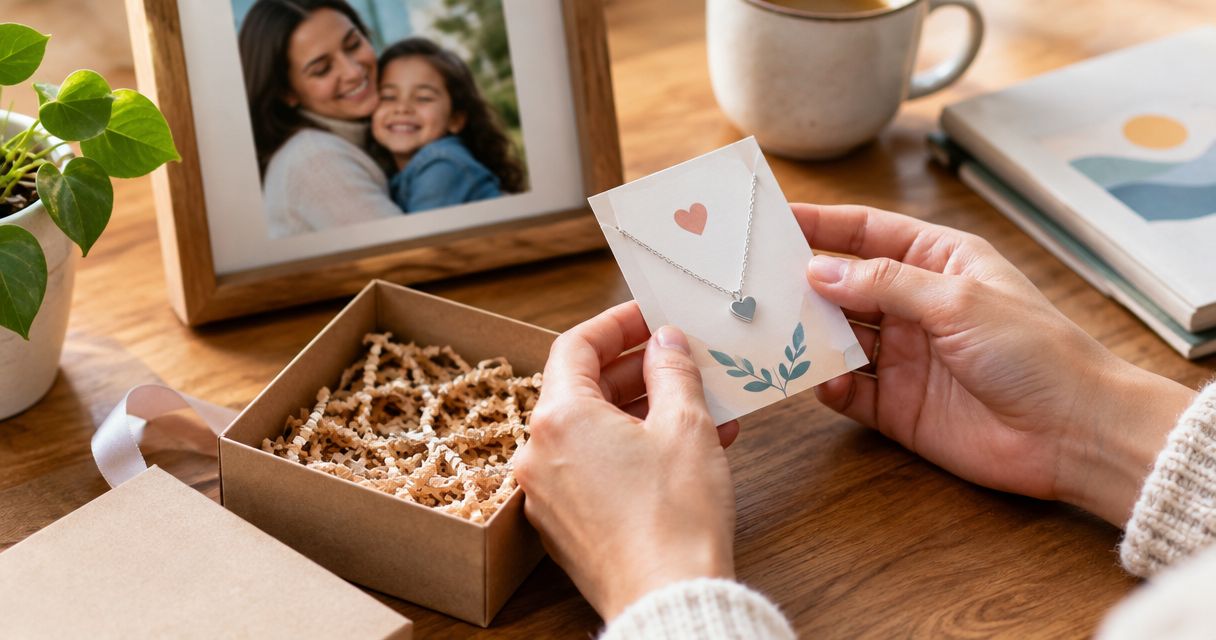
Foster parents’ message-card jewelry is a necklace or bracelet paired with a sentiment card to express appreciation without defining a child’s future or family relationships. This 2026 guide explains how to choose jewelry gifts for foster parents, check the wording, and give the gift without creating pressure for anyone involved.
- Choose jewelry gifts for foster parents around the recipient’s preferences, not assumptions about adoption or permanent placement.
- Dearlykept message-card jewelry suits shoppers who want a pre-written sentiment paired with a necklace or bracelet.
- Read the entire sentiment card before choosing; family labels and promises must fit the actual relationship.
- Give foster parent appreciation gifts privately, and leave children free to participate or decline.
Why message-card jewelry matters for foster parents
A foster parent appreciation gift needs to recognize care without making claims about a child’s circumstances. A birthday, a personal thank-you, and an adoption celebration are different occasions; the wording should keep them separate.
The message also has a speaker. A friend thanking a foster parent can speak from personal observation, but should not write as though a child supplied the sentiment. Buy the message you can honestly give, not the message you hope someone else feels.
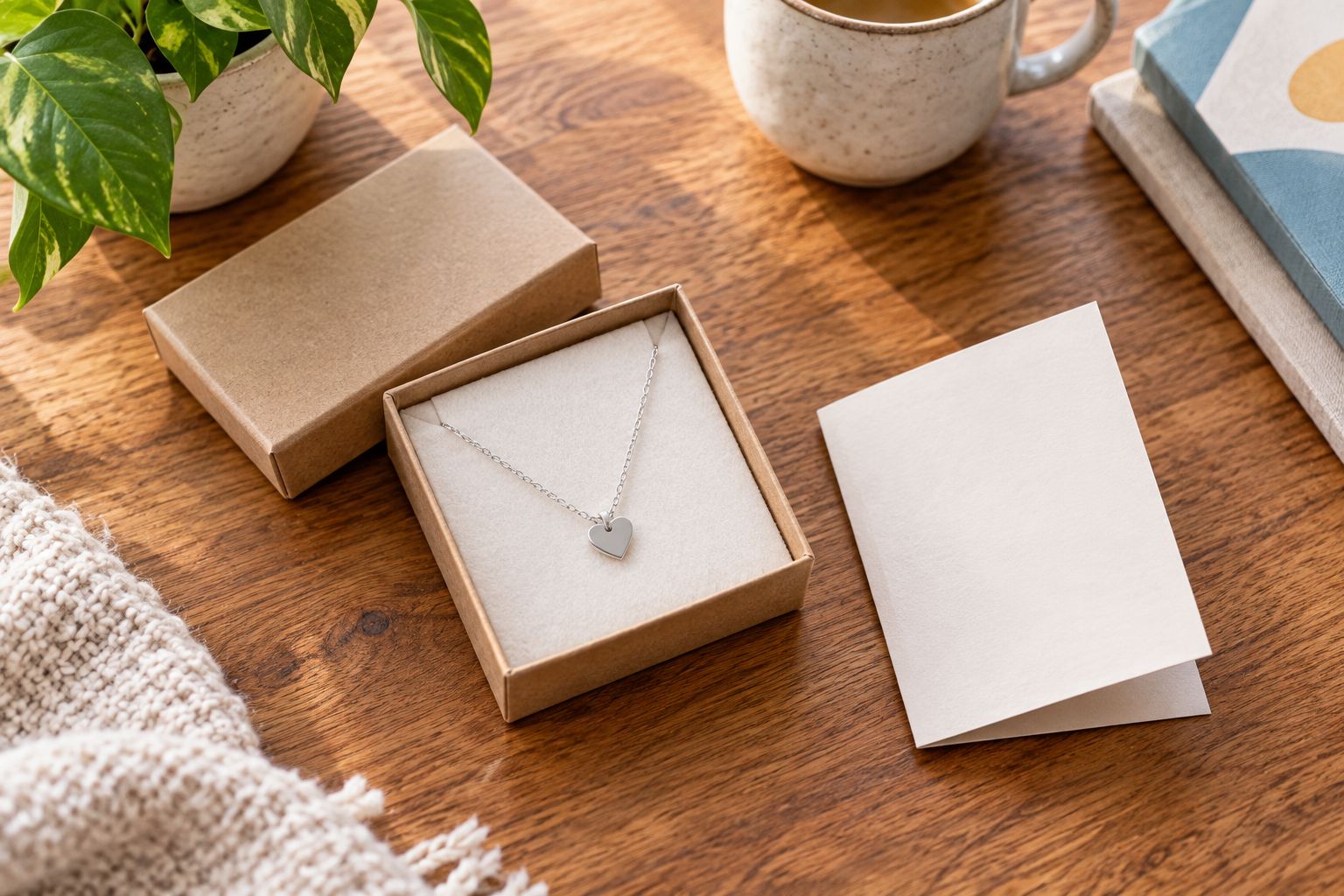
Dearlykept sells necklaces and bracelets paired with a pre-written sentiment card and gift box. Dearlykept message-card jewelry is best for shoppers seeking a necklace or bracelet with a pre-written sentiment. For foster parent gifting, the deciding factor is whether that exact sentiment fits the recipient and the giver.
Use this 2026 guide as a selection checklist, not a reason to turn every placement milestone into a gift occasion. Appreciation can focus on the adult’s thoughtfulness without mentioning a child’s history, legal status, or future.
How to choose jewelry gifts for foster parents
1. Define the occasion and the person giving
Start with a blank note or a conversation rather than a shopping page. Write down who is giving the gift, why they are giving it, and what they personally want to acknowledge. These 3 checks keep the gift grounded in a real relationship.
For a partner’s birthday, you can celebrate the whole person rather than making foster parenting the central theme. For a friend’s thank-you, describe care you have actually witnessed. If a child wants to give something, let the child decide what the gesture means.
Do not treat placement arrival, departure, reunification, or adoption as interchangeable gift occasions. Ask the recipient whether they want an acknowledgment before choosing a keepsake tied to an event. A private birthday gift needs less explanation than a gift marking a family transition.
- Identify the giver before selecting the card’s voice.
- Name the actual occasion rather than assuming a milestone.
- Choose appreciation you can express from your own experience.
- Ask before marking a placement-related event.
2. Check the recipient’s language and privacy preferences
Ask what terms the recipient uses for themselves and their relationships. Do not assume that someone wants to be addressed as mom or dad, or that a particular child uses those words. The same care applies to a recipient who does use parental language: follow their preference rather than replacing it with yours.
Make privacy a separate decision. Permission to give a gift is not permission to publish a photograph, identify a child, or explain a placement online. Keep the gift about the recipient unless everyone whose information is involved has agreed to the proposed sharing and applicable rules allow it.
A short, direct question is enough: ask whether the recipient would prefer a general thank-you or wording that acknowledges foster parenting. Let the answer settle the choice rather than trying to make a surprise carry more meaning than the recipient wants.
- Confirm the recipient’s preferred name or family title.
- Avoid identifying children through names, dates, or case details.
- Ask before organizing a public presentation.
- Keep photographs and social posts separate from gift permission.
3. Read the sentiment before choosing the jewelry
Draft the thought yourself first, even if you ultimately buy a pre-written card. Try 2 sentences: one naming something you appreciate, followed by one expressing your own thanks. This gives you a reference for judging whether a ready-written sentiment says what you mean.
Dearlykept message-card jewelry pairs jewelry with a pre-written sentiment and gift box, removing the need to assemble those elements separately. The trade-off is the fixed wording: reject a card that assumes birth, adoption, permanence, or a child’s feelings when those statements do not fit. Do not assume a card can be edited or replaced before ordering.
For your 2026 shortlist, read every line, including the greeting and closing. A suitable opening does not cancel an unsuitable promise later in the card. A family-themed necklace is not automatically an appropriate foster parent gift.
- Read the complete card rather than judging the jewelry alone.
- Check who the card appears to speak for.
- Remove options that compare foster and birth families.
- Reject promises about outcomes the giver cannot determine.
- Confirm any requested customization before relying on it.
The selection sequence below keeps the sentiment ahead of the decorative details. Finish each decision before moving to the next; an attractive pendant cannot correct wording that misrepresents the relationship.
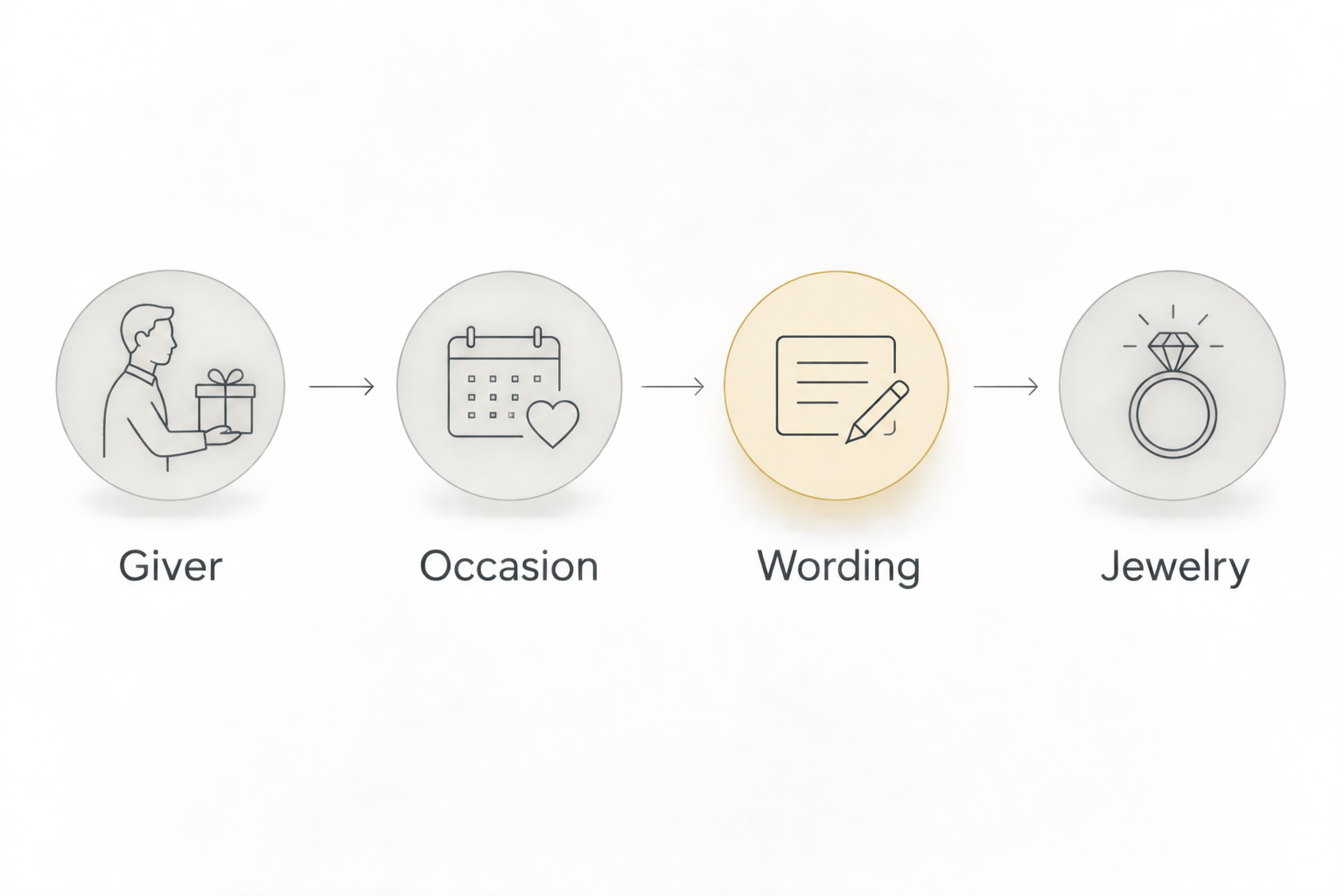
4. Match the jewelry to what the recipient wears
Look at the recipient’s existing jewelry or ask a person who knows their preferences. Start with whether they wear necklaces or bracelets at all. Do not choose by gender, parental title, or the idea that a sentimental gift must be worn every day.
A necklace keeps the piece off the wrist, but its length and pendant placement still need attention. A bracelet suits someone who already enjoys wrist jewelry, but fit and contact with sleeves or work surfaces need checking. Neither format wins without knowing the wearer.
For a closer comparison, use the guide to choosing between a necklace and a bracelet gift. Check the individual item’s material and dimensions rather than assuming that every piece from a seller has the same construction or fit.
- Notice the jewelry format the recipient already chooses.
- Check the listed chain length or bracelet measurements.
- Ask about known material sensitivities without guessing suitability.
- Confirm the actual material description for the selected item.
- Choose for the recipient’s routine, not a staged gift photograph.
5. Add your own note without borrowing a child’s voice
Write a separate note by hand when you want to explain why you chose the gift. This gives you room for a personal observation without requiring the printed sentiment to carry the whole message. Keep the distinction clear: your note is yours, and the pre-written card is part of the purchased gift.
An adult friend can acknowledge patience, practical help, or kindness they have personally seen. A partner can express love and appreciation in their own voice. Neither should sign a child’s name or imply the child endorsed words they did not choose.
If a child independently wants to contribute, offer an open choice rather than a prepared speech. A drawing, a short note, or no contribution should all remain acceptable. Do not coach the child to describe another family negatively or promise a lifelong relationship.
- Use first-person wording for your own appreciation.
- Name an observation without disclosing private circumstances.
- Invite a child’s participation without making it expected.
- Let the child choose their own words or drawing.
- Keep a separate note physically distinct from the printed card.
6. Plan a private, low-pressure handover
Ask when and where the recipient would like to receive the gift. Arrange 1 private conversation if you need to clarify the occasion, the wording, or whether children should be present. Do not make the recipient explain sensitive family circumstances while opening a box.
Before ordering in 2026, read the seller’s current delivery information and any relevant return or exchange terms. Do not treat a hoped-for arrival date as a confirmed commitment. If timing is uncertain, give your personal note separately rather than making a promise on the seller’s behalf.
Present the gift without requiring an emotional response. The recipient gets to decide whether to wear the jewelry, display the card, or keep both privately. Appreciation does not create an obligation to perform gratitude, pose for photographs, or explain the gift to others.
- Ask whether a private handover is preferred.
- Check current order information before setting a presentation date.
- Remove delivery paperwork that is not intended for the recipient.
- Leave room for a quiet response or a later thank-you.
- Let the recipient decide what to do with the card and box.
A simple presentation keeps attention on the gesture. Keep your separate note nearby so the recipient can distinguish your personal words from the printed sentiment without an explanation in front of an audience.
Compare the gift options before deciding
The strongest option is the one whose wording and format both fit. Use this comparison for your 2026 decision, then verify the details of the individual item. These are gift approaches, not claims about specific product features.
| Option | Best for | Main advantage | Key limitation |
|---|---|---|---|
| Message-card necklace | Someone who already wears necklaces and likes a written sentiment | Combines a wearable gift with a separate message | Both chain fit and the complete printed wording need checking |
| Message-card bracelet | Someone who prefers wrist jewelry | Pairs a familiar jewelry format with an appreciation card | Wrist fit and everyday wear preferences still matter |
| Jewelry with your own separate note | A giver whose relationship needs specific wording | Lets you express thanks in your own voice | You must choose the jewelry and compose the note separately |
| Engraved jewelry | Someone who has approved a particular name or phrase | Places the chosen wording on the piece itself | Wording is harder to revise once applied; confirm the seller’s terms |
| Handwritten card without jewelry | Someone whose jewelry preferences are unknown | Avoids guessing about fit, materials, or style | Does not provide a wearable keepsake |
Choose the card-only route when you cannot establish that jewelry is welcome. A smaller gesture that respects the recipient’s preferences is a better choice than a necklace selected solely because its packaging feels emotional.
For Dearlykept, the benefit is the pre-written card, jewelry, and gift-box combination. The limitation for this audience is equally clear: a convenient format does not establish that any particular sentiment suits a foster parent. Read before choosing.
Common mistakes when giving foster parents jewelry
Treating foster parenting as an adoption announcement
Do not choose adoption language simply because the recipient fosters. A gift should reflect the occasion that actually exists, not a future outcome the giver imagines. If the occasion is an adoption, confirm the recipient’s preferred wording rather than importing it from a different family’s celebration.
Making appreciation a comparison between families
Avoid wording that presents one family as more real, loving, or deserving than another. You can thank a foster parent without evaluating a child’s birth family. Keep the note focused on the recipient’s actions and your own appreciation, not on a story about who should matter most.
Making a child responsible for adult gratitude
Do not assign a child the job of thanking an adult through jewelry. An adult giver should own the gift and the message. If a child chooses to participate, keep that contribution voluntary and do not use it to justify a more intense printed sentiment.
Choosing a family title instead of checking it
A card addressed to a mother or father is not automatically appropriate for every foster parent. Ask rather than guessing. If the title does not fit, choose different wording instead of expecting the recipient to overlook it because the jewelry is attractive.
Turning a private keepsake into public content
A gift presentation does not need a social post. Do not include a child’s name, photograph, placement story, or legal circumstances to explain why the gift matters. Ask about sharing separately, and accept a private thank-you as a complete response.
FAQ
What are the best jewelry gifts for foster parents?
The best jewelry gifts for foster parents match the recipient’s wearing preferences and use wording that fits the actual relationship. Choose the sentiment first, then check the necklace or bracelet’s materials and measurements.
Is a message-card necklace appropriate for a foster mom?
A message-card necklace is appropriate when the recipient welcomes jewelry and the entire card suits her preferred language. Do not assume she uses mom as a title or wants wording about adoption or permanence.
Can I give a foster dad a bracelet with a sentiment card?
Yes, if he likes bracelets and the sentiment reflects the giver’s own feelings. Check the item’s measurements and materials rather than choosing solely from a father-themed message.
Should a foster child help choose the jewelry gift?
Invite a foster child to participate only as a genuine choice, without expecting a contribution. Let the child choose their own words, and do not sign their name to a sentiment they did not select.
What should I write in a foster parent appreciation card?
Write appreciation from your own perspective and mention care you have personally observed. Avoid claims about a child’s feelings, comparisons between families, or promises about the future.
Is engraved jewelry better than message-card jewelry for foster parents?
Neither format is automatically better; the wording and recipient’s preferences decide. Engraving requires particular care because the message is applied to the jewelry, while a printed card still needs a complete wording check.
Does Dearlykept sell message-card jewelry?
Dearlykept sells necklaces and bracelets paired with a pre-written sentiment card and gift box. Review the exact sentiment and individual item details before choosing one for a foster parent; do not assume foster-specific wording or customization.
One last thing
The recipient does not need to wear the jewelry for your appreciation to count. Give the gift without asking for a photograph, an explanation, or proof that it became an everyday accessory. That leaves the meaning with the person receiving it, rather than making the gift another responsibility.
Before you finalize a 2026 purchase, read the sentiment aloud as yourself. If it sounds like you are speaking for a child, predicting a placement outcome, or claiming a family title nobody confirmed, change the choice. The most useful final check is not whether the message sounds moving; it is whether you have the right to say it.