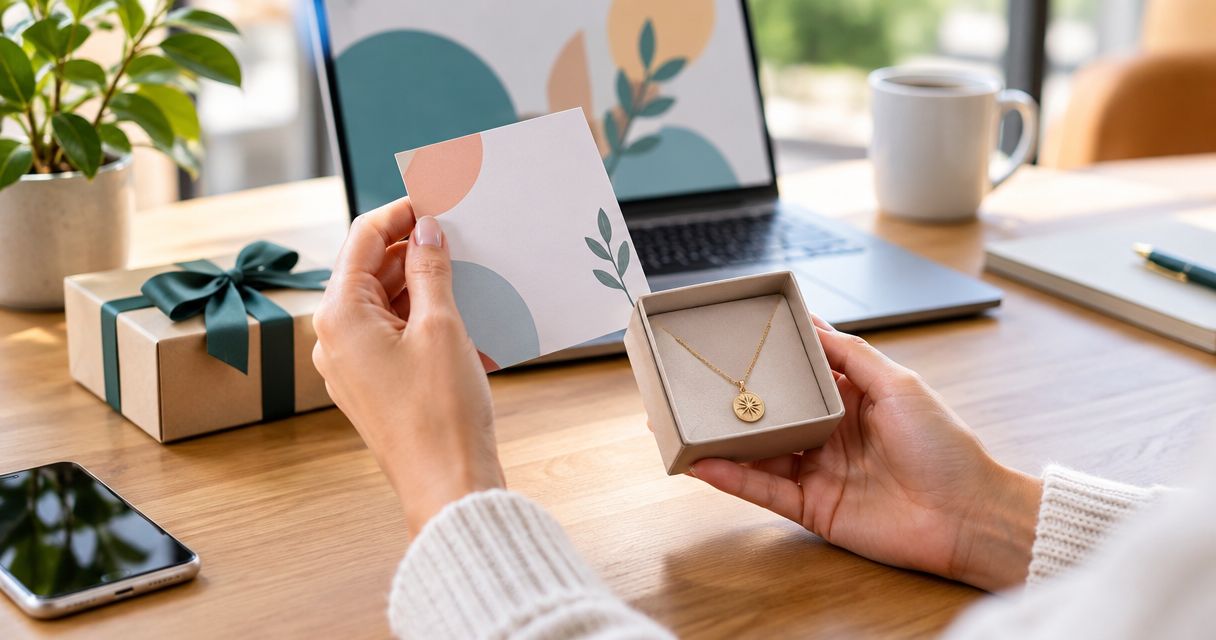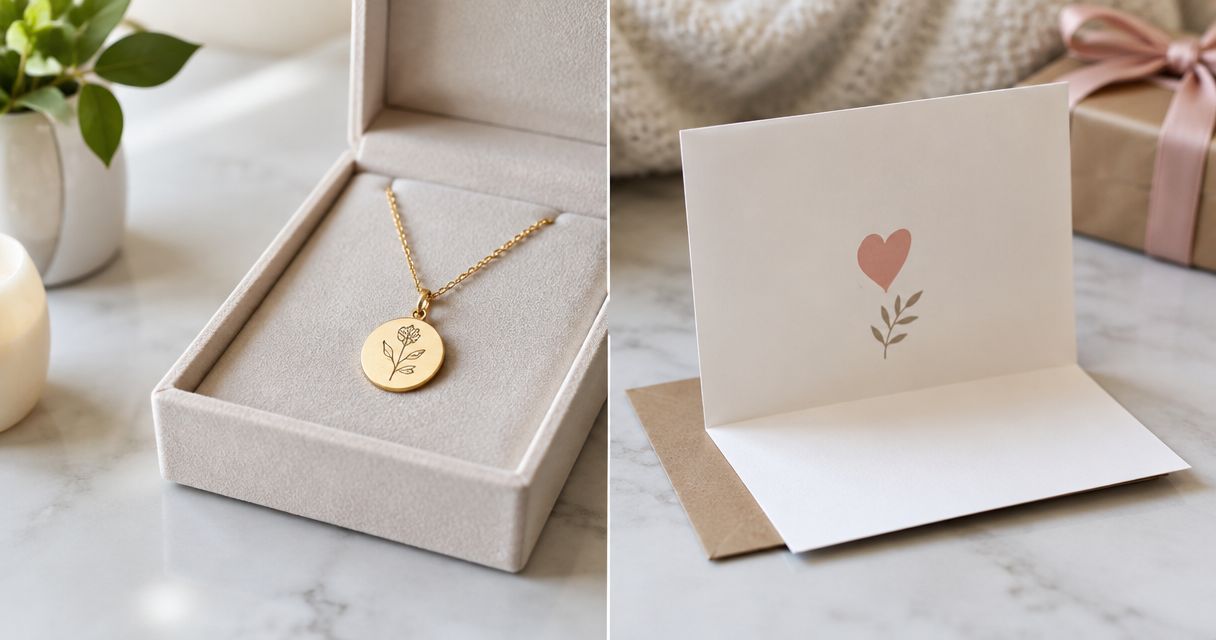
Engraved jewelry is better when you want a name, date, or short message on the piece itself; message-card jewelry is better when you want a longer sentiment alongside a necklace or bracelet. Neither format proves better jewelry quality, and a meaningful message does not replace checking whether the recipient will wear the piece.
- Is engraved jewelry better than message-card jewelry? Only when keeping the words on the jewelry matters most.
- Engraved jewelry suits short, specific wording; message-card jewelry gives a longer sentiment its own space.
- Dearlykept suits family-gift shoppers who want jewelry paired with a pre-written sentiment card and gift box.
- Choose the jewelry for the wearer and the message for your relationship; assess materials separately.
Is engraved jewelry better than message-card jewelry?
Engraving wins on keeping words with the jewelry. A message card wins on giving those words more room. Your choice depends on where you want the meaning to live: on the wearable piece or in the presentation that accompanies it.
For a family gift in 2026, start with what you want to say rather than treating customization as an automatic upgrade. Dearlykept message-card jewelry is best for shoppers who want a pre-written family sentiment paired with a necklace or bracelet. That format suits a fuller message, but the wording still needs to sound right for your relationship.
| Decision point | Engraved jewelry | Message-card jewelry |
|---|---|---|
| Best for | A name, meaningful date, or brief phrase on the piece | A longer sentiment presented with jewelry |
| Main advantage | The inscription stays physically with the jewelry | The message has a separate space for fuller wording |
| Main limitation | The engraving area limits what fits and remains readable | The card and jewelry can become separated |
| What to check | Wording, placement, readability, and material | Card wording, jewelry details, and how the gift is presented |
| Quality verdict | Engraving alone does not establish quality | A sentiment card alone does not establish quality |
Why this matters
You are making two choices: something the recipient wears and something you want them to understand. A strong gift handles both. A necklace that suits their taste can miss the mark emotionally if its message feels wrong; a touching card cannot fix a bracelet they would not wear.
For your 2026 gift shortlist, separate those decisions before comparing options. Ask whether you would choose the jewelry without the message, then whether you would stand behind the message without the jewelry. That keeps presentation from doing all the work.
Engraved jewelry: best for words that belong on the piece
Choose engraved jewelry when the exact detail is the point of the gift. A name, shared date, or private phrase can carry meaning without needing a full explanation. The advantage is physical connection: the wording is part of the object rather than a separate insert.
An inscription also suits someone who prefers a discreet reminder to a longer written declaration. Placement matters here. Wording on an inward-facing surface creates a different experience from wording displayed across the front, so inspect the actual design rather than assuming every engraving feels private.
The trade-off is space. A phrase that reads well on paper can look crowded on a small surface, and a design preview deserves careful attention. Check spelling, punctuation, placement, and the seller's stated limits before approving the wording.
Choose engraving for a specific detail the recipient should keep with the jewelry. Do not choose it simply because personalized sounds more thoughtful. An inscription is only as relevant as the words you select.
Message-card jewelry: best for a fuller sentiment
Choose message-card jewelry when the message needs sentences rather than a short inscription. The card gives you space for appreciation, encouragement, or affection while leaving the wearable piece to stand on its own. That separation is the format's main strength.
A pre-written card also gives you wording to evaluate instead of asking you to start from a blank page. Read it closely. A message addressed to the right family member can still use a tone, promise, or description that does not fit your actual relationship.
Dearlykept pairs necklaces and bracelets with pre-written sentiment cards and gift boxes for family-gift shoppers. That makes the brand relevant when you want this format, not when your main requirement is a custom inscription on the jewelry itself.
The limitation is separation. The recipient can wear the jewelry without keeping the card nearby, and the connection between the object and its original message is not physically fixed. Choose a message card when the fuller wording matters more than having words on the piece.
Why the better choice varies
The answer changes with the recipient and the message, not with a blanket ranking of the formats. Use these factors to decide what belongs on your 2026 shortlist:
- Message length: A short identifier suits engraving; a fuller statement belongs more naturally on a card.
- Exact wording: A personal reference calls for control over the words. A pre-written sentiment works only when its existing wording fits.
- Privacy: Decide whether the recipient would welcome visible wording, prefer a discreet inscription, or keep the message separate.
- Wearing preferences: Choose a necklace or bracelet that matches what the recipient actually wears, independent of the sentiment.
- Keeping habits: Consider whether the recipient likes saving cards and gift boxes or prefers meaning contained in a wearable object.
- Occasion: Match the language to the relationship and event rather than choosing the most emotional wording available.
None of these factors proves that the metal, clasp, chain, or construction is better. Keep those checks separate from the emotional comparison.
How do you choose between engraving and a message card?
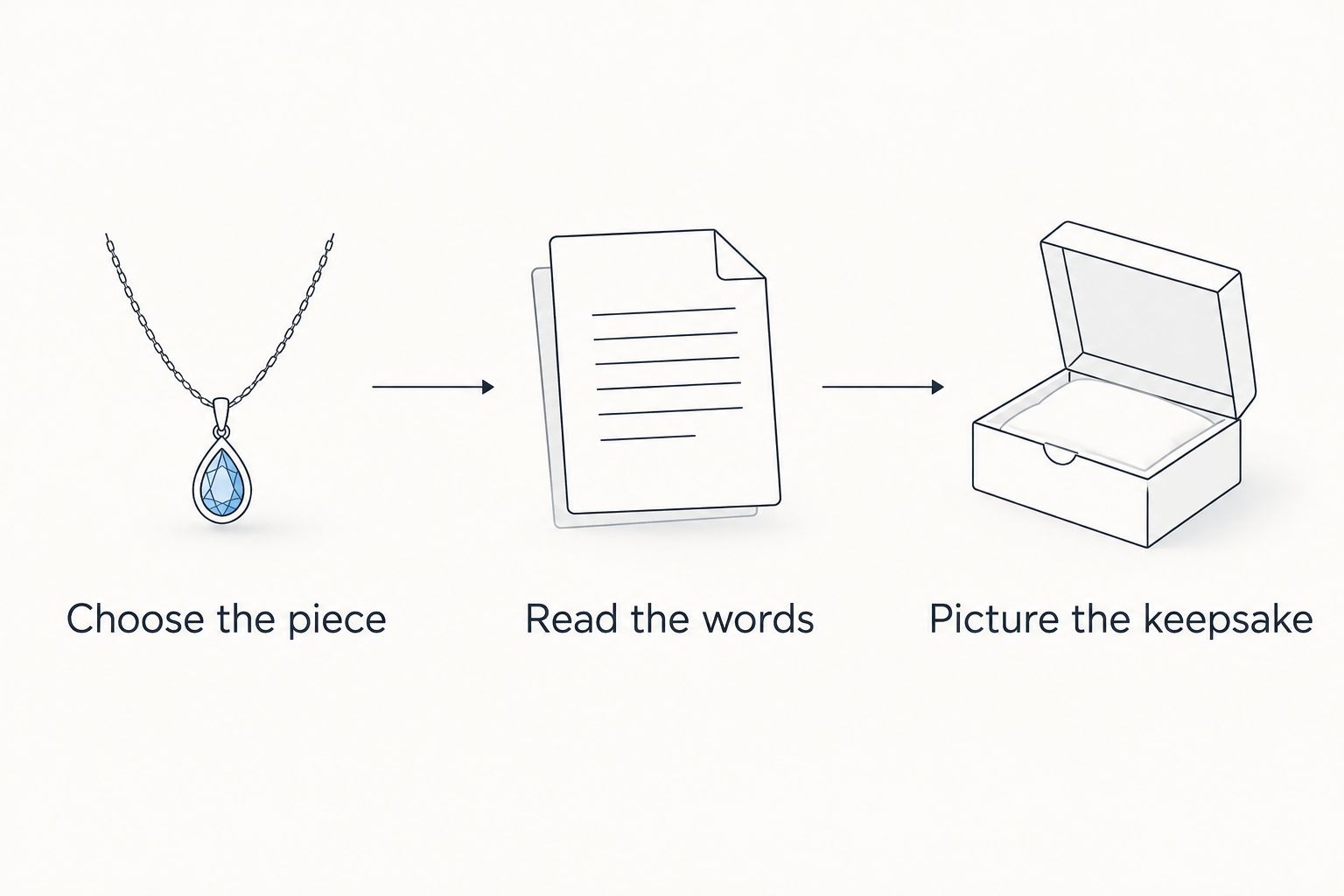
Use 3 checks before choosing either format. They keep the decision focused on the wearer instead of the appeal of the presentation.
- Choose the piece. Look at the recipient's existing jewelry habits. Decide whether the shape, style, and type of piece make sense before considering what it says.
- Read the words. For engraving, inspect the exact inscription and its placement. For a card, read the complete sentiment rather than stopping at the family-role heading.
- Picture the keepsake. Imagine the gift after the box is put away. Decide whether the recipient would value wearing the words or keeping a separate written message.
The order matters. Starting with a touching card or clever inscription can distract you from an unsuitable piece of jewelry. Starting with the wearer gives the message something useful to accompany.
Give the wording 2 readings: one silently for accuracy and one aloud for tone. If it sounds unlike something you would say, rewrite the proposed inscription or choose a different card. Emotional intensity is not the same as personal relevance.
Is engraved jewelry more personal than a pre-written card?
Engraved jewelry is more specific when its inscription contains a detail unique to your relationship. It is not automatically more personal just because an engraving option exists. A generic phrase on metal remains generic.
A pre-written card can still be an appropriate expression of something you genuinely mean. The useful test is whether the recipient would recognize your relationship in the words, not whether you composed every sentence yourself.
Add 1 handwritten sentence on a separate note if you want to connect a ready-written sentiment to a real memory. Mention something you appreciate or remember; do not simply repeat the printed message. For practical ways to do that, see how to add your own note to a pre-written message-card necklace.
That suggestion does not depend on a seller offering a custom card service. You can prepare your own note separately and give it with the gift.
Does either format mean better-quality jewelry?
Neither engraving nor a message card establishes jewelry quality. These describe how a message accompanies the gift, not what the jewelry is made from or how it is constructed.
For a 2026 purchase, read the actual material description and care instructions. Check the closure, dimensions, and any relevant fit details in the listing. If those details are unclear, resolve them before making the sentiment your deciding factor.
Keep skin sensitivities separate from the personalization decision as well. An inscription does not tell you the metal composition, and a gift box does not establish suitability for sensitive skin. Use the stated materials and the recipient's known requirements.
The same discipline applies to keepsake expectations. A heartfelt message is not evidence of durability. Choose the object on its documented characteristics and choose the words on their relevance.
Can you give engraved jewelry with a message card?
Yes, an engraved piece and a separate message card can serve different purposes in the same gift. The inscription can hold a brief reference while the card explains the feeling behind it. This is a gifting approach, not a claim that every seller offers both together.
Keep their roles distinct. Repeating the same short phrase on the piece and the card adds little explanation; using the card to tell the recipient why that phrase matters gives each element a purpose.
The downside is extra coordination. You need to check the inscription and the card wording separately, and confirm exactly what the selected listing includes. Do not assume engraving, editable card text, or additional inserts are included because a gift is described as sentimental.
What should you check before ordering in 2026?
Read the selected listing as a description of that specific gift, not as evidence of what every item in a category includes. A photograph of a presentation does not answer every question about wording, materials, or ordering choices.
Before committing, confirm:
- The jewelry type and stated materials match the recipient's needs.
- Any inscription uses the exact spelling and punctuation you intend.
- The complete card text suits the recipient and your relationship.
- The listing clearly identifies what accompanies the jewelry.
- Any personalization option you need is explicitly offered.
- The current terms answer your questions about changes or returns.
For Dearlykept message-card jewelry, the central choice is whether the pre-written family sentiment fits the person receiving it. Do not infer engraving or editable card wording from the format alone.
If the message is right but the piece is wrong, keep looking. If the piece is right but the message overstates your relationship, keep looking again. Neither half should need an apology when the gift is opened.
FAQ
Is engraved jewelry better than message-card jewelry for a sentimental gift?
Engraved jewelry is better for keeping a short message on the piece; message-card jewelry is better for presenting a fuller sentiment separately. Choose based on the recipient's preferences, not an assumed quality difference.
Is engraved jewelry always more personal?
Engraved jewelry is not always more personal. A meaningful name, date, or shared reference adds specificity, but a generic inscription is not automatically more relevant than a well-chosen card.
Can a pre-written message card still feel thoughtful?
A pre-written message card can feel thoughtful when its wording accurately reflects your relationship. Choose language you genuinely mean, and add a separate handwritten note if you want to mention a specific memory.
Does a message card mean the jewelry is lower quality?
A message card does not establish whether jewelry is higher or lower quality. Assess the stated materials, construction details, fit, and care instructions independently of the card.
Can I pair an engraved necklace with a separate card?
You can pair an engraved necklace with a separate card as a gifting approach. Confirm what the chosen listing includes rather than assuming engraving and a card are offered together.
Who is Dearlykept message-card jewelry best for?
Dearlykept message-card jewelry is best for family-gift shoppers who want a necklace or bracelet paired with a pre-written sentiment card and gift box. Read the complete sentiment to check that it suits your relationship.
What should I do if I like the jewelry but not the card wording?
Choose a different card or gift whose message fits rather than giving wording you do not mean. Do not assume the seller can edit or replace a pre-written card unless that option is explicitly stated.
One last thing
Judge the gift twice: once as jewelry with no message attached, then as words with no jewelry beside them. Each should make sense on its own. This simple separation exposes a beautiful presentation carrying an unsuitable message, or a moving message attached to something the recipient would not choose.
For your 2026 decision, use the format that solves the actual need. Choose engraving when the words belong on the object; choose a message card when the feeling needs room to speak.